

Is a Wipe Warmer Worth It for Newborns? 2026 Guide
Table of Contents
- Is a Wipe Warmer Worth It for Newborns in 2026?
- Wipe Warmer Pros and Cons: The Honest Breakdown
- Wipe Warmer Safety: What Parents Need to Know
- Do Wipe Warmers Dry Out Wipes? What to Expect
- Wipe Warmer Alternatives That Cost Less
- Cost and Value: What You Actually Spend
- A Newborn Decision Framework: Who Should Buy One
- Conclusion: Making the Call for Your Nursery
- Frequently Asked Questions
Last Updated: October 4, 2026
Is a Wipe Warmer Worth It for Newborns in 2026?
A wipe warmer heats baby wipes to roughly body temperature before a diaper change. Whether it's worth buying depends on your baby, your home, and how many nighttime changes you're doing. At Tender Tots & Wellness, we hear this question constantly from new parents building their registry, so this guide breaks down the honest pros, cons, safety details, and costs.
Here's the part most guides get wrong: a wipe warmer isn't a comfort upgrade for every baby. It's a targeted fix for one specific problem.
Wipe Warmer Pros and Cons: The Honest Breakdown
The case for and against a wipe warmer comes down to comfort versus convenience.
Where Warm Wipes Actually Help
Warm wipes shine in one scenario above all others: the middle-of-the-night diaper change. A cold wipe against warm skin can trigger crying that wakes a drowsy baby fully, turning a five-minute change into a forty-minute resettling session. Warm wipes reduce that startle response, which many parents find leads to calmer nighttime changes and faster returns to sleep.
They also help during the newborn stage, when skin is especially sensitive to sudden temperature shifts.
Where a Warmer Falls Short
A wipe warmer is not essential, and plenty of parents never buy one. Babies who aren't bothered by room-temperature wipes gain nothing from it.
There's a practical downside too: warm wipes can feel pleasant going on but slightly cool once exposed to air, so the comfort benefit is brief. And a warmer is one more thing to plug in, refill, and maintain.
Wipe Warmer Safety: What Parents Need to Know
Most wipe warmer coverage stops at "it's low heat, so don't worry." That's not a safety standard, it's a vibe.
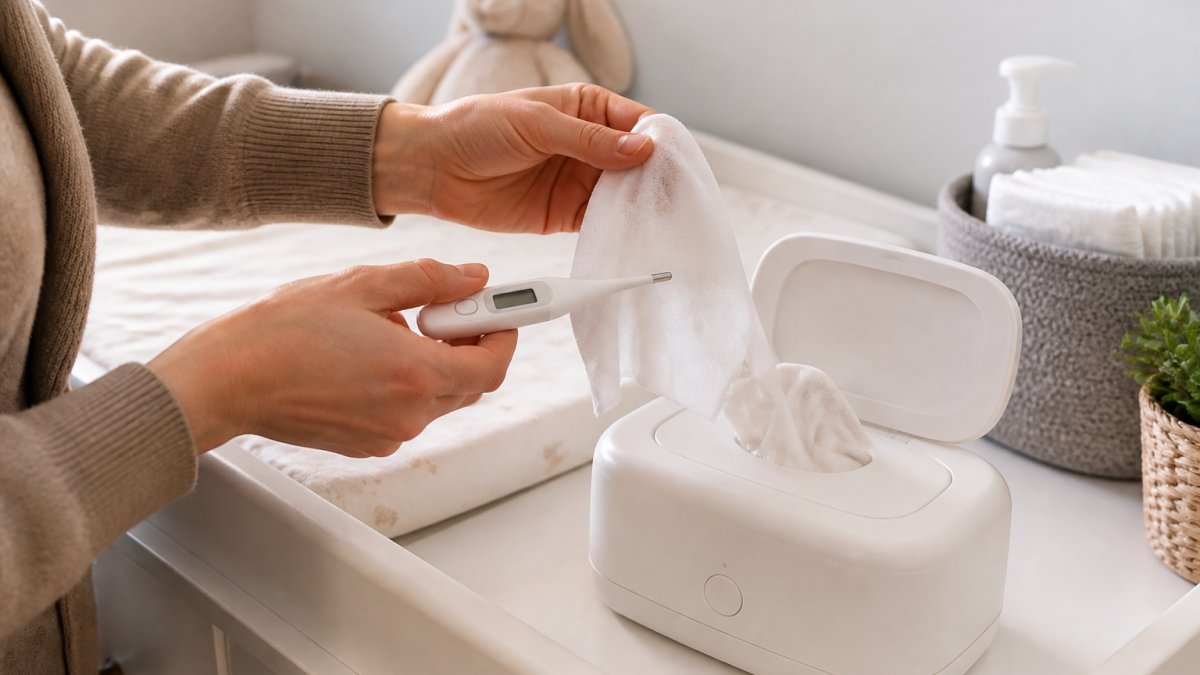
Temperature Settings and Burn Risk
The real risk isn't normal operation. It's a stuck thermostat, a damaged heating element, or a unit never designed with a cutoff. That's why the features to look for are boring on purpose:
- A simple on/off switch or a low/medium/high dial rather than a wide temperature range you can crank up
- No exposed heating surface, the wipe should never sit directly on a bare element
- An automatic shutoff or thermal fuse if the manufacturer lists one; if it doesn't, assume there isn't one
Before the first use, pull a wipe and test it against the inside of your wrist, the same way you'd test a bottle.
One more electrical note: keep the warmer's cord out of reach of the crib and away from any water source on the changing table.
For broader nursery-product safety context, the American Academy of Pediatrics safe sleep recommendations remains the reference point most pediatric practices point parents toward.
Moisture, Mold, and Cleaning Routine
This is where wipe warmers earn their bad reputation, and it's deserved if you skip maintenance. A warmer holds wipes in a warm, sealed environment, roughly the conditions a proofing drawer creates for bread dough. That's ideal for yeast and bacteria, and it's why the bottom wipes in a neglected stack can discolor or develop a musty smell within a week or two.
The fix isn't complicated, but it needs to be a routine rather than an intention:
- Wipe the interior every two to three days with a damp cloth and let it dry fully before reloading. A warmer that's still damp when you close the lid is a warmer that's already growing something.
- Do a deeper clean weekly, remove the wipe tray if it's removable, wash it with mild soap and warm water, and let every surface air-dry completely.
- Don't top off a half-empty stack repeatedly. Each refill without a clean adds a fresh layer of moisture and warmth on top of older wipes. Rotate so the oldest wipes get used first.
The Hygiene Trade-Off Nobody Frames Clearly
Here's the honest summary most guides skip: a wipe warmer is a low-risk appliance if you treat it like a food-contact surface and clean it on a schedule. It becomes a genuine hygiene problem the moment you treat it like a set-and-forget gadget. The parents who regret buying one almost always regret it for the same reason, they stopped cleaning it, the wipes started smelling off, and the device went in a closet.
Do Wipe Warmers Dry Out Wipes? What to Expect
Yes, wipe warmers can dry out wipes, especially the ones at the top of the stack.
How bad it gets depends on the warmer and how you use it. A tightly sealed unit with a good lid holds moisture far better than a loose one.
A few habits keep this under control:
- Keep the lid closed between changes
- Don't overfill past the recommended line
- Use wipes within a reasonable window rather than leaving a stack in for weeks
If dried-out wipes are a constant problem, that's a sign the warmer isn't sealing well, and it may not be worth the hassle.
Wipe Warmer Alternatives That Cost Less
If you want the comfort benefit without the appliance, several cheaper options work well. The goal is to take the shock out of a cold wipe, and you don't always need electricity to do it.
Pure Cotton Changing Pad Cover – Soft, Removable & Washable | Fits Standard →
| Alternative | How It Works | Best For | Cost Level |
|---|---|---|---|
| Warm your hands first | Hold the wipe in your palm for a few seconds | Occasional cold-weather changes | Free |
| Room-temperature storage | Keep wipes in the nursery, not a cold bathroom | Most babies year-round | Free |
| Warm water and cotton pads | Use a cloth with warm water at the sink | Newborns with very sensitive skin | Low |
| Insulated wipe pouch | Keeps wipes from getting cold on the go | Diaper bag and outings | Low |
| Wipe warmer | Heats the whole stack | Frequent nighttime changes | Higher |
For parents who want to keep diaper changes organized wherever they happen, a well-structured bag like our Large Capacity Mummy Baby Backpack keeps wipes, diapers, and a spare changing cover separated and easy to reach, which matters more than warmth when you're changing a baby in a parking lot.

The cloth-and-warm-water route is worth knowing about. The Centers for Disease Control and Prevention guidance on diapering and hygiene covers safe diapering practices, and plain warm water with a soft cloth is a gentle option for newborns with irritated skin.
Cost and Value: What You Actually Spend
"Is it worth it?" is a cost question disguised as a comfort question, and most wipe warmer articles never run the numbers. Here's the honest math, with the caveat that prices shift, check current listings before you buy.
The Upfront Cost
A basic wipe warmer typically runs $20 to $40, with premium models that add a night light, larger capacity, or a digital temperature display landing closer to $40 to $60.
The Ongoing Costs
This is where the picture gets more interesting, because a wipe warmer is a small but continuous electrical load:
- Electricity: A wipe warmer draws very little power, most units are in the range of a few watts to roughly 20 watts while maintaining temperature. At typical residential electricity rates, running one continuously for a few months costs a few dollars total, not tens of dollars. It's not a meaningful line item, but it isn't zero either.
- Replacement wipes: If the warmer dries out the top layer of the stack, you'll toss more wipes than you would from a sealed room-temperature container. Over a few months of daily use, that adds up, modestly, but it's real.
- Replacement parts: Some warmers use a replaceable moisture pad or a proprietary wipe tray. Those are cheap individually but can be annoying to source, and a discontinued model can leave you with a warmer you can't maintain.
The Alternatives, Priced Honestly
| Option | Upfront Cost | Ongoing Cost | Time Cost |
|---|---|---|---|
| Warm your hands first | $0 | $0 | A few seconds per wipe |
| Room-temperature storage | $0 | $0 | None |
| Warm water and cotton pads | Low (cloth + water) | Minimal | A trip to the sink per change |
| Insulated wipe pouch | Low | $0 | None |
| Wipe warmer | $20-$60 | A few dollars of electricity + occasional tossed wipes | Cleaning every 2-3 days |
How to Judge the Value for Your Household
The right question isn't "is $30 a lot?", it's "how many times will I actually use this, and does the comfort it buys justify the cleaning it demands?"
A rough way to think about it: if you're doing several nighttime changes a night for the first two to three months, a warmer gets used hundreds of times, and the per-use cost drops into fractions of a cent.
Our advice is to treat the warmer as a comfort item, not a necessity. A soft, washable surface for the changing table does more for daily comfort than warmth does, which is why we stock a Pure Cotton Changing Pad Cover that's gentle on newborn skin and easy to toss in the wash after a blowout.

A wipe warmer is a low-cost device with a low ongoing cost, the real expense is the cleaning routine it requires. If you'll keep up with it, the value math works in your favor for frequent nighttime changes. If you won't, the free alternatives deliver most of the comfort benefit for none of the maintenance.
A Newborn Decision Framework: Who Should Buy One
Use this framework to decide in under a minute.
Question 1: Does your baby cry at cold wipes? If yes, a warmer is likely worth it.
Question 2: How many nighttime changes are you doing? Frequent middle-of-the-night changes are where a warmer earns its place.
Question 3: Will you keep up with cleaning? If you'll clean it every few days, it's a fine addition.
- Baby reacts strongly to cold wipes
- Doing multiple nighttime changes
- Willing to clean the warmer every few days
Three or more checks, and a warmer makes sense for your nursery.
Conclusion: Making the Call for Your Nursery
The honest answer is that a wipe warmer is worth it for some newborns and unnecessary for others. It's a comfort tool for babies who hate cold wipes and for parents doing endless nighttime changes, and it's a gadget that gathers dust for everyone else.
If you decide to build out your changing station, Tender Tots & Wellness carries the essentials that make daily changes easier, from soft cotton changing pad covers to organized diaper bags, all with free worldwide shipping and a curated mix of timeless and modern pieces for your nursery.
Frequently Asked Questions
Is a wipe warmer worth it for a newborn?
It depends on your baby and your budget. A wipe warmer can reduce crying and disruptions during diaper changes, especially for newborns who react strongly to cold wipes. But many babies tolerate room-temperature wipes without any issue, and a warmer adds cost, cleaning, and a cord on the changing table. If your newborn screams at every cold wipe or you do frequent nighttime changes, it may earn its place. If not, standard wipes work fine.
Do wipe warmers dry out baby wipes?
Yes, drying out is one of the most common complaints. Heat and repeated opening of the lid cause moisture to evaporate faster than in a sealed package. Wipes at the top of the stack dry first, and you may notice the edges turning stiff within a few days. Using a warmer with a tight-sealing lid and keeping the stack topped up can reduce the problem. Some parents simply accept that the last few wipes in a pack get tossed.
Can a wipe warmer cause bacteria or mold to grow?
A warm, moist environment can encourage bacterial and mold growth if the warmer is not cleaned regularly. The risk increases when wipes sit for days, when water pools at the bottom, or when the lid stays closed with residual moisture. Wipe down the interior weekly with a mild soap and water solution, dry it completely before reloading, and avoid adding extra water unless the manufacturer allows it. Following the warmer's cleaning instructions is the simplest way to keep it hygienic.
What can I use instead of a wipe warmer?
Several lower-cost alternatives work well. You can warm a few wipes in your hands for a few seconds before use, run the wipe under warm tap water, or use a small thermos with warm water and cotton pads for newborn changes. A soft cotton changing pad cover, like the Pure Cotton Changing Pad Cover from Tender Tots & Wellness ($21.99), also adds comfort without electricity, and it is machine washable.