

5 Safe Non-Toxic Baby Bottles: 2026 Reviews
Table of Contents
- How We Evaluated These Non-Toxic Baby Bottles
- Quick Comparison: Top 5 Non-Toxic Baby Bottles
- 1. Borosilicate Glass Bottles: Best Overall for Chemical Safety
- 2. Food-Grade Stainless Steel Bottles: Best for Durability and Travel
- 3. Medical-Grade Silicone Bottles: Best for Lightweight Feeding
- 4. Wide-Neck Glass Bottles with Venting System: Best for Latch and Anti-Colic
- 5. Hybrid Stainless Steel with Silicone Sleeve: Best for Drop Resistance
- Glass vs Stainless Steel Baby Bottles: Which Is Safer?
Last Updated: August 14, 2026
Choosing the right feeding bottle feels straightforward until you start reading ingredient labels. At Tender Tots & Wellness, we've evaluated non-toxic baby bottles across material safety, anti-colic design, and real-world usability, because "BPA-free" tells parents almost nothing about what's actually inside the plastic, silicone, or metal.
Most mainstream bottles pass minimum regulatory standards, but minimum compliance and genuine chemical safety are not the same thing. This guide covers microplastic leaching, heavy metal testing, breast pump compatibility, and end-of-life disposal, angles most reviews skip entirely.
Quick Picks:
- Best Overall: Borosilicate glass bottles, unmatched chemical inertness
- Best for Durability and Travel: Food-grade stainless steel bottles
- Best Lightweight Option: Medical-grade silicone bottles
- Best for Latch and Anti-Colic: Wide-neck glass bottles with venting system
- Best for Drop Resistance: Hybrid stainless steel with silicone sleeve
How We Evaluated These Non-Toxic Baby Bottles
Non-toxic baby bottles are feeding vessels made from materials verified to be free from harmful chemical migration, including BPA, BPS, phthalates, PVC, and detectable levels of heavy metals.
Our evaluation framework covered material composition and third-party certification, anti-colic engineering, sterilization ease, and durability. We prioritized bottles with documented third-party testing over manufacturer self-certification.
Safety Standards and Third-Party Testing We Looked For
All bottles on this list comply with CPSC regulations and FDA food-contact material guidelines. Beyond that baseline, we looked for third-party certification from NSF International, ASTM International, and California Proposition 65 compliance documentation.
According to FDA guidance on food-contact materials, chemical migration from packaging into liquid is a recognized risk, particularly during heat sterilization. Independent third-party certification offers meaningfully stronger assurance than manufacturer claims alone.
We weighted heavily against polycarbonate plastic and BPS substitutes. Research cited by National Institute of Environmental Health Sciences on endocrine disruptors indicates BPS may carry similar endocrine-disrupting properties to BPA.
Anti-Colic Features, Flow Rate, and Nipple Design
Anti-colic performance depends on venting system design. A well-engineered venting system prevents negative pressure buildup during feeding, reducing air swallowing and associated gas and fussiness.
Flow rate matters equally. Nipples are typically rated slow, medium, or fast for different developmental stages. We prioritized bottles offering multiple nipple stages with clearly labeled flow control.
Wide-neck nipples with a broad base better mimic breast shape, reducing nipple confusion for parents combining bottle and breastfeeding.
Quick Comparison: Top 5 Non-Toxic Baby Bottles
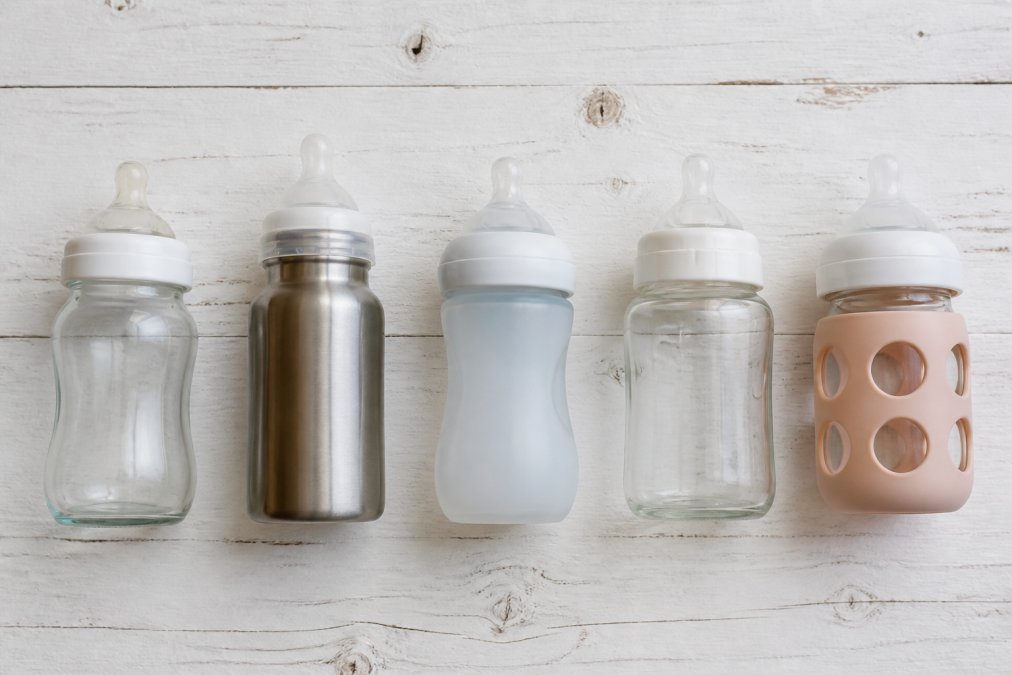
| Bottle Type | Material | Anti-Colic Venting | Dishwasher Safe | Best For |
|---|---|---|---|---|
| Borosilicate Glass | Food-grade glass | Varies by brand | Yes (top rack) | Chemical safety priority |
| Food-Grade Stainless Steel | 18/8 steel | Varies by brand | Yes | Travel and durability |
| Medical-Grade Silicone | Silicone | Basic | Yes | Lightweight feeding |
| Wide-Neck Glass with Venting | Borosilicate glass | Advanced venting system | Yes (top rack) | Latch and anti-colic |
| Hybrid Stainless with Silicone Sleeve | Steel + silicone | Varies by brand | Yes | Drop resistance |
1. Borosilicate Glass Bottles: Best Overall for Chemical Safety
Borosilicate glass is the gold standard for chemical inertness. Unlike standard soda-lime glass, it contains no chemical plasticizers, phthalates, or BPS, and produces zero microplastic particles. It is non-porous, preventing bacteria from embedding in surface scratches.
The material's thermal shock resistance is a practical advantage. Borosilicate glass handles rapid temperature changes without cracking, a common failure point with cheaper glass.
What works: Absolute chemical transparency with no migration, leaching, or degradation over hundreds of sterilization cycles. Dishwasher safe on top rack. Easy to visually inspect for residue.
What doesn't: Weight matters during overnight feeds. Breakage risk exists, though genuine borosilicate glass is far more resistant than standard glass.
Breast pump compatibility: Many borosilicate glass bottles use standardized neck diameters compatible with major breast pump collection systems, allowing direct pumping into the bottle. Verify neck diameter against your pump before purchasing.
End-of-life disposal: Glass is infinitely recyclable without quality degradation. Check with local recycling programs, as some systems separate borosilicate from standard glass.
2. Food-Grade Stainless Steel Bottles: Best for Durability and Travel
Food-grade stainless steel, specifically 18/8 or 304-grade, survives real family life. Drop it, toss it in a diaper bag, leave it in a hot car, stainless steel won't crack, shatter, or leach chemicals under heat stress.
The non-porous surface is a genuine hygienic advantage. Stainless steel doesn't harbor bacteria in micro-scratches and tolerates high-temperature sterilization without degradation.
What works: Exceptional durability, fully dishwasher safe, no chemical migration, and vacuum-seal versions maintain milk temperature for hours during travel and daycare.
What doesn't: You can't see fill levels or visually inspect the interior, making thorough cleaning discipline more important. Stainless steel conducts heat, so always check exterior temperature before handing to a baby.
Microplastic consideration: Food-grade stainless steel produces no microplastics, a meaningful distinction from plastic bottles where research documents particle shedding during normal use and sterilization.
End-of-life disposal: Stainless steel is highly recyclable and retains full material value through recycling.
3. Medical-Grade Silicone Bottles: Best for Lightweight Feeding
Medical-grade silicone is softer than glass or steel, making it easier for small hands to grip and more comfortable during overnight feeds. It's phthalate-free, BPA-free, and BPS-free by material composition.
The material is hypoallergenic and heat-resistant, tolerating sterilization temperatures without releasing chemical byproducts. Many parents find silicone bottles feel more similar to breastfeeding, supporting latch transition.
What works: Lightweight, ergonomic, and genuinely soft. Easier for babies to self-hold as they develop grip strength. Good thermal insulation.
What doesn't: Silicone can absorb odors over time. It's harder to visually inspect for residue. Some lower-quality silicone has tested positive for trace chemical migration under repeated high-heat sterilization.
End-of-life disposal: Silicone is not widely recyclable in standard municipal programs. Specialized recycling programs exist but require separate drop-off.
4. Wide-Neck Glass Bottles with Venting System: Best for Latch and Anti-Colic
Wide-neck design combined with engineered venting addresses two common feeding problems: nipple confusion during breast-to-bottle transition and gas pain from air ingestion.
Wide-neck nipples with a broad, flat base replicate breast shape and compression mechanics, supporting deeper, more natural latch. This matters significantly for parents combining breastfeeding and bottle feeding.
Advanced venting systems use a tube or valve mechanism that draws air into the bottle's bottom rather than through the nipple, maintaining consistent milk flow without negative pressure. This mechanism reduces colic symptoms.
What works: The wide-neck opening makes thorough cleaning significantly easier. The borosilicate glass body retains all chemical safety advantages.
What doesn't: Wide-neck bottles are bulkier and don't fit standard bottle pockets on many diaper bags. The venting system adds components requiring disassembly for cleaning.
Breast pump compatibility: Wide-neck bottles frequently fit wide-neck pump flanges, reducing transfer steps and contamination risk during expressed milk handling.
According to CDC guidelines on safe breast milk storage and handling, minimizing container transfers reduces contamination risk.
5. Hybrid Stainless Steel with Silicone Sleeve: Best for Drop Resistance
The hybrid approach solves stainless steel's grip limitation. A food-grade stainless steel inner body paired with medical-grade silicone outer sleeve provides chemical safety and durability with ergonomic grip and thermal insulation.
The silicone sleeve absorbs impact on drops, protecting both bottle and floor. For older babies learning to self-feed, this is practical rather than clever.
What works: Steel interior means no chemical migration. Silicone sleeve provides grip and cushions drops. Genuinely dishwasher safe, though the sleeve should be removed for thorough cleaning.
What doesn't: The sleeve adds cleaning complexity; residue can accumulate between sleeve and bottle if not separated regularly. The hybrid design typically costs more.
End-of-life disposal: The two materials must be separated for recycling. Steel is fully recyclable; silicone faces limited recycling infrastructure.
Glass vs Stainless Steel Baby Bottles: Which Is Safer?
Glass and stainless steel are both significantly safer than polycarbonate plastic. Both are non-leaching, non-porous, and free from endocrine disruptors. The difference is practical performance.
Glass wins on transparency, you can see the interior and confirm cleanliness visually. Stainless steel wins on durability and travel resilience. For home use with infants, glass is stronger. For travel, outdoor use, or older babies who drop bottles, stainless steel is more practical.
Microplastics, Leaching, and Long-Term Chemical Migration
Research documented by peer-reviewed studies on microplastic release from plastic baby bottles has found that standard polypropylene plastic bottles release significant microplastic particles during normal use, particularly when formula is prepared with high-temperature water and the bottle is shaken.
Glass and stainless steel produce zero microplastics under any normal use or sterilization condition. This is a categorical difference.
Chemical migration, where compounds from bottle material transfer into liquid contents, concentrates in plastic bottles. Heat, acidic liquids, and repeated sterilization cycles accelerate chemical release from the polymer matrix. Glass migration is effectively zero; food-grade stainless steel is specifically formulated to resist migration.
Lead, Heavy Metal Testing, and What Certifications Actually Mean
Lead and heavy metal contamination typically enters through colorants and pigments in painted designs or manufacturing process contamination in lower-quality facilities.
The CPSC enforces a 100 ppm lead limit under the Consumer Product Safety Improvement Act, but testing is not always independently verified for every batch. Third-party testing through NSF International or ASTM-certified laboratories provides stronger assurance than manufacturer self-certification.
Choose bottles with plain exteriors or food-safe printed designs from manufacturers publishing third-party test results. Avoid bright painted external patterns where paint source is undisclosed. For stainless steel, verify the grade is documented as 18/8 or 304.
Certifications that carry weight:
- NSF/ANSI 51 (food equipment materials)
- ASTM F963 (toy safety standard)
- California Proposition 65 compliance
- SGS or Bureau Veritas third-party testing
Certifications carrying less weight: "BPA-free" (marketing claim, not certification), "food-grade" without grade specification, and "non-toxic" without independent verification.
How to Clean Non-Toxic Baby Bottles the Right Way
Proper cleaning and sterilization matters as much as material selection. A borosilicate glass bottle cleaned carelessly is less safe than a well-maintained stainless steel bottle.
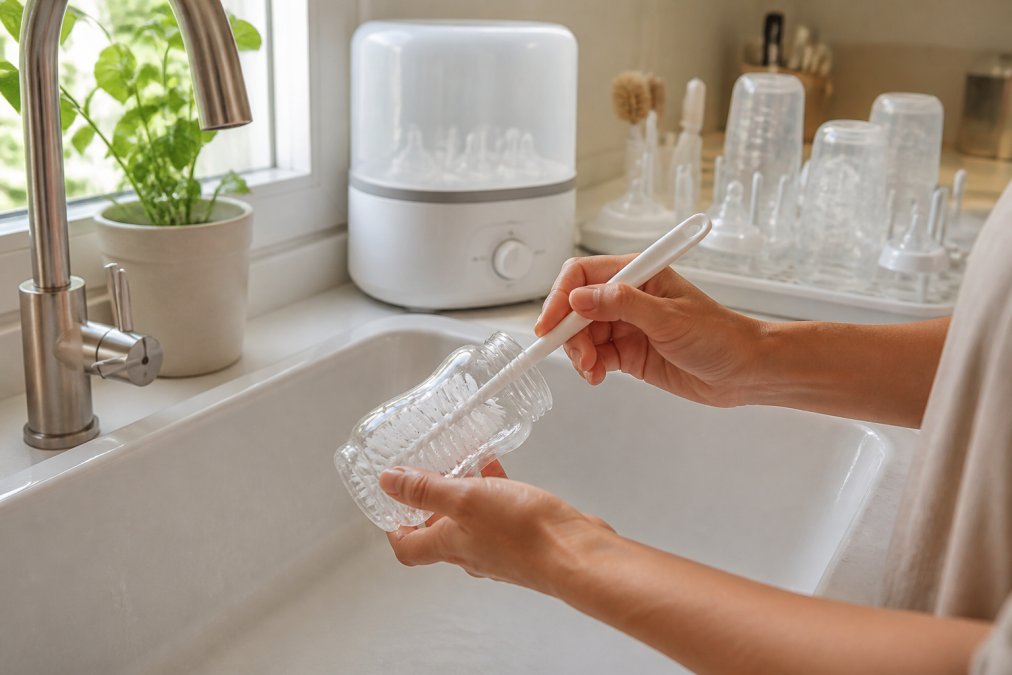
The standard cleaning sequence:
- Rinse immediately after each feed
- Disassemble fully: bottle body, nipple, collar ring, venting components
- Wash each component separately with warm water and fragrance-free dish soap
- Use a dedicated bottle brush sized for the bottle's interior diameter
- Rinse thoroughly to remove all soap residue
- Sterilize according to material: glass and steel tolerate boiling and steam sterilizers; silicone tolerates steam but check manufacturer guidance
- Air dry on a clean rack
For dishwasher cleaning: glass and stainless steel are generally dishwasher safe on the top rack. Silicone components and nipples should be placed in a mesh basket to prevent warping. Run the hottest cycle available for effective sanitization.
| Bottle Type | Chemical Safety | Microplastics | Durability | Ease of Cleaning | Best Use Case |
|---|---|---|---|---|---|
| Borosilicate Glass | Highest | Zero | Moderate | Easy (visual inspection) | Home feeding, chemical-sensitive babies |
| Food-Grade Stainless Steel | Very High | Zero | Highest | Good (no visual check) | Travel, daycare, older babies |
| Medical-Grade Silicone | High | Zero | Moderate | Moderate (odor retention) | Lightweight, grip-focused feeding |
| Wide-Neck Glass + Venting | Highest | Zero | Moderate | Good (more components) | Breastfed babies, anti-colic priority |
| Hybrid Steel + Silicone Sleeve | Very High | Zero | Highest | Moderate (two-part clean) | Drop-prone environments |
Feeding a newborn involves enough uncertainty without worrying about whether the bottle itself adds to the chemical load. The five non-toxic baby bottle types reviewed here all represent meaningful upgrades over standard polycarbonate plastic. Match the material to your actual feeding situation: glass for home-based chemical safety priority, stainless steel for durability and travel, silicone for lightweight ease, wide-neck vented glass for breastfed babies managing latch, and hybrid construction for drop-prone environments.
Tender Tots & Wellness curates baby gear with material-first thinking, offering products chosen to fit a modern family's needs without compromising on safety. Browse our selection with free worldwide shipping and find the bottle that fits your feeding routine.
Frequently Asked Questions
What is the most non-toxic baby bottle material available?
Borosilicate glass is the most chemically inert option for non-toxic baby bottles. It is non-porous, free from BPA, BPS, phthalates, and PVC, and does not leach chemicals even when heated repeatedly. Food-grade stainless steel is a close second, offering similar chemical safety with added durability. Both materials produce no measurable microplastics and are free from endocrine disruptors, making them the top choices for health-conscious parents.
Which baby bottles do not have microplastics?
Glass and stainless steel baby bottles do not shed microplastics during use or sterilization. Research has shown that standard plastic bottles can release millions of microplastic particles per liter of formula, particularly when exposed to heat. Medical-grade silicone bottles also present a significantly lower microplastic risk than polypropylene plastic. Choosing any of these three materials over conventional plastic is the most direct way to reduce your baby's microplastic exposure during feeding.
Are glass baby bottles safer than stainless steel for newborns?
Both are among the safest options, but each has trade-offs. Glass baby bottles, especially those made from borosilicate glass, are fully transparent so you can monitor milk levels easily, and they carry zero risk of chemical migration. Stainless steel baby bottles are virtually unbreakable, lighter for travel, and maintain temperature longer. For newborns at home, glass is often preferred. For on-the-go use or older infants, stainless steel tends to be more practical.
How can I tell if a baby bottle is truly BPA-free and non-toxic?
Look beyond the BPA-free label. A bottle can be BPA-free but still contain BPS or other bisphenol compounds that act as endocrine disruptors. Check for third-party certification from bodies like the CPSC or NSF, and look for bottles labeled phthalate-free and PVC-free as well. Bottles made from borosilicate glass, food-grade stainless steel, or medical-grade silicone offer the most complete protection because they avoid the entire class of chemical migration risks associated with plastics.
Do silicone baby bottles leach chemicals into milk or formula?
Medical-grade silicone is considered hypoallergenic and highly stable. Under normal feeding and sterilization conditions, it does not leach measurable levels of harmful chemicals. However, silicone quality varies between products. Always choose bottles certified as medical-grade or food-grade silicone. Avoid silicone bottles with fillers or additives, which can be identified by pinching the bottle: if white residue appears, the silicone may be low-grade. High-quality silicone bottles are dishwasher safe and maintain their integrity through repeated sterilization.
This article was written using GrandRanker