

Open-Ended vs Structured Play: Benefits Compared
Table of Contents
- Open-Ended vs Structured Play: A Quick Comparison
- Benefits of Open-Ended Play for Toddlers
- Structured Play Benefits: Building Skills Through Guided Activities
- Examples of Structured Play Activities
- Open-Ended vs Closed-Ended Toys: What to Look For
- How to Balance Both Types of Play at Home
- Age-by-Age Play Progression and the Parental Burnout Factor
- Conclusion
- Frequently Asked Questions
Last Updated: September 18, 2026
Open-Ended vs Structured Play: A Quick Comparison
The open-ended play vs structured play benefits debate misses the point: kids need both. Open-ended play is child-led activity with no fixed outcome, while structured play follows adult-set rules or goals. At Tender Tots & Wellness, we see families thrive when they treat the two as partners, not rivals.
| Feature | Open-Ended Play | Structured Play |
|---|---|---|
| Who leads | Child | Adult or rules |
| Main strength | Creativity, exploration | Skill building, focus |
| Best age range | Toddlers through early elementary | Preschool and up |
| Example | Block tower, pretend kitchen | Puzzle, guided craft |
| Watch for | Mess and loose parts | Too much adult control |
Benefits of Open-Ended Play for Toddlers
Open-ended play for toddlers builds the foundation everything else rests on. When a child decides what a wooden block becomes, they practice decision-making and cognitive flexibility without an adult correcting them.
The benefits of open-ended play for toddlers include:
- Problem-solving skills built through trial and error
- Language acquisition as they narrate their own stories
- Sensory exploration with different textures and materials
- Early self-regulation when they choose to keep going or stop
Structured Play Benefits: Building Skills Through Guided Activities
Structured play benefits come from repetition, clear goals, and a defined finish line. When an activity has a known endpoint, children practice planning, sequencing, and following through, the same cognitive loop they will use to complete a worksheet, finish a chore, or follow a coach's drill.
Here is what structured play actually builds, and how:
- Working memory, remembering the rules of a board game or the next step in a build while doing the current one
- Inhibitory control, waiting for a turn, resisting the urge to grab, staying with a task when it gets boring
- Cognitive flexibility, switching strategies when a puzzle piece doesn't fit the way they expected
- Sequencing and planning, knowing that step three depends on step two
- Frustration tolerance, finishing something hard without an adult rescuing them
Examples of Structured Play Activities
Examples of structured play activities range from five-minute games to full afternoon projects. The key is that an adult sets the goal, even if the child does the work.
Try these at home:
- Puzzles and matching games for visual discrimination
- Guided building sets like the Tender Tots Kids Electric Drill 3D Puzzle Dinosaur Assembly Toy Set, where kids follow steps to assemble a dinosaur
- Word games such as WordWise Blocks, which pairs wooden blocks with 40 activity cards
- Flash card sessions with the Tender Tots Talking Flash Cards, which reads each card aloud for phonics practice
- Cooking or baking with measured ingredients
- Simon-says and freeze dance for listening skills
Open-Ended vs Closed-Ended Toys: What to Look For
Open-ended vs closed-ended toys is really a question of how many ways a child can use something. Open-ended materials have no single correct outcome. Close-ended toys have one intended result, like a puzzle with a fixed picture.


| Toy Type | Example | Strength |
|---|---|---|
| Open-ended | Wooden blocks, play silks | Creativity, exploration |
| Closed-ended | Jigsaw puzzle, shape sorter | Focus, problem-solving |
| Hybrid | Build-and-disassemble sets | Both, depending on use |
How to Balance Both Types of Play at Home
Balancing both types of play at home comes down to rhythm, not rigid scheduling. Aim for long stretches of child-led time and short, focused windows of guided activity.

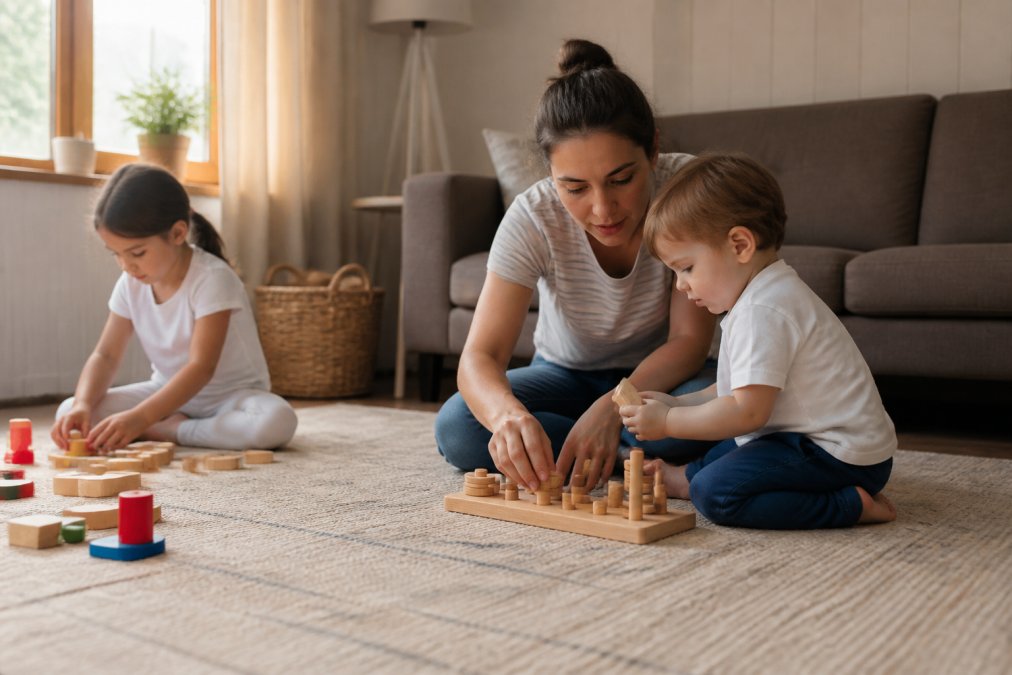
A simple daily pattern works for most families:
- Morning: open-ended play while you handle chores nearby
- Midday: one structured activity, 10-20 minutes
- Afternoon: free exploration, indoors or out
- Evening: quiet guided play like reading or a simple game
Age-by-Age Play Progression and the Parental Burnout Factor
Play patterns shift with age, and so does what parents can realistically sustain. Most articles on this topic treat the child in isolation. This one treats the household as a system, because the parent's capacity is the single biggest variable in how much structured play actually happens.
What the progression looks like
| Age | Open-Ended Focus | Structured Focus | Parent's Job |
|---|---|---|---|
| 1-2 years | Sensory exploration, free movement, dumping and filling | Simple cause-and-effect toys, songs with actions | Stay nearby, narrate, resist directing |
| 2-3 years | Pretend play, block building, messy art | Matching, sorting, simple board books, follow-the-leader | Set the stage, then step back |
| 3-4 years | Imaginative play, storytelling, art with no model | Puzzles, guided building, memory games | Introduce a goal, then let them own it |
| 4-6 years | Complex pretend, cooperative storytelling, invention | Board games, STEM sets, sports drills, cooking with steps | Coach, don't control |
| 6+ years | Independent projects, hobby exploration, free outdoor play | Organized sports, music practice, structured clubs | Protect unstructured time as it shrinks |
The trend is consistent: open-ended play carries the early years, structured play grows as attention spans and social awareness develop, and by school age the risk flips, structured time crowds out free time rather than the reverse.
When the timeline doesn't fit
For neurodivergent children, this progression can look very different, and forcing the standard timeline usually backfires. Children with sensory processing differences often need more structure to feel safe, predictable routines and known endpoints reduce anxiety rather than stifle creativity. Autistic children may show deep, sustained focus in open-ended play around a specific interest, and that intensity is a strength, not a deficit.
The parental burnout factor
Parental burnout is real, and it directly changes how much guided play a household can sustain. The guilt many parents carry about "not playing enough" or "not making it educational" is itself a barrier, it turns play into another performance metric, and exhausted parents disengage entirely rather than do it imperfectly.
A few reframes that help:
- Ten engaged minutes beat an hour of stressed supervision. Quality of attention matters more than duration.
- Open-ended play is your ally on hard days. It does not require you to lead, plan, or produce a result. Setting out materials and sitting nearby is enough.
- Boredom is not neglect. A child staring at a pile of blocks is often deciding, not stuck. Resist the urge to rescue.
- Structured play can be outsourced. A library story time, a grandparent's board game, or a sibling's puzzle session all count.
- Lower the bar on low-capacity days without guilt. The goal is a weekly pattern, not a daily performance.
Conclusion
Figuring out the right mix of play takes trial and error, and every child's needs shift as they grow. Tender Tots & Wellness curates Montessori-inspired toys and baby gear chosen to support both open-ended exploration and guided skill building, with free worldwide shipping and high-quality items at fair prices. Our customers often tell us the products feel carefully selected for real modern families, not just marketing.
Frequently Asked Questions
What are the benefits of open-ended play?
Open-ended play builds creativity, problem-solving skills, and independent thinking because children decide how to use materials. A cardboard box becomes a spaceship or a castle. Research links this child-led exploration to stronger cognitive flexibility and self-regulation. For toddlers, it also supports language acquisition as they narrate their own play. The lack of fixed rules means every session looks different, which keeps young children engaged longer than toys with a single correct outcome.
What are the benefits of structured play?
Structured play benefits include building specific skills through guided activities. When an adult leads a game with rules, children practice following directions, taking turns, and working toward a goal. Activities like sorting games or board games strengthen executive function and social-emotional intelligence. Structured play also introduces school readiness skills such as counting, letter recognition, and sitting with a task. The predictability helps children who feel overwhelmed by too many choices.
What is the difference between open-ended and closed-ended toys?
Open-ended toys have no single correct way to play. Blocks, wooden tools, and pretend-play sets fit this category because a child decides what they become. Closed-ended toys have one intended outcome, like a puzzle with a fixed picture or a flash card with one right answer. Both have value. Open-ended vs closed-ended toys serve different purposes: open-ended materials build creativity and exploration, while closed-ended toys teach specific skills and give children a clear sense of accomplishment.
How can parents balance free play with guided learning at home?
Aim for a rough split where most of the day is child-led and shorter windows are adult-guided. Mornings often work well for open-ended exploration when energy is high. Reserve 10 to 15 minutes for a structured activity like a word game or a sorting task. Rotate toys so both types stay fresh. Watch your child's cues: if they are deeply absorbed in pretend play, let it run. If they seem restless or bored, offer a guided activity to reset.
At what age should children start engaging in structured activities?
Most children can handle short structured activities around age 2, when they begin following simple two-step directions. Keep sessions to 5 to 10 minutes at this age. By age 3 or 4, many children can sit through a 15-minute guided game. Before age 2, open-ended sensory exploration and free movement matter more than formal instruction. The key is matching the activity length to your child's attention span, not forcing a schedule that does not fit their developmental stage.
The open-ended play vs structured play benefits question has a clear answer: children need both, and the ratio changes with age and temperament. Start with more free play in the toddler years, layer in guided activities as focus grows, and let your child's cues lead the way.