

How Many Newborn Outfits Should You Actually Buy?
Last Updated: November 17, 2026
Quick Summary
Plan for 8 to 10 newborn outfits in rotation, which works out to roughly 6 bodysuits, 4 sleepers, 4 pairs of pants, 4 socks, 2 hats, and 2 to 3 swaddles. That count covers a baby who spits up, leaks, and needs a fresh change two to four times a day. Buy the low end of each range first, then top up once you know your baby's change rate.
- Run laundry every other day and 8 newborn outfits is plenty; weekly laundry needs closer to 14.
- The formula is daily changes (3) times days between washes plus 2 backup outfits.
- If you skip the newborn size, plan for 10 to 12 pieces in 0-3 months.
- Pack 3 to 4 newborn outfits for the hospital, plus one going-home outfit.
- A minimal newborn capsule can be built from around 20 pieces total.
Table of Contents
- How Many Newborn Outfits Do You Really Need?
- Your Baby Clothes Checklist 0-3 Months, by Clothing Type
- How Many 0-3 Clothes Do I Need If I Skip the Newborn Size?
- How Many Outfits Does a Newborn Need at the Hospital?
- How Many Baby Clothes Do I Need for Each Size?
- A Minimal, Budget-Friendly Newborn Capsule
- Safety and Sleepwear Rules Every Parent Should Know
- Build Your Starter Wardrobe at Tender Tots & Wellness
- Frequently Asked Questions
How Many Newborn Outfits Do You Really Need?
Most new parents buy too many newborn outfits and too few of the pieces that actually get used.
First-time parents often worry: what if it's not enough? The bigger risk is the opposite. Babies outgrow the newborn size fast, often within a few weeks, and a drawer full of unworn pieces is money you cannot get back.
Below, we break down the count by clothing type, by size, and by laundry schedule, so you buy what gets worn.
The laundry math that decides your count
Your washing frequency sets your real number. Run laundry every other day and 8 newborn outfits is plenty. Stretch it to once a week and you need closer to 14.
Here is the simple formula we recommend: daily changes (3) × days between washes + 2 backup outfits. A baby who goes through three outfits a day with laundry every two days needs 8. Same baby, weekly laundry, needs 23 pieces, which is why most parents do not wait a full week.
A common mistake is counting outfits instead of counting changes. Spit-up, diaper leaks, and feeding messes drive the real number, not the calendar.
American Academy of Pediatrics newborn care guidance
Your Baby Clothes Checklist 0-3 Months, by Clothing Type
Here is the baby clothes checklist 0-3 months that covers a full starter wardrobe without overbuying. Buy the low end of each range first, then top up once you know your baby's change rate.
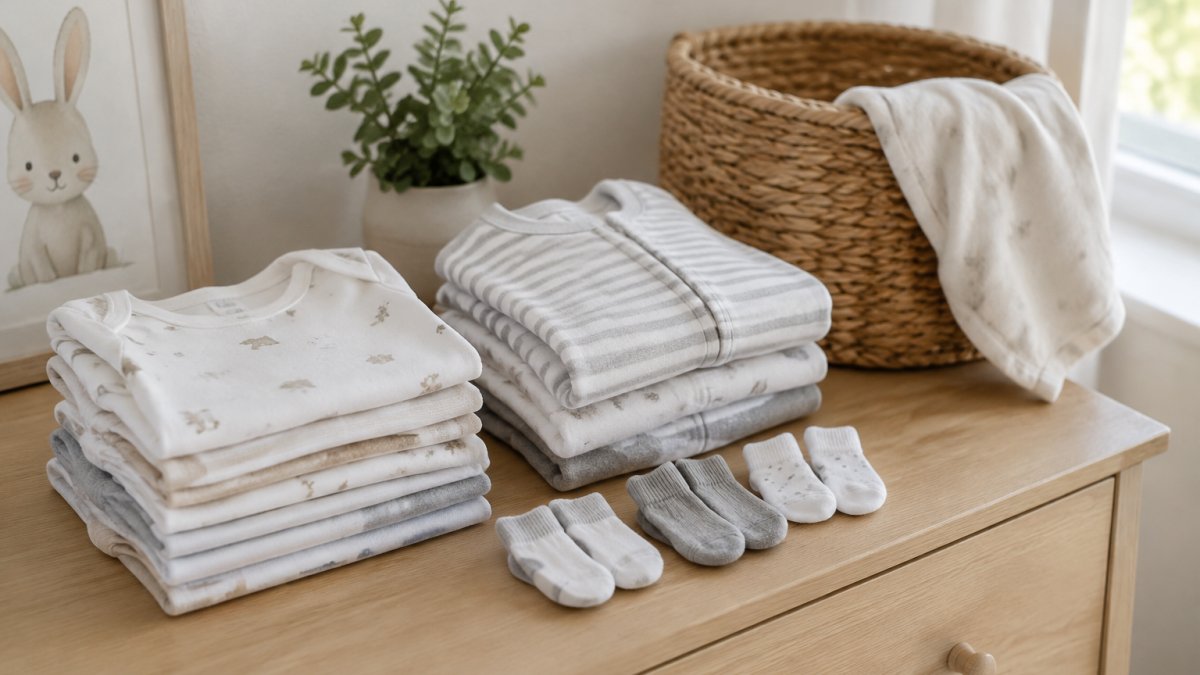
Bodysuits, sleepers, pants, socks and swaddles in one table
| Clothing Type | How Many to Buy | Why This Number |
|---|---|---|
| Bodysuits / onesies | 6-8 | Base layer, changed most often |
| Sleepers / footies | 4-6 | Night changes and cooler days |
| Pants / bottoms | 4-5 | Layers over bodysuits |
| Socks | 4-6 pairs | One always goes missing |
| Hats | 2-3 | Going home and chilly outings |
| Swaddles | 2-3 | One in use, one in the wash |
| Gowns | 2-3 | Optional, easy night changes |
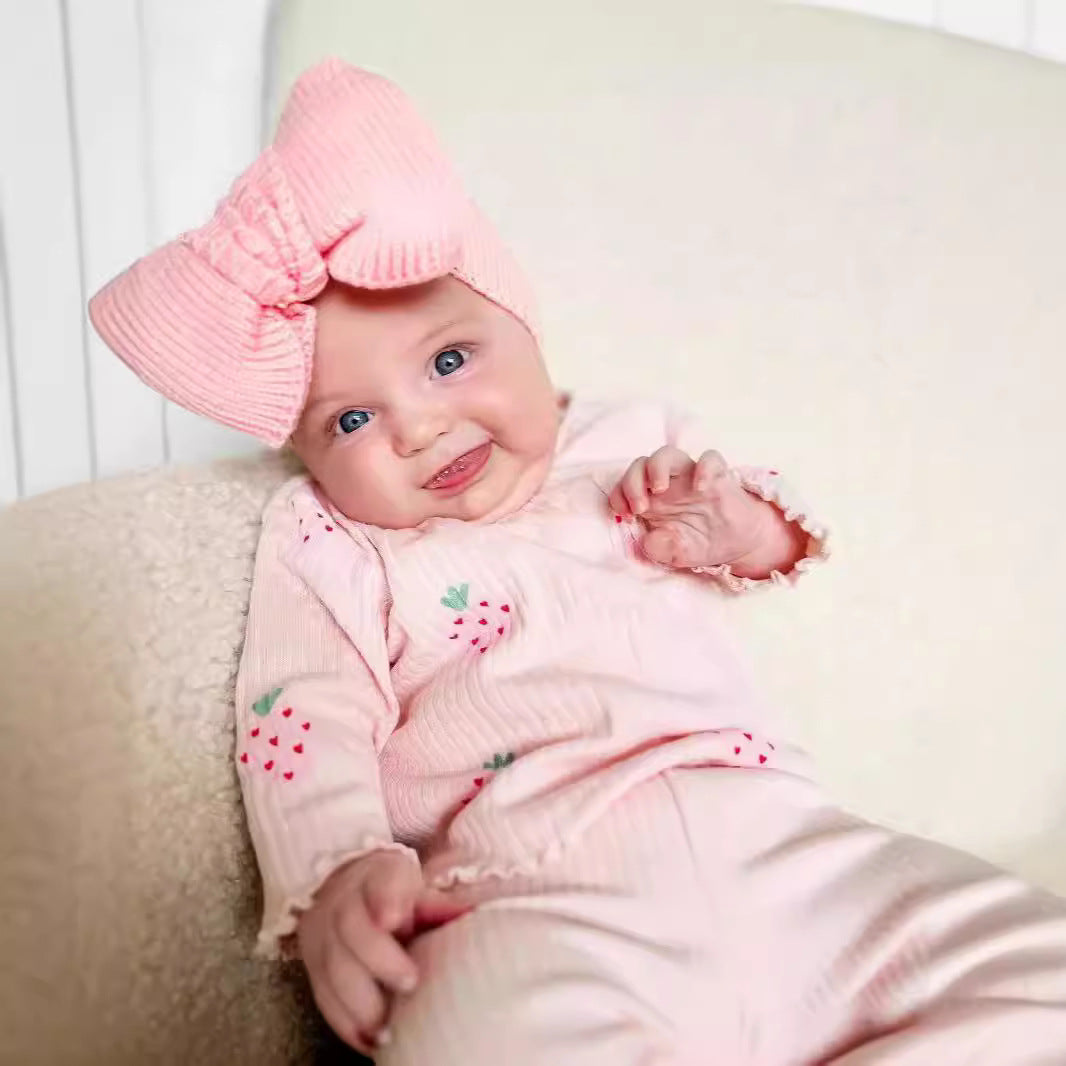
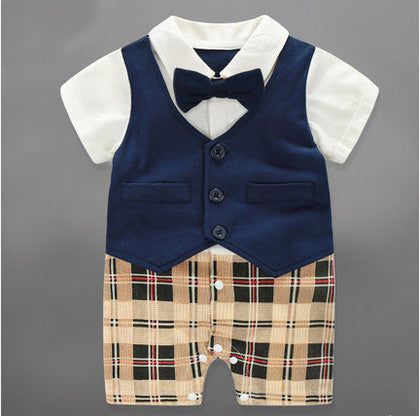
Start with the low number in each row. A Baby Cotton Onesie snaps at the bottom for fast changes and layers under pants. A Baby 3-Piece Outfit Set covers a printed top, pants and hat in one purchase.
How Many 0-3 Clothes Do I Need If I Skip the Newborn Size?
If you skip the newborn size, plan for 10 to 12 pieces in 0-3 months instead of 8 to 10. You are buying for a slightly longer window, so a little more volume pays off.
Many parents now skip newborn entirely. Babies are often born closer to the 0-3 month range, and newborn sizing can be outgrown in two or three weeks.
A practical approach is to buy a small newborn capsule (4 to 6 pieces) plus a fuller 0-3 month drawer. That way you are covered either way without a full duplicate wardrobe.
How Many Outfits Does a Newborn Need at the Hospital?
Pack 3 to 4 newborn outfits for the hospital, plus one going-home outfit. Most hospitals supply a shirt and blankets during the stay, so your bag is mostly for photos, the ride home, and spares. The real planning challenge is not the count, it is the size uncertainty and the weather on discharge day.
What to pack:
- 2 bodysuits
- 2 sleepers or footies
- 1 going-home outfit, weather-appropriate
- 1 hat and 1 pair of socks
- 1 swaddle or receiving blanket
Plan for size uncertainty, not just quantity
You will not know your baby's fit until after birth, and hospital staff typically weigh and measure within the first hour. A common pattern is to pack one newborn-size going-home outfit and one 0-3 month outfit, then choose based on the actual fit rather than the label. If your baby arrives early or small, the newborn size may be the only one that does not swim; if your baby arrives at 8 pounds or more, the 0-3 month set is often the better call.
Weather and discharge-day decisions
Check the forecast for your discharge date, not your due date. A going-home outfit for cold weather should include a hat, socks, and a sleep sack or swaddle for the car seat; for warm weather, a single bodysuit and a light swaddle are enough. Car-seat safety matters here: bulky coats and thick sleepers can interfere with harness fit, so dress your baby in a normal layer and add a blanket over the harness after buckling (Winter Car Seat Safety Tips: Keeping Kids Safe & Warm).
What hospitals usually supply, and what they do not
Most hospitals provide a shirt, blankets, diapers, and wipes during the stay, and many send you home with a few extras. They generally do not provide going-home clothes, a car seat, or weather-specific layers. Call your hospital's maternity unit before packing; policies vary, and some now limit what they hand out. Keep the bag light, you will be carrying enough on the way out, and nurses usually have spares if something gets messy.
How Many Baby Clothes Do I Need for Each Size?
The short answer: 8 to 10 outfits per size is the working number for most families. But the more useful answer is a flexible plan, buy a small starter set before birth, then fill in each size once you see how fast your baby is growing and how often you are doing laundry. This is the approach most ranking guides skip, and it is the one that prevents both underbuying and a drawer of unworn pieces.
A buy-before and buy-after plan
Before birth, buy only the newborn and 0-3 month starter sets: roughly 4 to 6 newborn pieces and 6 to 8 pieces in 0-3 months. Wait to buy 3-6 months and up until your baby is born and you have a sense of growth rate. A common pattern is that newborn fits for two to four weeks, 0-3 months for six to ten weeks, and 3-6 months longer still, but the range is wide, and birth size shifts it. If your baby is born under 7 pounds, newborn may last longer; if over 8 pounds, you may move to 0-3 months within days.
Adjust the count to your laundry schedule
The 8-10 baseline assumes laundry every two to three days. If you wash daily, you can drop to 6 to 8 pieces per size; if you stretch to weekly, plan for 14 or more. Use the same formula from the laundry section: daily changes (3) × days between washes + 2 backup outfits. A baby who goes through three outfits a day with laundry every other day needs 8; the same baby with weekly laundry needs 23, which is why most families do not wait a full week. The count per size should follow your routine, not a single average.
Adjust for feeding, spit-up, and diaper leaks
Baseline counts assume two to four changes a day. Formula-fed babies and babies who spit up heavily often push toward the high end; breastfed babies with frequent feeding messes may need more bodysuits than sleepers. Diaper leaks, more common in the first weeks as you learn fit, can add one or two extra changes a day. If you notice a pattern, add two to three pieces in the category that gets soiled most, rather than buying more of everything.
When to size up
Stop buying a size when the snaps or feet start to pull, when the neckline gaps, or when you are down to the last two clean pieces between washes. Our guide on how to transition a baby wardrobe between sizes walks through when to stop buying one size and start the next, including how to rotate out pieces that no longer fit.
A Minimal, Budget-Friendly Newborn Capsule
A minimal newborn capsule can be built from around 20 pieces total, and it covers a baby's first weeks without a single wasted item. This is the budget-conscious route, and it works.
The capsule list:
- 6 bodysuits
- 4 sleepers
- 3 pants
- 4 pairs of socks
- 2 hats
- 2 swaddles
- 1 going-home outfit
That is it. Everything else is optional. Resist the urge to buy sweaters, dresses, and novelty outfits before birth.
If you are choosing fabrics, our 7 steps to select soft cotton outfits for newborns covers what to look for, from breathability to easy snaps.
Safety and Sleepwear Rules Every Parent Should Know
Sleepwear is the one category where safety beats quantity. Follow the Consumer Product Safety Commission guidance on infant sleep and keep sleep simple.
- Choose snug-fitting sleepwear. Loose fabric is a hazard.
- Skip loose blankets in the crib. Use a swaddle or sleep sack instead.
- Dress baby in one layer more than you would wear, no more.
- Avoid drawstrings, ties, and anything that could snag.
Watch out: a cute loose gown is fine for supervised awake time, but it does not belong in the crib. Fit and fabric matter more than style here.
Build Your Starter Wardrobe at Tender Tots & Wellness
The right newborn wardrobe is smaller than you think, and better chosen.
At Tender Tots & Wellness, you can find baby clothing for everyday needs. Our Pure Cotton Newborn Baby Gift Set is made from 100% cotton and is designed for all seasons.
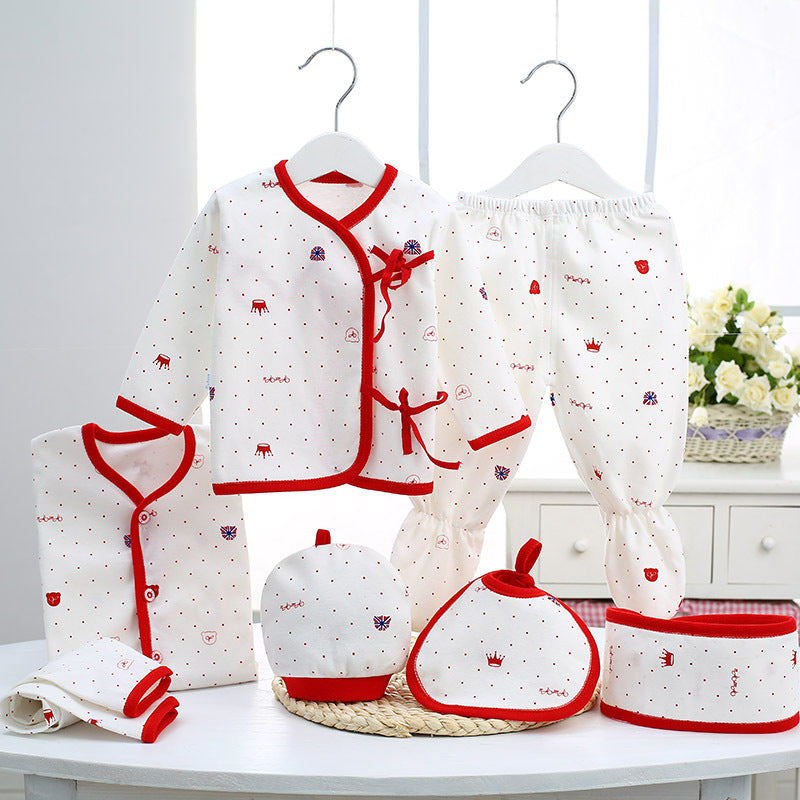
Get started with Tender Tots & Wellness and build a starter wardrobe that fits from day one.
Start with the capsule list, not the whole store. Buy the pieces your baby will wear this week, keep the receipts, and add as you learn your baby's rhythm.
Frequently Asked Questions
How many newborn outfits do you actually need?
Most parents do well with 8 to 10 outfits in newborn size, plus a few backups. That covers roughly one outfit per day with room for spit-up and diaper leaks, assuming you run a load of baby laundry every two to three days. If you plan to wash less often, add three or four more bodysuits and sleepers. Skip the 20-outfit stockpile: many babies outgrow newborn size within three to five weeks, and several pieces will never be worn.
Should I buy newborn onesies or 0-3 months?
Buy a small newborn set and put most of your budget into 0-3 months. Birth weight varies widely, and babies who arrive over roughly 8 pounds often skip newborn sizing entirely. A practical split is 6 to 8 newborn bodysuits and sleepers, then 12 to 15 pieces in 0-3 months. Keep tags on the newborn items and check the brand's size chart, since some lines run one to two sizes small. Sizing up is usually the safer call when your baby is between sizes.
How many outfits does a newborn need at the hospital?
Pack two to three going-home outfits, not a full wardrobe. Hospitals supply diapers, wipes and often a shirt or swaddle during your stay, so you mainly need something clean for photos and the ride home. Bring one newborn-size outfit, one 0-3 month option in case your baby is larger than expected, a hat, socks, and a swaddle or blanket. Add a spare bodysuit in case of a diaper blowout before discharge.
How many baby clothes do I need for each size?
A workable rule is 8 to 10 pieces per size for the first six months, then 10 to 12 as babies get more mobile and messier. For each size, aim for 5 to 6 bodysuits, 3 to 4 sleepers, 3 to 4 pants, 2 hats, 4 to 6 pairs of socks and 2 to 3 swaddles. Buy the minimum in newborn size, then add more as your baby's growth curve becomes clear. This keeps you from overbuying clothes your baby outgrows before wearing.
