

How to Clean and Sanitize Baby Gear Properly
Table of Contents
- Cleaning vs. Sanitizing vs. Disinfecting Baby Gear
- What You'll Need: Safe Cleaning Products and Tools
- How to Clean Baby Toys (Without Soaking the Wrong Ones)
- How to Sanitize Baby Bottles and Feeding Items
- How to Clean a Stroller, Car Seat, and Other Gear That Can't Be Submerged
- How Often to Clean Baby Gear: A Realistic Schedule
- Cleaning After Illness, Spills, and Second-Hand Finds
- Common Mistakes to Avoid When You Clean and Sanitize Baby Gear
- Frequently Asked Questions
Last Updated: October 9, 2026
Cleaning vs. Sanitizing vs. Disinfecting Baby Gear
Learning how to clean and sanitize baby gear starts with one key fact: cleaning, sanitizing, and disinfecting are three different jobs.
Cleaning washes away visible dirt, milk residue, and fingerprints with soap and water. It removes germs but does not kill all of them.
Sanitizing kills most germs on a surface after it has been cleaned. Disinfecting kills nearly all of them and is usually saved for illness or spills.
What Each Term Actually Means
Order matters: clean first, sanitize second. Soap and water do the heavy lifting, a sanitizer cannot cut through dried formula or food.
- Clean: wash with soap and warm water, then rinse
- Sanitize: kill most germs on an already-clean item
- Disinfect: kill nearly all germs, typically after illness
Which Level of Clean Does Your Item Need?
Most baby items only need cleaning. Bottles, nipples, and anything touching milk or food need sanitizing too. Floor toys get regular washing; a stroller frame just needs a wipe-down.
The CDC guidance on cleaning and disinfecting makes the same point: routine cleaning with soap and water is enough for most surfaces, and disinfectant is reserved for when someone is sick.
What You'll Need: Safe Cleaning Products and Tools
You do not need a cabinet full of special products, a short list covers almost everything.
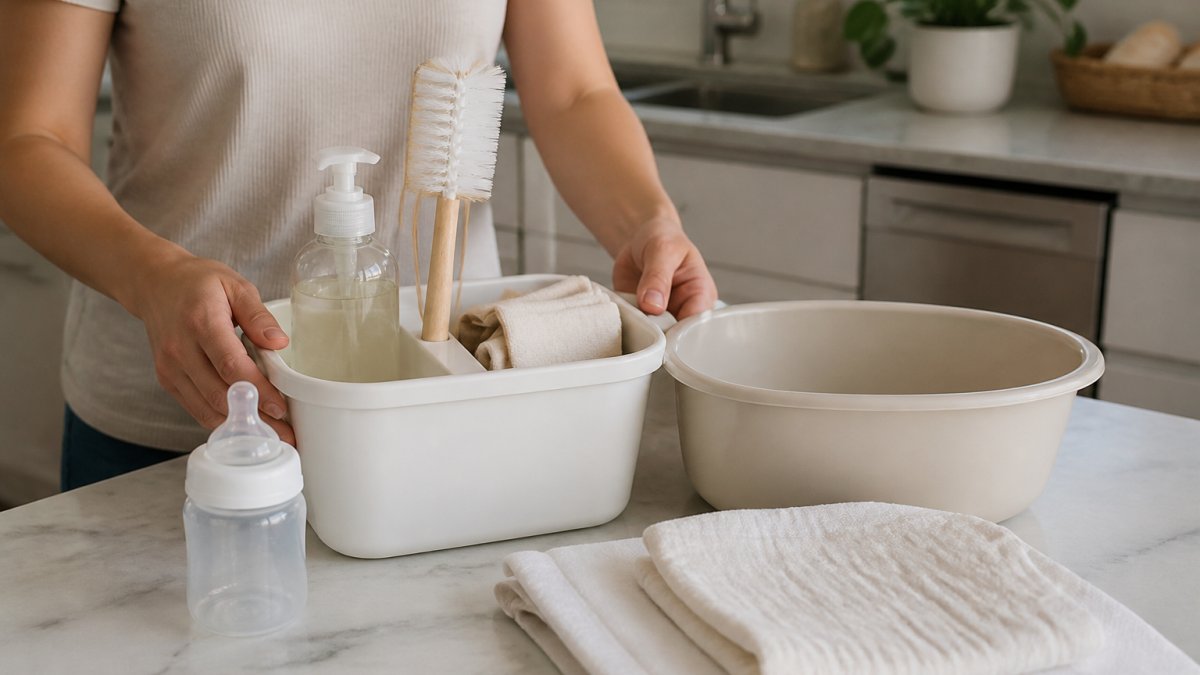
- Mild dish soap or a fragrance-free baby detergent
- A bottle brush and a small detail brush for crevices
- A dedicated wash basin, kept separate from food prep
Ingredients to Avoid
Skip antibacterial soaps with triclosan, and be careful with anything labeled "antibacterial." The FDA ruling on triclosan in consumer washes found no evidence these ingredients are safe and effective for long-term daily use.
Also avoid strong fragrances, harsh chemicals, and bleach on fabric or anything your baby mouths. If a product needs gloves and open windows, it does not belong near a crib.
How to Clean Baby Toys (Without Soaking the Wrong Ones)
How you clean a toy depends on its material. Soaking the wrong toy ruins it, and water trapped in a squeaker can grow mold.
Plastic, Wood, and Electronic Toys
- Plastic toys: wash in warm soapy water, scrub crevices with a small brush, rinse, and air-dry
- Wood toys: wipe with a damp cloth and mild soap, then dry right away. Never soak wood.
- Electronic toys: remove batteries, wipe the surface with a barely damp cloth, and dry fully before replacing batteries
For a deeper clean on plastic and silicone, a diluted bleach solution works if you rinse it completely and let it air-dry. The EPA list of registered disinfectants is where to confirm a product actually kills germs, not just cleans.
How to Sanitize Baby Bottles and Feeding Items
Bottles and feeding items need sanitizing because they hold milk and food, which germs love. Wash every part in hot soapy water with a bottle brush, especially the nipple, ring, and crevices.
Then pick one sanitizing method:
- Boiling: submerge in boiling water for a few minutes
- Steam: use a countertop steam sterilizer
- Diluted bleach: soak in a fresh solution, then rinse well and air-dry
Let everything air-dry on a clean rack, never towel-dry with a shared kitchen towel. Our 360° Rotate Spill-Proof Baby Bowl is top-rack dishwasher safe; keep it out of the microwave.

How to Clean a Stroller, Car Seat, and Other Gear That Can't Be Submerged
Large gear gets spot-cleaned, never soaked, water can rust the frame, weaken straps, and damage padding. For a stroller, wipe the frame and handles with a damp cloth and mild soap, then dry, and vacuum crumbs from the basket.
Fabric items like the changing pad cover are the easy part. Our Pure Cotton Changing Pad Cover is removable and machine-washable, so a blowout does not mean a full scrub-down.

| Item | Method | Can It Get Wet? |
|---|---|---|
| Plastic toys | Soap and water, air-dry | Yes |
| Wood toys | Damp wipe only | No soaking |
| Electronic toys | Damp cloth, batteries out | No |
| Bottles and nipples | Wash, then sanitize | Yes |
| Stroller frame | Damp wipe | No |
| Car seat cover | Delicate cycle | Cover only |
| Car seat straps | Wipe only | Never |
How Often to Clean Baby Gear: A Realistic Schedule
Most guides say clean "regularly" and stop there. What helps is knowing which items have a hard cadence because they touch milk or mouths, which can wait for a weekly pass, and which only need attention when something happens. Use the table below as a starting rhythm, then adjust for your household.
Pure Cotton Changing Pad Cover – Soft, Removable & Washable | Fits Standard →
| Item | Routine cadence | Step up when |
|---|---|---|
| Bottles, nipples, rings, pump parts | After every use | Baby was sick, or milk sat out |
| Pacifiers and teethers | Daily wash; sanitize weekly | Dropped on the floor, illness, or new item |
| Plates, bowls, spoons, sippy cups | After every use | Illness or a shared utensil |
| High chair tray and seat | After every meal | Sticky buildup, illness, or raw-food contact |
| Plastic and silicone toys | Weekly wash | Mouthing by a sick child, or a floor spill |
| Plush toys and fabric blocks | Every 1-2 weeks | Illness, drool saturation, or visible soil |
| Play mats and activity gyms | Weekly wipe; launder cover monthly | Crawling baby with a cold, or pet traffic |
| Changing pad cover | Weekly, or sooner after blowouts | Any leak, illness, or diaper cream buildup |
| Crib sheets and sleep sacks | Weekly | Spit-up, leak, or illness |
| Stroller frame and handles | Monthly wipe-down | Illness, sticky hands, or a public outing |
| Stroller seat fabric | Monthly spot-clean; launder per manual | Spill, illness, or visible grime |
| Car seat cover | Per manual, often monthly or as needed | Spill, illness, or a second-hand purchase |
| Car seat straps and buckles | Wipe only, as needed | Never submerge; check manual for approved cleaners |
| Baby carrier | Every few wears; launder per tag | Spit-up, sweat, or illness |
| Bath toys | Weekly squeeze-and-dry; replace if moldy | Any black specks inside |
Why the Cadence Varies
Three factors drive how often an item needs attention:
- Mouth and food contact. Anything that goes in the mouth or holds milk, formula, or food has the shortest window. Germs multiply fastest in residue, so bottles and feeding items are daily.
- Hand and floor contact. Toys, play mats, and stroller handles collect whatever is on hands and floors. A weekly wash usually suffices, but a crawling baby who mouths everything raises the frequency.
- Body-fluid exposure. Crib sheets, changing pad covers, and carriers get soiled unpredictably. Treat any leak or spit-up as a trigger, not a calendar event.
A Realistic Weekly Rhythm
Trying to do everything on one day is how schedules collapse. A pattern that holds up:
- Daily: bottles, feeding items, pacifiers, high chair tray after meals.
- Midweek: a quick pass on toys and the play mat.
- Weekend: sheets, changing pad cover, plush toys, and a wipe-down of the stroller.
When to Clean More Often Than the Schedule Says
- Someone in the household is sick, or your baby is recovering.
- Your baby is in the mouthing stage and puts everything to their lips.
- You have pets, or the gear lives on a floor that sees outdoor shoes.
If you are ever unsure, clean it. Soap and water is low-risk and low-effort; the bigger risk is letting milk film or food residue become a biofilm a quick wipe will not remove.
Cleaning After Illness, Spills, and Second-Hand Finds
Routine cleaning keeps gear tidy. Illness, bodily-fluid spills, and second-hand purchases are the three situations where you step up to sanitizing or disinfecting, and each has its own sequence. Getting the order wrong is the most common reason a disinfectant fails.
The Universal Sequence: Clean, Then Disinfect, Then Let It Dry
Disinfectants do not work through dirt. A stomach bug, diaper blowout, or spit-up that sat overnight leaves an organic film that shields germs. The order is always:
- Remove visible soil with soap and water.
- Rinse so no soap residue remains.
- Apply the disinfectant according to the label.
- Leave it wet for the full contact time on the label, not a quick wipe-and-go.
- Let it air-dry completely, or rinse if the label says to rinse surfaces that touch food or mouths.
That fourth step is where most parents lose the benefit. A disinfectant claiming to "kill 99.9% of germs" usually means it does so after the surface stays visibly wet for a specified number of minutes. Wiping it dry after ten seconds just spreads the product around.
After a Stomach Bug or Respiratory Illness
Norovirus, rotavirus, and influenza are the illnesses most likely to move through a household via shared surfaces and hands.
For fabric that cannot be laundered, a car seat shell pad, a spot-clean-only stroller seat, clean with soap and water, then use a manufacturer-approved disinfectant or follow the manual's illness-cleanup instructions. When in doubt, launder anything removable and quarantine the rest until fully dry.
After a Bodily-Fluid Spill (Diaper Blowout, Vomit, Spit-Up)
- Put on disposable gloves if you have them.
- Remove solids with a paper towel and dispose of it in a sealed bag.
- Wash the area with soap and warm water.
After a Second-Hand Purchase
Second-hand gear deserves a full reset before your baby touches it, because you do not know its history, illness, pets, smoke, mold, or pest treatment.
- Fabric items (covers, carriers, play mats, plush toys): launder per the care tag. If there is no tag and the item cannot be washed, treat it as spot-clean only and disinfect with a manufacturer-approved product.
- Hard plastic and metal (frames, trays, toy bodies): wash with soap and water, rinse, then disinfect and air-dry.
- Anything that goes in the mouth (teethers, bottle parts, pacifiers, silicone toys): clean, then sanitize using one of the methods in the feeding section, boiling, steam, or a diluted bleach soak with a full rinse.
Ventilation and Keeping Baby Away
Disinfectants kill germs, so they are not meant to be breathed or touched while wet. Open a window or run a fan, keep your baby in another room until surfaces are completely dry, and rinse anything that will touch food, mouths, or skin if the label calls for it. Never spray disinfectant near a crib, and never use a disinfectant wipe on a surface your baby will mouth before it has dried and, if required, been rinsed.
Common Mistakes to Avoid When You Clean and Sanitize Baby Gear
The biggest mistake is skipping the wash and going straight to a sanitizer. Germs hide under milk film and food residue, so the sanitizer never reaches them.
Other common slip-ups:
- Soaking wood, electronics, or anything with batteries
- Washing car seat straps, which weakens them
- Towel-drying bottles with a shared kitchen towel
A little patience pays off: clean gear keeps your baby healthy and your nursery calm. When you are ready to stock up on washable, easy-care essentials, Tender Tots & Wellness has you covered with free worldwide shipping and products chosen for real family life.
Frequently Asked Questions
What is the difference between cleaning, sanitizing, and disinfecting baby items?
Cleaning removes dirt, milk residue, and germs from surfaces using soap and water. Sanitizing reduces bacteria to a level considered safe by public health standards, often with heat or a diluted bleach solution. Disinfecting kills nearly all germs but uses stronger chemicals. For most daily baby gear, cleaning with mild soap and warm water is enough. Save sanitizing for feeding items and disinfecting for illness or bodily-fluid spills.
Can I use disinfecting wipes on baby toys?
Disinfecting wipes can be used on some hard, nonporous plastic toys, but you must check the manufacturer's instructions first. Many wipes leave chemical residue that babies can ingest when they put toys in their mouths. If you use wipes, follow with a thorough rinse of clean water and let the toy air-dry completely. For fabric, wooden, or electronic toys, skip the wipes and clean with mild soap and a damp cloth instead.
How do I clean baby gear that cannot go in the washing machine?
For strollers, car seats, and other gear that cannot be submerged, start by vacuuming crumbs and crevices. Then wipe hard surfaces and frames with a cloth dampened with mild soap and water, and scrub straps with a soft brush. Never soak the harness or buckles. Check the manufacturer's care tag for removable fabric covers, since many are machine-washable on a delicate cycle. Always air-dry completely before use.
How often should you clean baby gear?
Bottles and feeding items need cleaning after every use, and sanitizing daily for newborns or babies with a weakened immune system. Toys and play mats should be wiped weekly, or more often during cold and flu season. Strollers, carriers, and car seats need a wipe-down every two to four weeks, plus immediate cleaning after spills or illness. A simple rule: if it goes in your baby's mouth or touches food, clean it daily.
Cleaning and sanitizing baby gear can feel like one more chore on a long list, but a simple routine makes it quick. Tender Tots & Wellness makes it easier with machine-washable cotton covers, dishwasher-safe feeding bowls, and a spacious diaper backpack built for busy days. Shop now and build a nursery that works as hard as you do.