

How to Verify Baby Gear Sizes: A Step-by-Step Guide
Table of Contents
- Why Verifying Baby Gear Sizes Matters
- How to Measure Your Baby for Clothes and Gear
- Understanding Baby Clothing Size Charts by Weight and Height
- Decoding Size Labels and Standards
- The Difference Between 24 Months and 2T Sizing
- Accounting for Fabric Shrinkage and Material Impact
- Brand-Specific Sizing Discrepancies and Fit Calculators
- Buying for Growth: Percentile Charts and Future Fit
- Frequently Asked Questions
Last Updated: September 3, 2026
Why Verifying Baby Gear Sizes Matters
Getting the right size for your baby's clothes and gear isn't just about comfort, it's about safety, fit, and avoiding the frustration of multiple returns. Parents often assume that a size label tells the whole story, but the reality is messier. A newborn labeled "0-3 months" might swim in one brand's onesie while being snug in another's (the FTC). Growth happens fast, and sizing inconsistencies across manufacturers mean you can't rely on age alone.
Understanding how to verify baby gear sizes before you buy, or after you receive items, saves time, reduces returns, and ensures your baby stays comfortable through rapid growth phases. The process isn't complicated, but it does require knowing what to measure, how to read charts, and which standards actually matter.
This guide walks you through the exact steps to verify baby gear sizes, decode manufacturer labels, and account for the variables that most parents overlook.
How to Measure Your Baby for Clothes and Gear
Accurate measurement is the foundation of proper sizing. Before you can match your baby to a size chart, you need precise numbers for height, length, weight, and key body dimensions. This section covers the measurement process step by step.
Measuring Height and Length
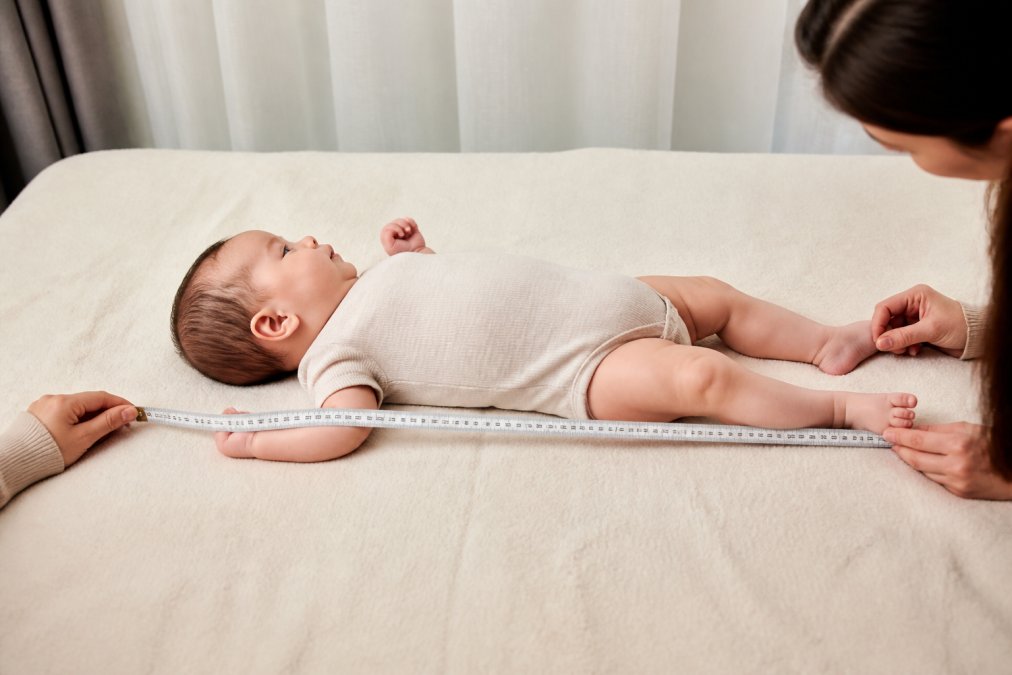
Babies under 2 years old are measured by length (lying down), not height (standing up) (the CDC). This distinction matters because standing height measurements are less accurate for infants and toddlers who can't stand still reliably.
To measure length accurately, place your baby on a firm, flat surface like a changing table or the floor. Remove shoes and thick clothing. Position your baby so they're lying completely straight, with their head against a wall or a fixed point. Use a soft cloth tape measure or a rigid measuring tape placed alongside your baby's body, starting from the top of their head to the bottom of their heels. Record the measurement in both inches and centimeters, most size charts use metric measurements, and conversion errors are common mistakes.
For babies who won't stay still (which is most of them), measure twice and take the average. If your baby is between measurements, round up slightly to avoid undersizing. Many parents find that measuring during sleep or right after feeding produces the most reliable results.
Measuring Weight and Body Dimensions
Weight is the most straightforward measurement. Use a digital baby scale, typically available at pediatrician offices, pharmacies, or online retailers. Weigh your baby without clothes or a diaper for the most accurate reading. Record weight in both pounds and kilograms.
Beyond length and weight, some detailed size charts also reference chest width, shoulder width, and inseam length. Chest width is measured around the fullest part of the chest with a soft tape measure. Shoulder width runs from the tip of one shoulder to the tip of the other. Inseam length measures from the inner thigh to the ankle, useful for pants and full-length rompers.

For most everyday clothing, length and weight are sufficient. But when buying specialty gear like car seats, carriers, or sleep sacks, these additional dimensions matter. Measure once and keep these numbers in a note on your phone, you'll reference them repeatedly as your baby grows.
Understanding Baby Clothing Size Charts by Weight and Height
Size charts are your primary tool for matching your baby to the right gear. However, charts vary significantly between brands, and understanding how to read them correctly prevents expensive sizing mistakes.
Most reputable brands organize their size charts by both weight and height ranges. A size might be labeled "6-12 months" but actually correspond to a weight range of 12-18 pounds and a length range of 24-28 inches. The age label is merely a reference point, the actual measurements are what matter.
When you look at a size chart, find the row that matches your baby's current measurements. If your baby's weight falls into one size category but their length falls into the next size up, choose based on length. Clothes that are too short are uncomfortable and unsafe (especially for gear like sleep sacks), while clothes that are slightly loose are manageable and allow room for growth.
Many brands also provide fit guides that describe how snug or loose a particular garment should be. Read these descriptions carefully. A sleep sack, for example, should fit snugly around the chest to prevent rolling, while everyday clothing can be looser for comfort and layering.
Cross-reference multiple sources if available. Some brands publish size charts on their websites, while others include them on product pages or packaging. If a brand's chart seems inconsistent with others in the same category, that's a red flag for potential sizing issues.
Decoding Size Labels and Standards
Understanding what size labels actually mean is crucial because terminology varies across manufacturers and product categories.
Newborn, Infant, and Toddler Sizing Ranges
Baby clothing is typically divided into three broad categories based on age and developmental stage, though these categories have overlapping measurements.
Newborn sizing typically covers ages 0-3 months and weights up to 12 pounds. Newborn-specific gear is designed for smaller bodies and includes features like snap closures for easy diaper changes and softer, more delicate fabrics. However, not all newborns fit newborn sizes, larger babies may skip this size entirely.
Infant sizing spans roughly 3-12 months, with weight ranges of 12-26 pounds and lengths of 24-30 inches. This is the longest-used size category because it accommodates the rapid growth of the first year. Most essential baby gear is available in infant sizes.
Toddler sizing begins around 12 months and extends to 24-36 months, covering weights of 26-40 pounds. Toddler clothing is designed for more active bodies and typically includes features like reinforced seams and easier-to-manage closures.

The overlap between these categories is intentional. A 9-month-old might fit comfortably in either infant or toddler sizes depending on their individual growth percentile. This is where measuring your baby's actual dimensions becomes more reliable than relying on age.
The Difference Between 24 Months and 2T Sizing
One of the most confusing transitions in baby clothing is the shift from "24 months" to "2T" sizing. Parents often assume these sizes are identical, but they're actually different enough to matter.
24-month sizing is technically an infant size, designed for children who are still in the infant growth phase. These garments are typically cut to fit babies who weigh around 26-30 pounds and measure 28-33 inches in length. The proportions reflect a baby's body shape, shorter torsos and proportionally larger heads.
2T sizing (where T stands for "toddler") is designed for children who have transitioned into the toddler phase. A 2T garment accommodates weights of 27-32 pounds but is cut with a longer torso and more proportional limbs, reflecting how toddlers' bodies differ from infants'. The overall proportions are taller and leaner.
In practice, a child wearing 24-month clothes typically transitions to 2T when they hit around 18-24 months of age, though this varies widely. Some children skip 24-month sizes entirely and go straight to 2T, while others wear 24 months for several months before moving up.
When shopping, check the actual measurements on the size chart rather than assuming 24 months and 2T are interchangeable. A garment labeled 24 months might be too short for a toddler who's already in 2T, even if the weight range overlaps.
Accounting for Fabric Shrinkage and Material Impact
Fabric composition directly affects how a garment fits after washing, and this variable is often overlooked when selecting sizes.
Natural fabrics like cotton shrink more than synthetic blends. A 100% cotton onesie can shrink 3-5% in the length and width after the first wash, especially if dried in a hot dryer (peer-reviewed research). A cotton-polyester blend might shrink only 1-2%. If you're buying a garment that fits snugly, shrinkage could make it unwearable.

The solution is to account for shrinkage when you measure and select sizes. If a garment is at the upper end of a size range and is made from 100% cotton, consider sizing up slightly. Conversely, if a garment is a synthetic blend or labeled as pre-shrunk, you can feel more confident buying it at the exact size.
Machine washing in cold water and air drying minimizes shrinkage, but most busy parents use warm water and dryers for convenience. Read the care label before buying. If a garment requires hand washing or lay-flat drying to prevent shrinkage, that's additional friction that might not fit your routine.
Fabric weight also affects perceived fit. Heavier knits and fleece materials feel snugger than lightweight cotton, even in the same size. A fleece sleep sack that fits perfectly might feel constrictive to a baby used to lightweight cotton, while a lightweight onesie might feel too loose.
Brand-Specific Sizing Discrepancies and Fit Calculators
Sizing inconsistency across brands is real and frustrating. A size 6-12 months from one manufacturer might fit completely differently from the same labeled size from another brand.
Some brands have recognized this problem and developed fit calculators or detailed size guides. These tools ask for your baby's specific measurements and recommend a size based on that brand's particular cut and proportions. If a brand offers a fit calculator, use it. It's more reliable than guessing based on age or comparing to another brand's sizing.
When you receive gear from Tender Tots & Wellness or any retailer, check the fit against the brand's specific size chart before assuming it's the wrong size. Some brands cut generously to allow room for growth, while others cut more snugly for a precise fit. Both approaches are valid, they just require different sizing strategies.
Keep notes on how specific brands fit your baby. If you find that a particular brand's 12-month size is consistently too loose or too snug, you'll know how to adjust when you buy the next size up. This institutional knowledge saves money and reduces returns over time.
Buying for Growth: Percentile Charts and Future Fit
Babies grow unpredictably, and growth rate varies significantly between children. Using percentile charts helps you anticipate future sizing needs and buy gear that will fit for longer.
Percentile charts show where your baby falls on the growth curve relative to other children of the same age. A baby in the 75th percentile for length is taller than 75% of babies their age. A baby in the 25th percentile is shorter than 75% of babies their age.
If your baby is in a high percentile for height or weight, they'll likely outgrow sizes faster than the average age-based recommendation suggests. A baby in the 90th percentile for length might wear a "6-12 months" size for only 4-5 months instead of the typical 6. Conversely, a baby in the 10th percentile might wear the same size for 8-9 months.
Your pediatrician can provide percentile information at checkups. Track your baby's percentile across visits to understand their growth trajectory. If your baby has consistently grown in the same percentile (for example, staying around the 60th percentile), you can predict roughly when they'll outgrow a size.
When buying gear you plan to use for multiple months, consider sizing up slightly if your baby is in a high growth percentile. A romper that's a bit loose now might fit perfectly in two months. Conversely, if your baby is in a lower percentile, buying the exact current size maximizes the usable lifespan of that garment.
This strategy is especially useful for expensive items like car seats, carriers, or sleep sacks. A garment that costs $35-50 is worth buying slightly larger if it extends the usable period by a couple of months.
Getting the right size for your baby's gear doesn't require guesswork. By measuring accurately, understanding how to read size charts, and accounting for variables like fabric shrinkage and brand-specific proportions, you can confidently select gear that fits well and grows with your baby. Tender Tots & Wellness offers carefully curated baby clothing and gear designed with modern families in mind, from our Baby Cotton Onesie in sizes 59-90cm to our Baby Cotton Romper Jumpsuit spanning 66-90cm. Each piece includes detailed size guidance to help you verify the right fit for your child's measurements, ensuring comfort and confidence in every purchase.
Frequently Asked Questions
Is size 2T the same as 24 months?
Not exactly. Size 24 months is based on age and is typically cut roomier for a child who is two years old. Size 2T (toddler) is cut slimmer and assumes more active movement. A 24-month piece will generally be slightly larger through the torso and arms. Check the manufacturer's size chart by weight and height rather than age alone, as growth varies widely among children.
How do I measure my baby for clothes to verify the right size?
Lay your baby on a flat surface and measure from the top of their head to their toes with a soft tape measure for length. For chest width, wrap the tape gently around the fullest part of the chest. Measure the inseam from the inner thigh to the ankle for pants. Weigh your baby at a pediatrician's office. Cross-reference these measurements against the manufacturer's size chart, which should list measurements by both age and body dimensions. This ensures accuracy better than age alone.
Why do baby gear sizes vary so much between brands?
Manufacturers use different sizing standards and fit philosophies. Some brands cut generously for layering, while others assume a snug fit. International brands may use metric measurements or different percentile growth assumptions. Always check the specific brand's fit guide and size conversion chart before ordering. Many brands now offer fit calculators on their websites to help account for these discrepancies and ensure proper fit.
Should I account for fabric shrinkage when buying baby clothes?
Yes, especially with natural fibers like cotton. Most cotton pieces shrink 3-5% in length and width after the first wash if not dried on low heat. If a garment fits snugly now, shrinkage may make it unwearable. Check the care label for material content and washing instructions. For items like the Baby Cotton Onesie (95% cotton), consider sizing up slightly or washing in cold water and air-drying to minimize shrinkage and preserve the fit.
This article was written using GrandRanker