

Minimalist Baby Gear for Modern Nurseries
Table of Contents
- Why Minimalist Baby Gear Matters for Modern Parents
- Essential Baby Gear for New Parents: The Foundation
- Multi-Functional Baby Furniture That Grows With Your Child
- How to Declutter Baby Gear and Avoid Accumulation
- Sourcing Sustainable and Eco-Friendly Options
- Organizing Your Minimalist Nursery for Calm and Function
- Conclusion
Last Updated: August 26, 2026
Why Minimalist Baby Gear Matters for Modern Parents
Parenthood doesn't require accumulation. In fact, the opposite is often true. A cluttered nursery creates stress for both parent and child, while a thoughtfully curated space promotes calm, focus, and genuine connection. This is where minimalist baby gear becomes essential, not as a trend, but as a practical philosophy that simplifies your early parenting years.
Minimalist baby gear strips away the unnecessary and keeps only what serves your family's actual needs. It's the difference between owning 47 toys that create visual chaos and having 12 carefully chosen items that spark genuine play and development. Modern parents increasingly recognize that less isn't deprivation, it's liberation.
The psychological benefits are real. When your nursery isn't overstimulating, your baby sleeps better. When your diapering station has exactly what you need and nothing more, changing diapers takes seconds instead of minutes hunting through clutter. When you've invested in multi-functional furniture that grows with your child, you're not replacing items every six months. This approach reduces decision fatigue, lowers household stress, and aligns with how many families actually want to live.
At Tender Tots & Wellness, we understand that modern families don't want a nursery that looks like a toy explosion happened. You want pieces that blend timeless elegance with function. You want gear that earns its place in your home by doing one thing exceptionally well, or multiple things brilliantly. This guide walks you through exactly which items matter, how to source them responsibly, and how to organize them so your minimalist nursery actually works for your family.
Essential Baby Gear for New Parents: The Foundation
The foundation of minimalist baby gear starts with understanding what your newborn actually needs versus what marketing tells you to buy. Most new parents are overwhelmed by choice. The minimalist approach cuts through that noise by focusing on items that solve real problems without duplication.
Your baby needs to sleep safely, eat comfortably, stay dry, stay warm, and be monitored for safety. Everything else is optional. This section covers the non-negotiable items that belong in every nursery, chosen for their quality, durability, and honest utility.
Sleeping Arrangements and Infant Sleep Safety
Safe infant sleep is non-negotiable. The American Academy of Pediatrics recommends that babies sleep in their parents' room, on a separate surface, for at least the first six months (aap.org). This means your sleeping arrangement choice directly impacts your family's setup.
A crib remains the most practical option for most families. Choose one with solid construction, a firm mattress, and minimal decoration. Avoid bumpers, pillows, blankets, and stuffed animals, these increase SIDS risk (the CDC). Your crib needs only a fitted sheet and a waterproof mattress protector. That's it.
A bassinet works well for the first few months if you want something closer to your bed. It's smaller, portable, and easier to manage during those intense nighttime feeding sessions. The downside: your baby outgrows it around four to six months, which means you'll eventually transition to a crib anyway.
A portable play yard or pack-and-play serves double duty as both a sleep space and a contained play area. For families who travel frequently or have limited space, this single piece of furniture can replace a traditional crib. Look for one with a firm, flat sleep surface and minimal decoration.
For crib mattresses, firmness matters more than thickness or padding. A firm mattress reduces suffocation risk (cpsc.gov). Pair it with a waterproof protector and fitted sheets, that's your complete sleep setup.
Diapering Station Essentials
Your diapering station doesn't need to be elaborate. It needs to be functional and within arm's reach of your changing surface.
A changing table or dresser gives you a safe height for diaper changes and prevents back strain. A simple wooden dresser serves double duty: changing surface on top, storage below. Alternatively, a low changing pad that sits on your crib rail saves space in smaller nurseries. The Tender Tots & Wellness Pure Cotton Changing Pad Cover ($21.99) fits standard changing tables and is removable for easy washing, exactly what a minimalist setup needs.

Stock your station with:
- Diapers (one size, unless you're using cloth)
- Wipes in a dispenser
- Diaper cream (one type)
- A small trash bin for used diapers
- A washcloth for cleanup
That's genuinely all you need. Avoid the temptation to fill drawers with backup supplies or "just in case" items. A well-organized station with only what you actively use prevents clutter and makes diaper changes efficient.
For families considering cloth diapers, they're a legitimate minimalist choice. You own fewer total items (20-30 diapers versus buying disposables continuously), reduce landfill waste, and save money long-term. The learning curve is real, but many parents find the simplicity appealing once they establish a routine. Pair cloth diapers with a wet bag for storage and a simple washing system.
Feeding and Nursing Gear
Feeding setup depends entirely on whether you're breastfeeding, bottle-feeding, or combining both. Avoid buying "just in case" items for feeding methods you might not use.
A nursing chair or comfortable seat is genuinely useful for both breastfeeding and bottle-feeding. You'll spend significant time in this chair during the first year. Choose something supportive with good armrests to reduce shoulder and arm strain. A simple wooden rocker or upholstered chair works better than trendy gliders that take up excessive space.
The Tender Tots & Wellness Multifunction Nursing Pillow ($40.00) provides ergonomic support while nursing or bottle-feeding, reducing arm and shoulder pressure. This single item replaces multiple specialized pillows, which aligns perfectly with minimalist principles.
For bottle-feeding, you need:
- 8-10 bottles (glass or stainless steel last longer than plastic)
- A bottle brush and drying rack
- A sterilizer (optional, many parents skip this)
For breastfeeding, you need surprisingly little:
- Nursing pads (reusable cloth ones, not disposable)
- Lanolin or nipple balm
- A comfortable place to sit
Avoid specialty nursing bras, breast pumps you won't use, and feeding pillows beyond one good one. The minimalist approach means you own what you'll actually use.
Multi-Functional Baby Furniture That Grows With Your Child
The most sustainable approach to baby gear is choosing pieces that serve multiple purposes and adapt as your child grows. This philosophy saves money, reduces waste, and keeps your nursery from becoming a storage facility for outgrown items.
Convertible cribs transform from a crib to a toddler bed to a full-size bed. You're investing in one piece of furniture your child will use for years, not a crib you'll replace at 18 months. Quality convertible cribs are more expensive upfront but eliminate the need to buy multiple beds.
Dressers with changing tops function as changing stations during infancy and transition to regular bedroom storage afterward. Choose a solid wood dresser that will look appropriate in your child's room at age five, ten, and beyond. This is furniture you keep, not something you donate after the baby stage.
Storage ottomans or benches provide seating while offering hidden storage for blankets, extra clothes, or toys. They work in a nursery, a playroom, or a bedroom as your child grows.
Shelving units designed for both aesthetic appeal and function keep your minimalist nursery organized without feeling cluttered. Open shelving displays a few beautiful items while closed storage hides the rest. Avoid overstuffed shelves that create visual chaos.
The key principle: every piece of furniture should earn its place by serving a genuine function and fitting into your home long-term. Avoid trendy nursery-specific items that you'll outgrow or donate within a few years.
How to Declutter Baby Gear and Avoid Accumulation
Most parents accumulate baby gear through a combination of well-meaning gifts, "what if" purchases, and marketing pressure. Decluttering before you even bring items home prevents this problem entirely.
Before buying anything, ask these questions:
- Will my family use this regularly?
- Does it serve a purpose my existing items don't already cover?
- Will it still be useful in six months?
- Can I borrow or rent this instead of owning it?
If you answer "no" to any of these, don't buy it.
For items you already own, conduct a ruthless audit. Pull everything from your nursery and sort into three categories: actively used, occasionally used, and never used. The "never used" pile gets donated or sold. The "occasionally used" pile goes into storage outside the nursery. Only "actively used" items stay visible and accessible.
Common items to eliminate:
- Wipe warmers (unnecessary and one more thing to break)
- Bottle sterilizers (boiling water works fine)
- Specialty sleep positioners (unsafe and unnecessary)
- Decorative items that only collect dust
- Duplicate toys or gear
- Clothing in sizes your baby won't reach for months
Establish a one-in, one-out rule for new items. Before accepting a gift or buying something new, decide what leaves your nursery. This prevents creeping accumulation over time.
Sourcing Sustainable and Eco-Friendly Options
Minimalism and sustainability naturally align. Buying fewer items of higher quality means less waste and less environmental impact. But sourcing matters too.
Second-hand and circular economy options are genuinely minimalist. Buying used gear reduces demand for new manufacturing, keeps items out of landfills, and costs significantly less. Consignment shops, online marketplaces, and parent groups offer quality used gear. Inspect items carefully for safety, car seats and mattresses should be purchased new, but cribs, dressers, and toys are often perfectly safe used.
Eco-friendly materials matter when you're building a sustainable nursery. Look for:
- Organic cotton for sheets and clothing
- Solid wood furniture (lasts longer, looks better, biodegrades)
- Natural rubber or wood toys
- Non-toxic paints and finishes
- Bamboo or sustainably harvested materials
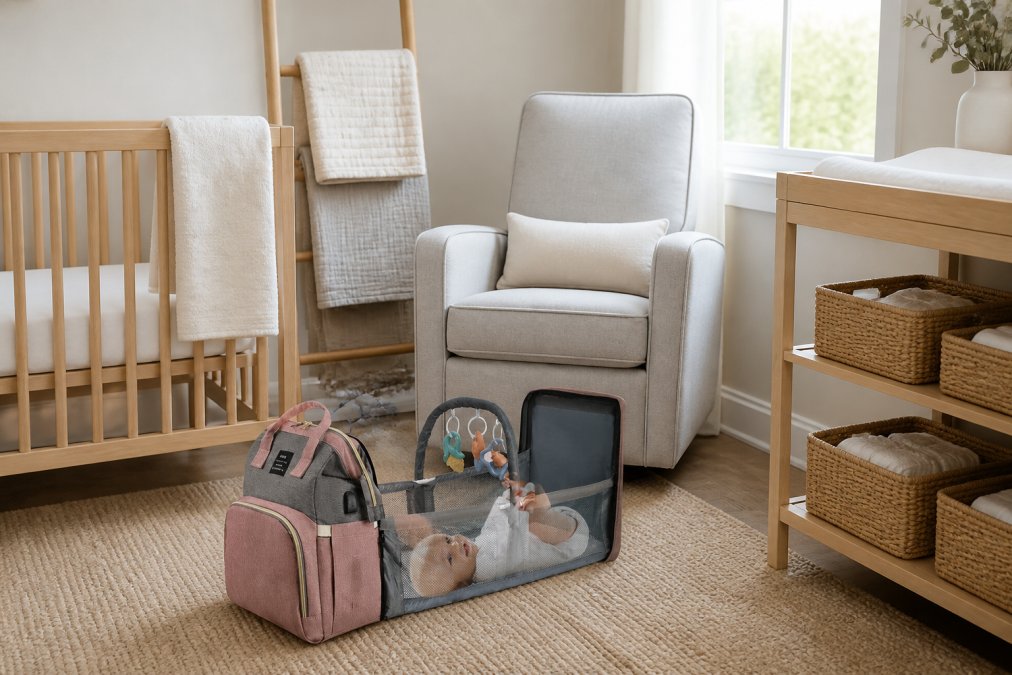
Multi-functional items reduce your overall consumption. The Tender Tots & Wellness 4-In-1 Baby Diaper Bag ($33.67) converts to a portable bed and changing station, eliminating the need for separate travel gear. One item replaces three, which is the essence of sustainable minimalism.

Durability is an environmental choice. Higher-quality items last longer, withstand multiple children, and eventually pass down or resell. Cheap gear falls apart, gets replaced frequently, and creates more waste. Invest in quality pieces you'll keep.
Avoid greenwashing. Some brands use eco-friendly language without genuine sustainability practices. Look for third-party certifications, transparent sourcing information, and honest material descriptions. Tender Tots & Wellness curates products specifically chosen for quality and sustainability.
Organizing Your Minimalist Nursery for Calm and Function
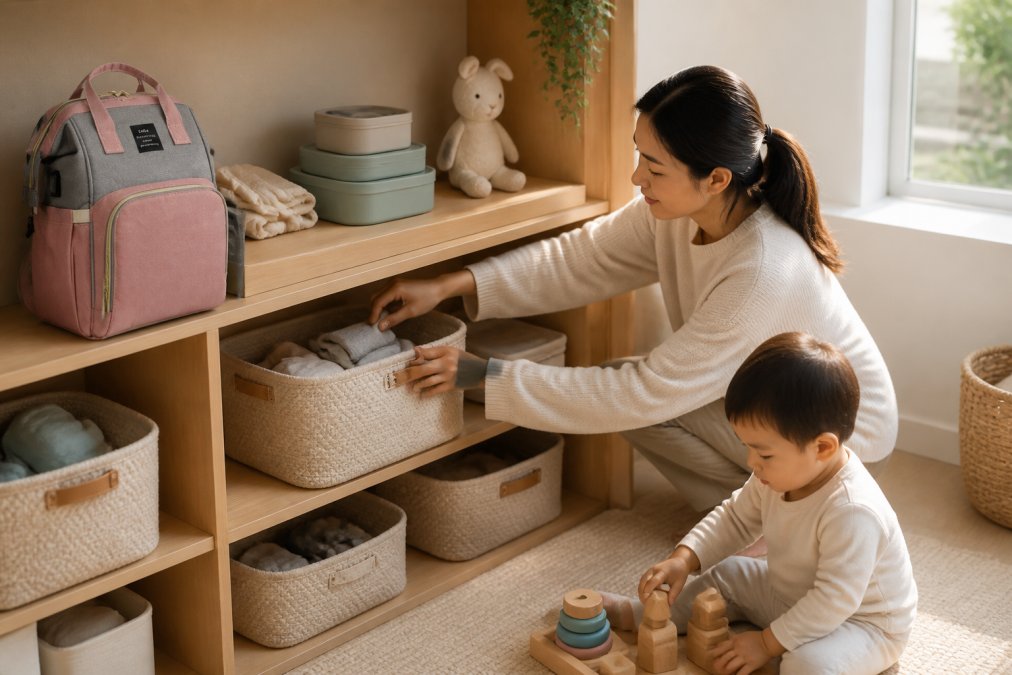
Organization isn't about buying more containers. It's about creating systems that keep your minimalist space functional and calm.
Zone your nursery into functional areas: sleeping zone, changing zone, storage zone, and play zone. Each zone contains only items relevant to that function. Your diaper station isn't near the crib. Your toys aren't scattered throughout the room. Clear zones prevent items from migrating and cluttering spaces where they don't belong.
Use visible storage for frequently used items. Open shelving or labeled baskets let you see what you have without opening drawers. This prevents buying duplicates and makes cleanup faster. Woven baskets add visual warmth while containing clutter.
Hide backup supplies and occasional items. Closed storage, drawers, cabinets, or closet shelves, keeps items you use less frequently out of sight. Your actively used diapers stay accessible; backup boxes go in a closet.
Label everything. Simple labels on baskets and drawers make it obvious where items belong. This is especially useful if your partner or caregivers help with the nursery. Labels also make cleanup faster, there's no guessing about where something goes.
Limit visible toys to five to seven items. Fewer toys actually increases engagement and reduces decision fatigue for your baby. Rotate toys monthly to maintain novelty without accumulation. The Tender Tots & Wellness Large Capacity Mummy Baby Backpack ($69.99) keeps diaper bag essentials organized for outings, preventing the chaos of scattered supplies.

Embrace negative space. A minimalist nursery intentionally has empty wall space and uncluttered surfaces. This visual calm directly reduces parental stress and creates an environment where your baby can focus on sleep and play rather than overstimulation.
Seasonal rotation prevents accumulation. As your baby grows out of clothing sizes or developmental stages, rotate items rather than storing everything. Keep current-season items accessible; store off-season items elsewhere. This keeps your active nursery lean and functional.
Building a minimalist nursery isn't about deprivation, it's about intentionality. Your baby doesn't need 100 items to thrive. They need safety, comfort, and your presence. When you choose multi-functional gear, source responsibly, and organize thoughtfully, you create a nursery that supports both your child's development and your family's wellbeing. Shop Tender Tots & Wellness for curated minimalist baby gear that blends timeless elegance with genuine function, and start your parenting journey with clarity instead of clutter.
Frequently Asked Questions
Q: What are the absolute essentials for a minimalist baby nursery?
A: A minimalist baby nursery needs a safe crib or bassinet with a firm mattress and fitted sheets, a diapering station with changing pad and cotton covers, storage for diapers and wipes, a nursing chair for feeding comfort, and essential clothing like footie pajamas and swaddles. Skip decorative items, excess furniture, and items you haven't tested. Focus on pieces that serve multiple functions and can grow with your child. Quality matters more than quantity, invest in items that will last through multiple children.
Q: How can parents identify multi-functional baby products to reduce clutter?
A: Look for products that serve at least two purposes. A diaper bag that converts into a changing station or portable bed, a nursing pillow that supports bottle-feeding, or storage furniture that doubles as seating are smart choices. Before buying, ask yourself: Does this item replace something else I'd need anyway? Can it serve my child beyond the first year? Multi-functional furniture and gear reduce the total number of items in your nursery while maintaining full functionality and supporting your minimalist lifestyle.
Q: What are the most common baby items that parents end up not using?
A: Parents frequently overestimate their need for theme-specific nursery decor, wipe warmers, diaper pails with special liners, and specialty holders for every small item. Many also buy clothes in sizes their baby skips over entirely. Avoid items marketed as 'convenient' if they create new storage problems. Instead, start with bare essentials and add only what you actually use after the first few weeks. Second-hand options let you test items before committing to purchases, reducing waste and unnecessary spending.
Q: How do you balance aesthetic design with functional baby gear?
A: Choose a neutral color palette, whites, grays, natural wood tones, and soft earth colors, that creates a calm environment while allowing gear to blend seamlessly. Select pieces with clean lines and simple designs rather than busy patterns or bright primary colors. Invest in quality basics that look intentional rather than cluttered. Multi-functional furniture in natural materials like wood supports both aesthetics and function. This approach reduces visual noise, supports infant development, and creates a space parents genuinely enjoy spending time in, making daily routines feel less overwhelming.
This article was written using GrandRanker