

Montessori Bedroom Layout: Set Up a Room That Helps Kids Sleep
Quick Summary
A montessori bedroom layout is a room arranged so a child can see, reach and use everything without help. It typically includes a low bed or floor mattress, open low storage, a clear floor path and a calm, uncluttered space. Such a setup can support independence and may help with bedtime.
- Use a low bed or floor mattress that your child can climb in and out of safely.
- Leave a clear path of at least 30 inches beside the bed for the exit.
- Keep at least 6 inches between the bed and the wall to avoid entrapment.
- Anchor dressers and shelves to the wall with anti-tip straps or brackets.
- Pair the layout with dim light, steady low sound and a cool room.
Table of Contents
- What a Montessori Bedroom Layout Looks Like
- How a Montessori Bedroom Setup Supports Better Sleep
- Choosing a Floor Bed and Placing It Safely
- Montessori Bedroom Safety Checklist and Risk Trade-Offs
- Setting Up Sleep Conditions: Light, Sound, and Temperature
- Montessori Bedtime Routine by Age
- Montessori Bedroom Ideas for Books, Clothes, and Comfort Objects
- Your Next Step: Plan Your Child's Room Before Buying Furniture
- Frequently Asked Questions
What a Montessori Bedroom Layout Looks Like
Last Updated: November 7, 2026
A Montessori bedroom layout is a room set up so a child can see, reach and use everything without asking an adult. Montessori-inspired bedrooms are built around this idea, so it helps to start with the basics.
The core idea is freedom of movement. A toddler who can get out of bed alone, pick a book and put it back has practice making choices. That practice builds confidence over time.
Most Montessori bedrooms share a few features:
- A low bed or floor mattress the child can climb in and out of safely
- Open, low storage for clothes, shoes and books
- A clear floor path from the bed to the door and to the play area
- A calm color palette with few posters, screens or loud toys
- A consistent layout so the child always knows where things are
Some families notice a change within a few weeks, though results vary from child to child.
How a Montessori Bedroom Setup Supports Better Sleep
A good Montessori bedroom setup supports sleep by reducing stimulation and giving the child a predictable place to rest.
When the bed is low and the path is clear, a child can get up for a drink or a bathroom trip without climbing over rails or calling for help.
Here is how the setup helps:
- Predictability: The same bed, the same books and the same shelf reduce anxiety at bedtime.
- Less stimulation: Few toys and bright objects in view make it easier to wind down.
- Clear zones: Separating the sleep area from the play area helps a child link the bed with rest.
- Independent exits: A child who can leave the bed safely may be less likely to call out repeatedly.
Watch out: A floor bed can make a child more likely to leave the room at night. Use a safety gate or a closed door if your home has stairs or open hallways.
Choosing a Floor Bed and Placing It Safely
Choose a floor bed that is low, stable and sized for your child's current bedroom. Look for a firm mattress with a fitted sheet that stays on without bunching.
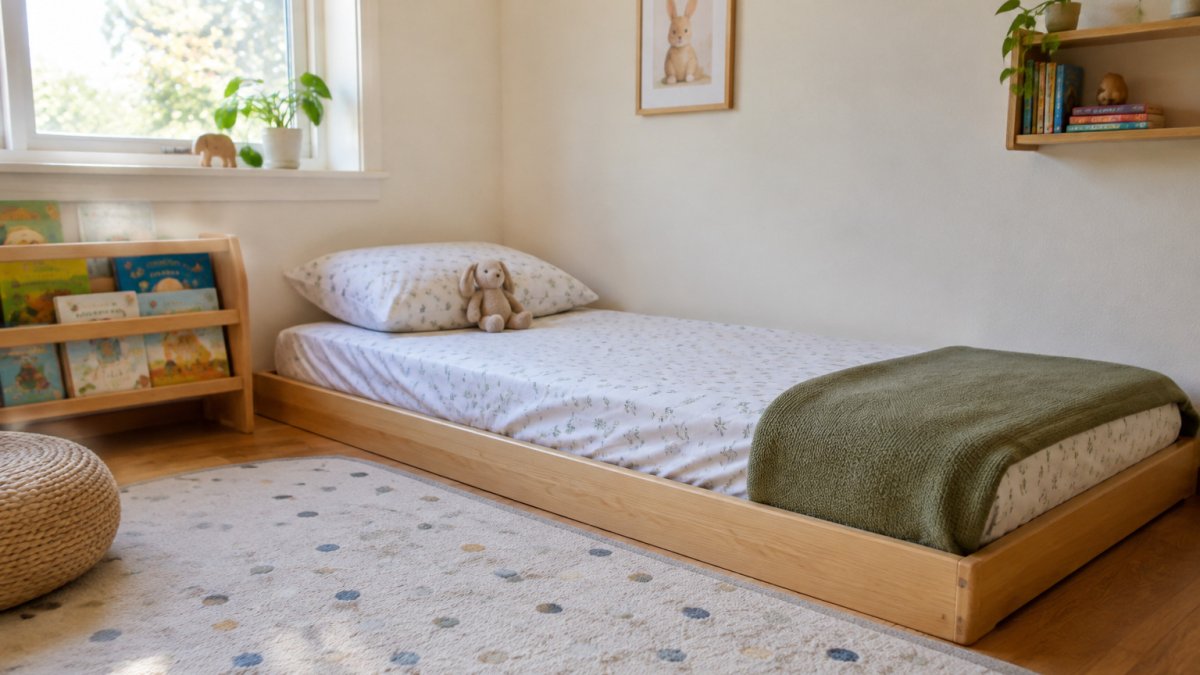
Place the bed away from heavy furniture, windows with cords and outlets. Keep it off the path to the door so your child does not have to step over things at night.
Before you buy, check these points:
- The bed sits close to the floor with no gaps a small body could wedge into
- The mattress fits the frame snugly, with no gaps along the sides
- The bed frame is made from solid wood or another sturdy material
- Any bed rails or headboard openings are narrow enough to prevent entrapment
Pricing depends on the size, materials and retailer, so check Tender Tots & Wellness's website for current options and details.
Measuring the Room and Keeping Wall Clearance
Before you move any furniture, measure the room and mark out where the bed will go.
Leave a clear path of at least 30 inches on the side of the bed where your child will climb out. This gives room to walk without tripping.
A simple plan helps. Sketch the room on paper, mark the bed, shelves and play area, then walk through the path a child would take at night. If any step feels cramped or unsafe, move the piece.
Montessori Bedroom Safety Checklist and Risk Trade-Offs
Safety in a Montessori bedroom comes from removing hazards, not from adding barriers.
Furniture and anchoring
- Anchor all shelves, dressers and bookcases to the wall with anti-tip straps or brackets. A dresser that a child can pull down is the most common furniture hazard in a child's room.
- Keep heavy items off high shelves and store them in closed cabinets or closets.
- Check that any open shelving is stable enough that a child leaning on it will not tip it.
Bed and entrapment
- Use a firm mattress that fits the frame snugly, with no gaps wider than two fingers along the sides.
- Keep the sleep area free of pillows, bumpers, loose blankets and stuffed animals for children under 12 months, per safe-sleep guidance (How to Keep Your Sleeping Baby Safe: AAP Policy Explained).
- Check that any bed rails or headboard openings are narrow enough that a child's head cannot pass through. A common rule of thumb is that openings should be smaller than 3.5 inches.
- Make sure the bed sits close to the floor with no gap a small body could wedge into.
Windows, cords and outlets
- Keep the bed away from windows, radiators and heaters.
- Secure or remove window blind cords. Corded blinds are a strangulation hazard and should be replaced with cordless options or secured out of reach (Window Covering Cords).
- Cover unused electrical outlets with tamper-resistant covers and route cords behind furniture or in cord covers.
- Avoid placing the bed directly under a window where blinds or curtains can be reached.
Doors, stairs and exits
- Check that the door can open from the inside if it closes.
- Use a safety gate or a closed door if your home has stairs or open hallways.
- Keep the path from the bed to the door clear of toys, furniture and tripping hazards.
Lighting and small parts
- Install a nightlight with a cool bulb for nighttime safety, and keep it away from fabric or bedding.
- Check that toys and decor in the room have no small parts that a child could choke on.
Each choice comes with trade-offs. A floor bed gives freedom but may increase night wandering. Open shelves build independence but need regular tidying.
Age-specific risk trade-offs
The right balance shifts as your child develops. As your child grows, keep the room flexible and let Painted wood letters add a personal touch without crowding the space.
The checklist's main hazards and the minimum clearances that address them are summarised below.
| Hazard | Fix | Figure |
|---|---|---|
| Dresser or shelf tipping | Anchor to wall | Anti-tip straps or brackets |
| Bed entrapment gaps | Snug mattress fit | No gaps wider than two fingers |
| Bed rail or headboard openings | Keep openings narrow | Smaller than 3.5 inches |
| Corded window blinds | Cordless or secured | Strangulation hazard |
| Bed placement near heat | Keep bed away | Away from vents and radiators |
| Bed-to-wall clearance | Leave gap | At least 6 inches |
| Path beside bed | Keep clear | At least 30 inches |
Setting Up Sleep Conditions: Light, Sound, and Temperature
Sleep depends on more than the bed. Light, sound and temperature shape how easily a child falls asleep and stays asleep.
Light
Light is the strongest signal to the body's sleep-wake system.
Sound
Household noise, hallway traffic and sudden sounds can wake a light sleeper. A white noise machine can mask those sounds and create a consistent backdrop.
Temperature
The sleep environment should be cool but comfortable. Dress your child in breathable sleepwear and avoid heavy blankets that can overheat a toddler.

Putting it together
These three factors work as a system. A dark room, steady low sound and a cool temperature together signal that the room is for sleeping. Test one change at a time so you can tell what is working, and give each change a few nights before judging it. If your child still wakes frequently, revisit the layout and routine sections alongside these conditions.
Montessori Bedtime Routine by Age
A bedtime routine helps a child know what comes next. The routine should match your child's age and stay consistent most nights.
Infants (0 to 12 months): Keep the routine short and calm. Dim the lights, change the diaper, read one short book and place the baby in the crib or sleep space on their back.
Toddlers (1 to 3 years): Add a few simple steps, such as putting on pajamas, brushing teeth, choosing one book and saying goodnight to a favorite comfort object. Let your toddler help with small tasks to build independence.
Preschoolers (3 to 5 years): Give choices within the routine, such as picking between two books or two pairs of pajamas. A visual chart with pictures can help a child follow the steps in order.
Keep the routine to about 20 to 30 minutes. Stick to the same order each night, and respond calmly if your child gets out of bed.
Montessori Bedroom Ideas for Books, Clothes, and Comfort Objects
Accessible storage is the heart of a Montessori bedroom. Keep the things your child uses most within reach, and store the rest out of sight.
- Books: Use a low shelf or a small rack with three to five books facing forward. Rotate them each week to keep the choice fresh.
- Clothes: A low dresser or open cubbies with a few outfits makes it easy for a child to dress independently. Keep seasonal clothes stored elsewhere.
- Comfort objects: Place a favorite stuffed animal or blanket on the bed or on a small shelf near the pillow. Choose one or two items, not a crowded pile.
Limiting the number of toys in the bedroom can help create a calmer space. Store extra toys in a closet or play area, and swap them out on a regular schedule.
Browse the Tender Tots & Wellness collection to find low shelves, open storage and calm materials for your child's space.
Your Next Step: Plan Your Child's Room Before Buying Furniture
Before you buy anything, sketch your child's room and decide where the bed, storage and play area will go. Measure twice, check the safety list, and plan the path your child will walk at night.
Once the plan is set, buy the pieces that fit it. Start with a low bed and open storage, then add decor and extras as your child settles. Tender Tots & Wellness offers a curated selection of Montessori-inspired toys, baby gear and wellness products.
Frequently Asked Questions
How do you set up a Montessori bedroom?
Start with a low floor bed or mattress placed away from walls and windows, leaving clear space around it. Keep the room uncluttered, store books, clothes and comfort objects on low, open shelves at your child's height, and use a simple rug to mark a calm sleep zone. Remove anything that could tip or be climbed, and keep the layout the same from week to week so your child can predict where things are and move through the room on their own.
Where should a Montessori bed go in a child's room?
Place the floor bed against a wall that is not near a window draft or a heater, and leave enough open floor on the other sides for your child to get in and out safely. Keep it away from heavy furniture, hanging cords and blind cords. Position it so the room's light source is not shining directly into your child's eyes at bedtime, and check that the bed frame sits flat on the floor so it does not rock.
Does a Montessori floor bed help children sleep better?
A floor bed gives children freedom to get in and out on their own, which can reduce bedtime frustration for some kids who feel confined in a crib or raised bed. It does not guarantee better sleep, though. Sleep depends on consistent bedtimes, a dark and quiet room and a predictable routine. Some families find that the independence helps, while others notice no change. Watch your own child over a few weeks before deciding.
How do you make a Montessori bedroom safe for a toddler?
Anchor or remove tall furniture, secure dressers to the wall, and cover electrical outlets. Keep cords for blinds and lamps out of reach, and choose a bed with a low profile and no gaps where a head or limb could become trapped. Keep the bed clear of loose bedding, pillows and stuffed toys for infants, and follow current safe-sleep guidance for the age of your child.
