

Sustainable Baby Gear Brands for Eco-Conscious Parents
Table of Contents
- Why Sustainable Baby Gear Matters for Eco-Conscious Parents
- How to Choose Sustainable Baby Gear: 6 Criteria That Actually Matter
- Eco-Friendly Newborn Essentials: What to Buy First
- Organic Baby Clothing and Sleepwear: Cotton That Holds Up
- Eco-Friendly Baby Products for Diapering and the Nursery
- Reusable Baby Products That Cut Waste and Cost
- Feeding, Toys, and Everyday Gear: Where Sustainability Gets Tricky
- Conclusion
- Frequently Asked Questions
Last Updated: October 17, 2026
Why Sustainable Baby Gear Matters for Eco-Conscious Parents
Sustainable baby gear means choosing infant products made from renewable, low-impact materials built to be reused rather than discarded after a few months.
The core problem is volume. Babies cycle through enormous quantities of short-lived items, most made from oil-based plastic and synthetic fibers that outlast the child by decades.
Below, we break down how to choose sustainable baby gear using six criteria, then map them onto the categories you'll buy first, and flag where claims get murky.
How to Choose Sustainable Baby Gear: 6 Criteria That Actually Matter
Choosing sustainable baby gear comes down to six checks: material source, certification, durability, end-of-life options, safety compliance, and total cost of ownership. Run every purchase through this list and the marketing noise drops away.
- Material source. Natural fibers and plant-based materials are a starting point, not a finish line. Ask whether the cotton is organic and how it was processed.
- Certification. Look for eco-certified labels you can verify, not a leaf icon printed on the box. A certification should name a standard and a certifying body.
- Durability. The most underrated sustainability metric. A onesie that survives two children beats a "green" one that pills after five washes.
Eco-Friendly Newborn Essentials: What to Buy First
Eco-friendly newborn essentials should be a short list, not a registry of novelty items.
Start with layers. Our Pure Cotton Newborn Baby Gift Set is 100% pure cotton, sized at 59cm, and built as an all-season two-piece.
For a base layer, the Baby Cotton Onesie uses 95% cotton with a single-breasted snap closure. Snaps at the bottom mean diaper changes happen without undressing a sleeping baby.

Organic Baby Clothing and Sleepwear: Cotton That Holds Up
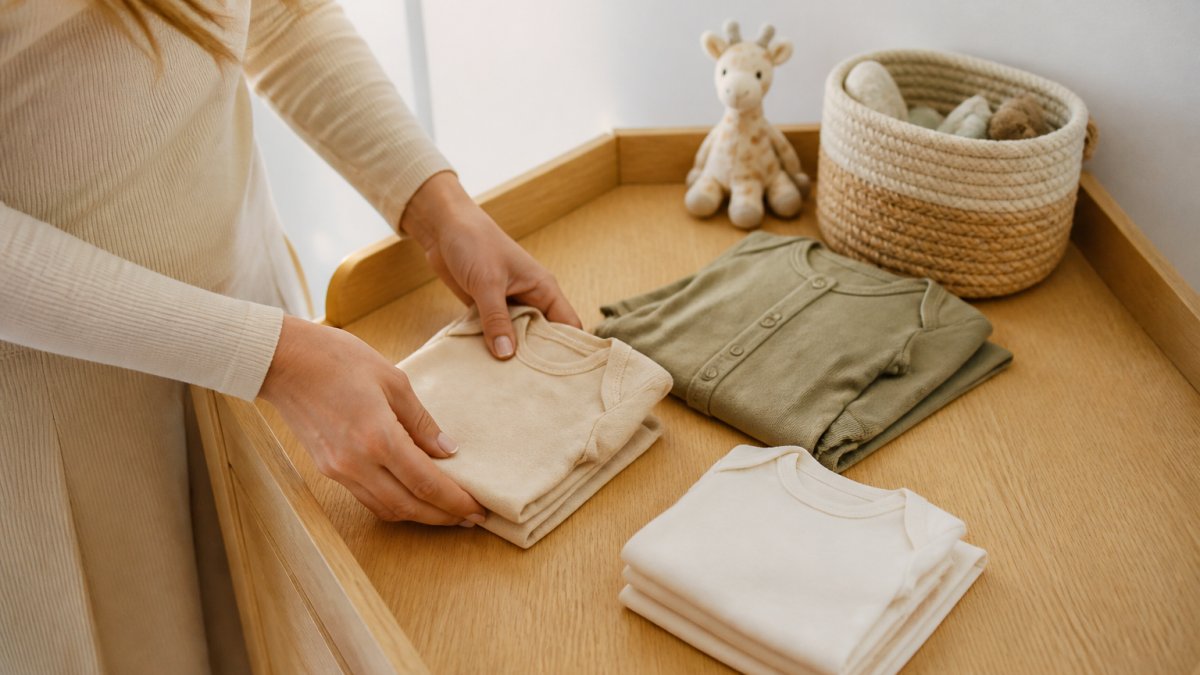
Organic baby clothing and baby sleepwear live or die on fiber quality and construction.
Look for 100% cotton or high-cotton blends, flat seams, and closures that survive repeated washing. Our Baby Cotton Romper Jumpsuit is a full-length 100% cotton one-piece with long sleeves, available from 66cm to 90cm, replacing a top-and-bottom pairing that wears out at different rates.

A note on fit: this romper runs on Asian sizing, 1-2 sizes smaller than US sizing. Size up if your baby is between sizes.
| Product | Material | Price | Best For |
|---|---|---|---|
| Cotton Onesie | 95% cotton | $29.99 | Everyday base layer, easy diaper changes |
| Cotton Romper Jumpsuit | 100% cotton | $35.99 | Full coverage for cooler days and naps |
| Newborn Gift Set | 100% cotton | $29.99 | Baby shower gift, first wardrobe |
Eco-Friendly Baby Products for Diapering and the Nursery
Eco-friendly baby products for diapering split into two decisions: what goes against the skin, and what the nursery is built from. Diaper balm, wipes, and changing surfaces are the daily-contact items where natural materials and reduced waste pay off. The nursery side hides the footprint, because crib bedding, changing covers, and blankets are washed constantly and replaced often.
Diapering: cloth versus disposable, honestly compared
Most guides frame cloth diapers as the sustainable choice and move on. A cloth diapering system is a waterproof outer cover plus an absorbent insert, washed rather than thrown away.
Run these checks before you commit:
- Wash cycle reality. Cloth diapers need a pre-wash and a main wash every two to three days. Without in-unit laundry, the logistics and cost change the math.
- Insert material. Cotton and bamboo are common; hemp is highly absorbent but slow to dry. Synthetic microfiber is cheap and fast-drying but sheds microfibers in the wash.
- Cover construction. Double gussets at the legs and a wipeable inner lining reduce how often the whole system needs a full wash.
For disposable diapers, sustainability is mostly about materials and transparency. Look for brands that disclose whether the absorbent core is chlorine-free, whether the backsheet is plant-based, and whether the product carries a recognizable certification.
Nursery textiles: the daily-wash category
Crib sheets, changing pad covers, and blankets are washed more than almost anything else in the nursery, so fiber choice and construction matter more than in clothing. Natural fibers that survive heat and repeated washing are the priority. Our Pure Cotton Changing Pad Cover is 100% pure cotton, removable, and machine washable at $21.99. The removable design lets you swap and wash rather than replace, extending the life of the pad underneath.

When you compare nursery textiles, use the same framework across brands:
| What to check | Why it matters |
|---|---|
| Fiber content | 100% cotton or high-cotton blends tolerate heat and washing better than synthetic blends |
| Certifications | A named standard (for example, organic fiber certification) is verifiable; a leaf icon is not |
| Closure and fit | Deep pockets and elastic that holds its shape prevent the cover from bunching and wearing out |
| Care instructions | Machine washable and dryer-safe items get used; hand-wash-only items get replaced |
For diapering on the go, the Large Capacity Mummy Baby Backpack uses Oxford cloth with polyester lining, includes an insulated bottle compartment, and separates wet from dry, the feature that makes cloth diapers practical outside the house.
Reusable Baby Products That Cut Waste and Cost
Reusable baby products win on total cost of ownership, an argument most parents never hear clearly. The sticker price looks higher, but cost per use is usually lower, sometimes dramatically, once you count how many disposable versions you'd otherwise buy. The math only works when the item is used daily and survives long enough to amortize its price.
A cost-per-use framework you can run yourself
Most guides say "consider cost per use" without showing how. Here is the calculation:
Pure Cotton Changing Pad Cover – Soft, Removable & Washable | Fits Standard →
- Count the replacement cycle. How many disposable units does one reusable item replace over 12 months? A cloth diaper used every other day replaces hundreds of disposables; a reusable snack bag replaces a roll of plastic bags.
- Add maintenance cost. Water, detergent, and electricity are real. Estimate your per-load cost from your utility bill and divide by the number of items in a load.
- Divide by expected lifespan. A product used twice a day for a year has 730 uses. Divide total cost (purchase plus maintenance) by that number.
- Subtract resale value. Durable textiles and reusable diapering systems hold resale value that disposables never do. Check completed listings on resale marketplaces for the brand you're considering.
A worked example: a $30 reusable item used twice a day for two years has roughly 1,460 uses, or about two cents per use before maintenance. A disposable alternative bought repeatedly over the same period rarely comes close. Run the calculation with your own usage and local prices rather than trusting a general claim.
Where reusables win, and where they don't
Reusables are strongest in four categories:
- Diapering. Cloth diaper systems are the highest-volume swap most families can make.
- Feeding. Durable bowls, plates, and cups that survive the toddler stage replace a stream of flimsier ones.
- Textiles. Crib sheets, changing covers, and burp cloths that are washed and reused rather than replaced.
They are weakest where the item is a novelty or the reusable version is poorly made. A reusable item that fails after a month has a worse footprint than the disposable it replaced, because the materials and manufacturing are already spent.
Lifecycle: repair, resale, and end-of-life
The environmental case for reusables depends on what happens after your child outgrows them. Three questions decide it:
- Can it be repaired? A wooden toy with a screwed or doweled joint can often be re-glued. A molded plastic toy with a cracked housing usually can't. For textiles, replaceable elastic and snap repairs extend life significantly.
- Can it be resold or passed on? Cloth diaper covers and durable textiles hold resale value. Check whether the brand has a resale or take-back program, and whether the product is designed to be handed down.
- Can it be responsibly disposed of? Natural fiber textiles biodegrade more readily than synthetic blends. Mixed materials are harder to recycle, so single-material construction is easier to dispose of responsibly.
Budget alternatives
Eco-conscious shopping doesn't have to mean premium prices. Three accessible routes:
- Buy used where safety allows. Clothing, nursery textiles, and many gear items are safe secondhand if intact and meeting current safety standards. Avoid used car seats and cribs with missing hardware.
- Buy fewer, better items. A smaller rotation of high-quality pieces that get washed more often beats a full drawer of cheap items that never get worn.
- Start with the highest-volume category. If your budget is limited, put it into diapering or feeding, where the replacement cycle is fastest and the savings compound.
Feeding is a good example of the trade-off. Our 360° Rotate Spill-Proof Baby Bowl is BPA-free PP plastic with a self-righting inner bowl, dishwasher safe, at $30.99. It's not a natural material, but it outlasts the toddler stage: durability can outweigh material purity when a product is used daily.
Feeding, Toys, and Everyday Gear: Where Sustainability Gets Tricky
The trickiest category is toys and everyday gear, because "natural" and "sustainable" get used loosely. Wooden toys and sustainable toys made from responsibly sourced wood are genuinely good choices, but only if the finish is safe and the construction survives teething.
Two angles most guides skip:
Safety alongside environmental claims. A wooden toy with a chipped, unsealed finish is a hazard regardless of how the wood was sourced. Check that any painted or sealed surface meets US Consumer Product Safety Commission requirements for children's products, and check for small parts on anything rated for under-three.
Regional availability and shipping footprint. A product shipped across an ocean carries a carbon cost that can offset its material advantage.
Conclusion
The hardest part of buying sustainable baby gear isn't finding green labels. It's cutting through claims that don't hold up to a durability test or a cost-per-use calculation.
We built Tender Tots & Wellness around a simpler idea: high-quality products at a fair price, chosen to fit a real modern family rather than a marketing persona.
Shop now and build a nursery you won't have to rebuy in a year.
Frequently Asked Questions
What materials are best for eco-friendly baby products?
Look for natural fibers like organic cotton, linen, and bamboo, plus wood from responsibly sourced forests for toys. For diapers, plant-based and cloth options reduce plastic waste compared with standard disposables. Check for third-party certifications such as GOTS for textiles or FSC for wood, since a label alone does not prove much. Tender Tots & Wellness uses 100% pure cotton in its changing pad covers and newborn gift sets, which keeps fabrics breathable against a baby's skin.
How can I tell whether a baby brand is genuinely sustainable?
Ask three questions: what the product is made of, where it is made, and what happens at end of life. Genuine brands publish material specs, name certifications, and explain how items can be washed, repaired, or passed on. Vague claims like 'earth-friendly' without a certification or material list are a warning sign. Durability is also evidence: a cotton romper that survives two children and a resale listing has a smaller footprint than a cheap one replaced three times.
Are sustainable baby products worth the extra cost?
Often yes, once you count replacements. A $35.99 cotton romper worn through two sizes of growth and then passed to a sibling costs less per month than three $12 versions that pill and stretch. Reusable items follow the same math: a washable changing pad cover at $21.99 replaces hundreds of disposable pads. The savings depend on how long you use each item, so prioritize durable pieces in the categories you use daily.
What are the best eco-friendly essentials for a newborn?
Start with the items a newborn touches constantly: a soft cotton onesie or gift set, a washable changing pad cover, and a diaper bag built to last. Add reusable feeding gear as solids begin. Skip the bulk of 'nice-to-have' items until you know your baby's routine. A 100% cotton newborn gift set at $29.99 covers the first months without overbuying, and it works as a baby shower gift if you are shopping for someone else.
Can baby gear be recycled or reused?
Clothing, cloth diapers, and cotton bedding are the easiest to reuse, since they can be washed and passed on or sold. Cotton items biodegrade better than synthetic blends at end of life. Hard goods like bowls and bags are harder to recycle curbside, so buy durable versions and keep them in service longer. Before discarding anything, check local textile recycling programs and parent resale groups, which extend a product's useful life by years.