

Tips for Buying Baby Clothes Online Without Trying On
Table of Contents
- Measure Your Baby Accurately and Compare With a Size Chart
- Use a Baby Clothes Size Chart to Find Your Best Fit
- Newborn Clothes Sizing: Age, Weight, and Growth Rate Matter
- Read Customer Reviews to Interpret Fit and Quality
- Prioritize Soft, Breathable Fabrics for Comfort and Sensitive Skin
- Check the Baby Clothes Return Policy Before You Buy
- How Many Baby Clothes to Buy in Each Size
- Choose Practical, Easy-to-Dress Styles for Daily Life
- Frequently Asked Questions
Last Updated: October 17, 2026
Measure Your Baby Accurately and Compare With a Size Chart
Getting the right fit when buying baby clothes online without trying on starts with accurate measurements. Measure your baby properly, then compare those numbers to the retailer's size chart.
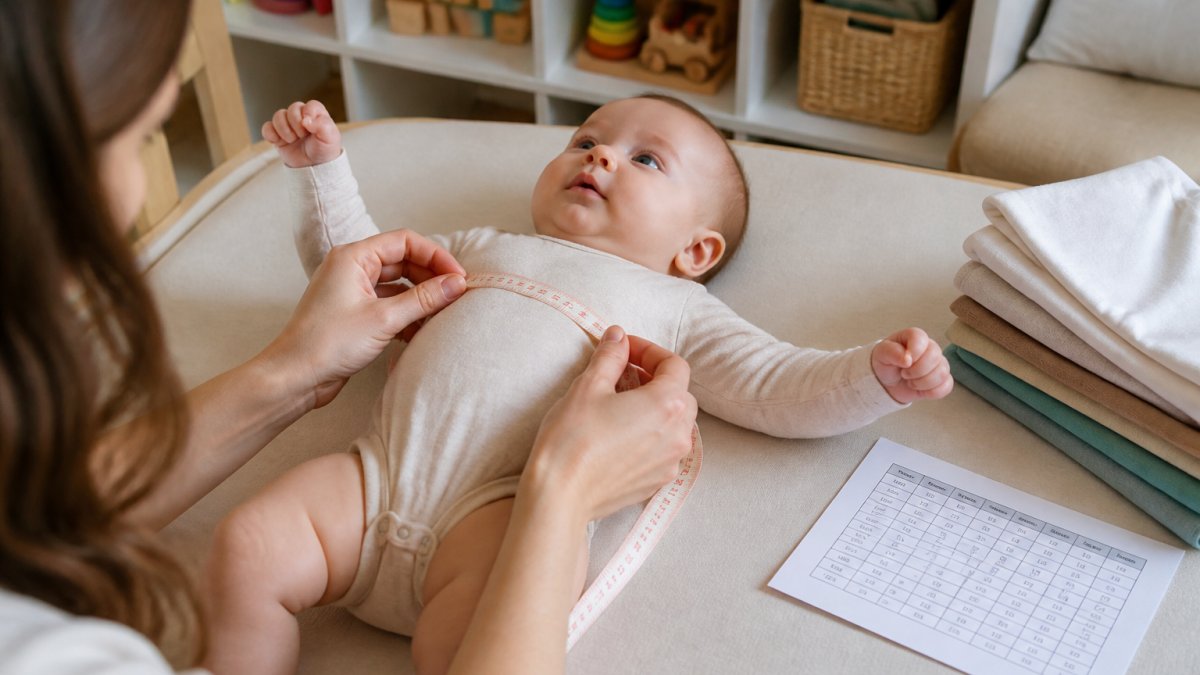
How to Take Accurate Measurements
Measure your baby when they're calm and still. Use a soft measuring tape, not a rigid ruler. Here's what to measure:
- Length: Lay your baby flat on a clean surface. Measure from the top of their head to the bottom of their feet. Write down the number in centimeters.
- Chest: Wrap the tape around the fullest part of their chest, just under the arms. Keep it snug but not tight.
- Waist: Measure around the narrowest part of the torso, typically just above the belly button.
- Sleeve length: Measure from the shoulder point down to the wrist with the arm relaxed at their side.
Take measurements twice to confirm accuracy, since babies squirm, and write everything down immediately.
Understanding Garment Measurements vs. Baby Size
Baby clothing sizes don't always match your baby's measurements. A "3-month" size doesn't mean it fits a 3-month-old baby. It's just a label.
What matters is the garment's actual measurements, not the age label. A "3-month" garment might have a 31-centimeter chest width, while your 4-month-old needs 32 centimeters. The measurements tell the real story.
Always compare your baby's measurements to the garment's measurements, not the size label. This is the single most reliable way to predict fit when you can't try clothes on.
Use a Baby Clothes Size Chart to Find Your Best Fit
Every retailer publishes a size chart. Find it before you buy; most list age ranges, weight ranges, and specific garment measurements in centimeters.
Decoding Common Size Labeling Systems
Baby clothing uses several labeling systems. Understanding them helps you navigate online shopping.
Age-based labels (Newborn, 0-3 months, 3-6 months): Common but imprecise, since growth varies widely. Use these as a starting point, then check the measurements.
Centimeter labels (59cm, 66cm, 73cm, 80cm, 90cm): These indicate the garment's length in centimeters. This system is more precise. If your baby measures 65 centimeters in length, look for garments labeled 66cm or 73cm.
Weight-based labels (up to 5 lbs, 5-8 lbs): Less common but useful if you know your baby's weight. Cross-reference weight with length for the best fit.
Most size charts show all three systems side by side. Use the one that matches your baby's measurements most closely.
Brand-to-Brand Sizing Differences
Sizing varies dramatically between brands: one company's 6-month size might fit like another's 9-month size. That's why the size chart matters more than the label.
At Tender Tots & Wellness, our products include detailed size guides. For example, the Baby Cotton Onesie comes in sizes 59cm through 90cm. Asian sizing typically runs 1-2 sizes smaller than US or European sizing, so if your baby falls between two sizes, sizing up is often the safer choice.

Before buying from any brand, check for notes on regional sizing differences. Many Asian-made baby clothes run smaller, so consider sizing up.
Newborn Clothes Sizing: Age, Weight, and Growth Rate Matter
Newborns grow fast, so a size that fits one month may be too small the next. Understanding newborn sizing helps you buy the right quantities.
When to Buy Newborn vs. 0-3 Month Sizes
Newborn size typically fits babies from birth to about 1 month old. Newborn clothes are snug and designed for tiny bodies. Most newborns weigh 5-8 pounds at birth.
0-3 month size fits babies from roughly 1 month to 3 months old. These garments are roomier and account for rapid early growth. Babies typically gain 1-2 pounds per month in the first few months (Health Supervision Visits, 1 and 2 Months).
If preparing before birth, buy a mix of both. A few newborn-size items work for the first week or two, but most of your early wardrobe should be 0-3 month size, since babies outgrow newborn sizes quickly.
Growth rate varies: some babies jump from newborn to 3-month size in 6 weeks, others stay in newborn sizes for 8 weeks.
Read Customer Reviews to Interpret Fit and Quality
Customer reviews reveal how garments actually fit and wear, telling you things the product description doesn't. Use the photos and detailed feedback buyers share.
What to Look for in Reviews
Read reviews specifically mentioning fit and sizing. Look for comments like "runs small" or "true to size" or "generous sizing." These phrases tell you whether the garment's actual fit matches the size chart.
Check for repeated comments. If ten reviews say a garment runs small, it probably does; multiple reviews saying the same thing reveal a pattern.
Look at the photos reviewers upload. See how the garment drapes on real babies. Notice if sleeves are too long or if the length hits at the ankles or mid-calf. Photos show you fit in ways words can't.
Read reviews from parents whose babies are similar to yours, whether taller or chunkier. Fit is personal, so find reviews that match your situation.
Red Flags in Product Descriptions and Images
Vague product descriptions are a warning. If a listing doesn't specify fabric content, garment measurements, or care instructions, that's a red flag.
Watch for product photos that hide details, like cropped-out sleeves or loosely draped garments. Good photos show the garment on a baby or model from multiple angles.
Baby Cotton Romper Jumpsuit – Long Sleeve One-Piece Outfit for Infants →
Descriptions using phrases like "fits most babies" or "one size fits many" should make you cautious. Babies vary widely. A garment that "fits most" might not fit yours. Stick with specific measurements instead.
Prioritize Soft, Breathable Fabrics for Comfort and Sensitive Skin
Fabric choice affects comfort and skin health. Babies have delicate skin. The wrong fabric can cause irritation, rashes, or overheating.
Why Cotton and Natural Fibers Matter
Cotton is the gold standard for baby clothes: soft, breathable, and gentle on sensitive skin. It lets air circulate, helping regulate temperature and reducing heat rash risk.
Look for 100% cotton or high-cotton blends (at least 95% cotton). The Baby Cotton Onesie is made from 95% cotton, providing softness and breathability for everyday wear.
What to Avoid: Tags, Zippers, and Irritating Details
Scratchy tags cause discomfort and can irritate baby's skin. Check product descriptions and photos for tag placement.
Check the Baby Clothes Return Policy Before You Buy
Returns happen. Sizes don't fit. Fabric quality disappoints. A good return policy protects you when something goes wrong.
Understanding Return Windows and Final-Sale Items
Read the return policy before adding items to your cart. Final-sale items can't be returned if they don't fit, so the lower price carries higher risk.
Fabric Shrinkage and Care Instructions
Cotton shrinks, so a garment that fits perfectly might become too small after washing. Check care instructions: cold water and air drying suggest it may shrink if washed hot or dried in a dryer.
Read reviews mentioning how garments wear after washing. Reviewers often comment on shrinkage or fading. If multiple reviews mention significant shrinkage, consider sizing up or choosing a different brand.
Follow care instructions exactly. Hand washing and air drying preserve fit and fabric quality, while hot machine washing and dryer heat accelerate shrinkage and wear.
How Many Baby Clothes to Buy in Each Size
Buying too many clothes in one size means waste when your baby outgrows it quickly. Buying too few means constant laundry and running out of clean clothes. The right quantity depends on how often you wash and your baby's growth rate.
Building a Practical Wardrobe With Mix-and-Match Basics
Start with versatile basics that mix and match. Solid-colored onesies, bodysuits, and pants create multiple outfit combinations. The Baby Cotton Romper Jumpsuit works as a complete outfit on its own or layers under other pieces.

For newborn size, buy 5-7 onesies, 3-4 pairs of pants, and 2-3 sleepers. You'll do laundry frequently, so you don't need huge quantities.
For 0-3 month size, buy 7-10 onesies, 4-6 pants, 2-3 sleepers, and a few specialty pieces.
Buy mostly basics in neutral colors. Add a few printed or patterned pieces for variety. Basics are more versatile and work across seasons when layered properly.
| Size | Onesies | Pants | Sleepers | Total Items |
|---|---|---|---|---|
| Newborn | 5-7 | 3-4 | 2-3 | 10-14 |
| 0-3 Months | 7-10 | 4-6 | 2-3 | 13-19 |
| 3-6 Months | 6-8 | 3-5 | 2 | 11-15 |
Seasonal Layering and Outerwear Needs
Layering extends your wardrobe. A onesie plus pants plus a lightweight sweater creates multiple outfit options. In warm months, a onesie and shorts work alone. In cold months, add layers.
Buy one lightweight sweater or cardigan per size. One heavier sweater or jacket works for outdoor time. Outerwear doesn't need to be washed as frequently as base layers, so fewer pieces suffice.
Seasonal clothing needs vary. If your baby is born in winter, buy more long-sleeve onesies and warm layers. If born in summer, prioritize short-sleeve onesies and lightweight options. Plan ahead for the seasons your baby will experience in each size range.
Choose Practical, Easy-to-Dress Styles for Daily Life
Complicated clothing frustrates parents. Buttons, zippers, and ties slow down diaper changes. Snap closures and simple pullover styles make dressing and diaper changes faster.
Snap-button onesies like the Baby Cotton Onesie allow quick access for diaper changes without undressing your baby completely. Pullover styles work for playtime and nap time. Avoid complicated closures that require two hands or multiple steps.
Rompers and jumpsuits like the Baby Cotton Romper Jumpsuit cover your baby completely in one piece, which is convenient for temperature control and a finished look.
Pants with elastic waistbands are easier to pull on and off than pants with snaps or zippers. Avoid anything with complicated fasteners for everyday wear. Save those for special occasions when convenience matters less.
Buying baby clothes online without trying them on doesn't have to be stressful. Our curated selection of baby clothing, including our Pure Cotton Newborn Baby Gift Set at $29.99, combines soft, breathable fabrics with detailed size guides so you know exactly what you're getting.

Frequently Asked Questions
How do I know if baby clothes will fit without trying them on?
Measure your baby's chest, length, and weight, then compare those measurements directly to the retailer's size chart. Check customer reviews for fit feedback (e.g., 'runs small' or 'true to size'). Look at product photos from multiple angles and read descriptions of fabric stretch. Always review the return policy so you can exchange if the fit isn't right when it arrives.
What should I check in a baby clothes size chart?
Compare your baby's actual measurements (chest, length, sleeve) to the chart's dimensions in centimeters. Note the age range and weight range listed, but prioritize the garment measurements over age labels, as growth varies widely. Check for notes about whether sizes run small or large, and verify if the chart uses Asian sizing (which typically runs 1-2 sizes smaller than US/EU sizing). Many retailers recommend sizing up if your baby is between sizes.
Should I buy newborn or 0-3 month clothes?
Buy both if possible. Newborn sizes (59cm) fit babies from birth, but some babies skip this size quickly. The 0-3 month size (66-73cm) covers roughly 3-6 months. If your baby is expected to be larger, start with 0-3 month sizes. Many parents find buying a few newborn essentials (like bodysuits and rompers) plus more 0-3 month outfits balances growth and practicality. Check your retailer's return policy so you can exchange sizes if needed.
How many baby clothes should I buy in each size?
For everyday wear, plan for 5-7 bodysuits or onesies, 3-5 tops, 2-3 bottoms, and 1-2 outfits per size. Babies go through clothes quickly due to spills and diaper accidents, so having enough to last 2-3 days between laundry is practical. Focus on mix-and-match basics in neutral colors so pieces coordinate easily. As your baby grows, buy fewer items in larger sizes since growth rate slows after 6 months. Tender Tots & Wellness offers versatile pieces like the Baby Cotton Onesie ($29.99) and Baby Cotton Romper ($35.99) that layer well and work across seasons.