

Why Choose Plastic-Free Baby Feeding Supplies
Table of Contents
- Why Parents Are Rethinking Plastic Baby Feeding Supplies
- Material Safety and Trade-Off Matrix: Plastic vs Glass vs Stainless Steel vs Silicone
- Glass Baby Bottles: Weight, Breakage, and Everyday Use
- Stainless Steel Baby Feeding Supplies That Last
- Silicone Baby Feeding Products: Where They Fit and Where They Don't
- How to Avoid Microplastics Exposure With Babies During Mealtime
-
A Stage-by-Stage Transition Plan (Without Replacing Everything at Once)
- Priority Order: What to Replace First
- Stage 1: Bottles (0-6 months)
- Stage 2: Purees and Weaning (6-9 months)
- Stage 3: Self-Feeding and Baby-Led Feeding (9-18 months)
- Stage 4: Toddler Meals (18 months+)
- Accessibility and Practical Use
- Care Instructions and Product Lifespan
- A Budget-Conscious Approach
- Frequently Asked Questions
Last Updated: October 15, 2026
Why Parents Are Rethinking Plastic Baby Feeding Supplies
Walk down any baby aisle and you'll see the same thing: bright plastic plates, plastic spoons, plastic bottles, plastic pouches.
But a growing number of parents are asking a harder question. What happens to that plastic when it meets hot food?
That's the heart of why choose plastic-free baby feeding supplies. It isn't about chasing a trend. It's about reducing a daily exposure that adds up over years.
What the Evidence on Chemical Exposure Does and Doesn't Show
Here's the honest version: the science is suggestive, not settled.
Many plastics used in feeding gear contain additives like BPA, BPS, and BPF. These are linked to concerns about endocrine disruptors, chemicals that can interfere with hormone signaling (Endocrine Disruptors).
What the evidence does not show is a direct, proven line from a plastic bowl to a specific health outcome in your child.
So the reasonable take is this: reduce exposure where it's easy, and don't panic where it isn't. FDA guidance on BPA in food contact notes that BPA-free does not automatically mean risk-free, since replacement chemicals can behave similarly.
Material Safety and Trade-Off Matrix: Plastic vs Glass vs Stainless Steel vs Silicone
Most roundups list materials and stop at "glass is safest." That's not useful when you're standing in a store aisle holding a silicone suction bowl and a stainless steel plate, trying to decide which one survives a toddler.
Here's the honest framing: there is no single safest material. There is a safest material for a given use, bottles, hot purees, cold snacks, self-feeding, travel.
The Full Comparison
| Material | Typical Use | Heat Tolerance | Breakage Risk | Weight | Staining / Odor | Lifespan | Main Watch-Out |
|---|---|---|---|---|---|---|---|
| Polypropylene (PP) plastic | Plates, bowls, cups, spoons | Low, warps and leaches with heat | Low | Lightest | Stains; scratches harbor residue | Short, replace at first scratches | Additives and microplastic shedding under heat and wear |
| Glass (borosilicate or tempered) | Bottles, storage, puree jars | High, microwave and oven safe | High if dropped | Heaviest | None | Long if unchipped | Chips and cracks; never use a chipped rim |
| Stainless steel (304 / 18-8) | Plates, bowls, cups, cutlery | High for food, but not microwave safe | Very low | Moderate | None | Very long, years | Not microwave safe; can get hot to the touch |
| Food-grade silicone | Spoons, suction bowls, bibs, cups | Moderate, varies by grade | None | Light | Can absorb odors and flavors | Medium, replace when tacky | Lower grades may contain fillers |
| Bamboo | Plates, spoons, bowls | Low, not for hot liquids | Low | Light | Can stain; can crack if soaked | Medium | Often bonded with melamine resin, check the label |
| Wood (maple, beech) | Spoons, bowls, teethers | Low | Low | Light | Absorbs oils and odors | Medium with oiling | Hand wash only; never soak |
Why Each Material Behaves the Way It Does
Plastic. Polypropylene is the most common food-contact plastic in baby gear because it's cheap, light, and shatter-resistant.
Glass. Borosilicate and tempered glass are chemically inert, so nothing migrates into food regardless of temperature.
Stainless steel. Food-grade 304 (often labeled 18-8) is non-reactive, doesn't stain, doesn't hold odors, and survives drops that would shatter glass.
Bamboo and wood. Both are renewable and pleasant to use, but they're porous and can't handle soaking or hot liquids.
The Practical Takeaway
If you only change three things, change these: glass or steel for anything hot, steel or wood utensils instead of plastic spoons, and silicone only for soft-contact items like spoons and suction bases. That covers the highest-exposure moments without forcing a full kitchen overhaul.
Glass Baby Bottles: Weight, Breakage, and Everyday Use
Glass baby bottles are the cleanest option for bottles specifically. They don't leach, they don't stain, and they don't hold onto smells.
The catch is obvious. Glass is heavy and it breaks.
For home use, that trade-off is usually worth it. For diaper bags and daycare, many parents keep one glass bottle for home and a lighter option for travel. A silicone sleeve cuts down on breakage and makes gripping easier.
Stainless Steel Baby Feeding Supplies That Last
Stainless steel baby feeding supplies are the workhorse of a plastic-free kitchen. Bowls, plates, cups, and cutlery in steel survive drops, dishwashers, and years of use.
They're stain-resistant and odor-free, which matters more than it sounds. A steel bowl that held tomato sauce yesterday won't taste like it today.
360° Rotate Spill-Proof Baby Bowl – Self-Righting Toddler Feeding Dish →
The one limitation: steel can't go in the microwave. If you reheat often, pair steel plates with glass storage.
Silicone Baby Feeding Products: Where They Fit and Where They Don't
Silicone baby feeding products shine in specific roles. Soft spoons for self-feeding, suction bowls that stay put, and bibs that wipe clean.
Where they fall short is heat and lifespan. Lower-grade silicone can absorb odors over time. Look for food-grade silicone and replace anything that gets tacky or discolored.
How to Avoid Microplastics Exposure With Babies During Mealtime
Learning how to avoid microplastics exposure with babies comes down to a few habits, not a total overhaul.
- Skip the microwave for anything plastic
- Retire scratched or cloudy plastic gear
- Choose glass or steel for hot foods and liquids
- Use wood or steel utensils instead of plastic spoons
- Avoid single-use plastic pouches when you can
Microplastics also shed from plastic during normal wear and tear. Cutting back on scratched plastic is the highest-value move.
A Stage-by-Stage Transition Plan (Without Replacing Everything at Once)
Most guides imply you should swap every plastic item in your kitchen this weekend. That's expensive, wasteful, and unnecessary. The better approach is to replace items in order of exposure, the pieces that touch hot food and get the most wear first, and let the rest age out naturally.
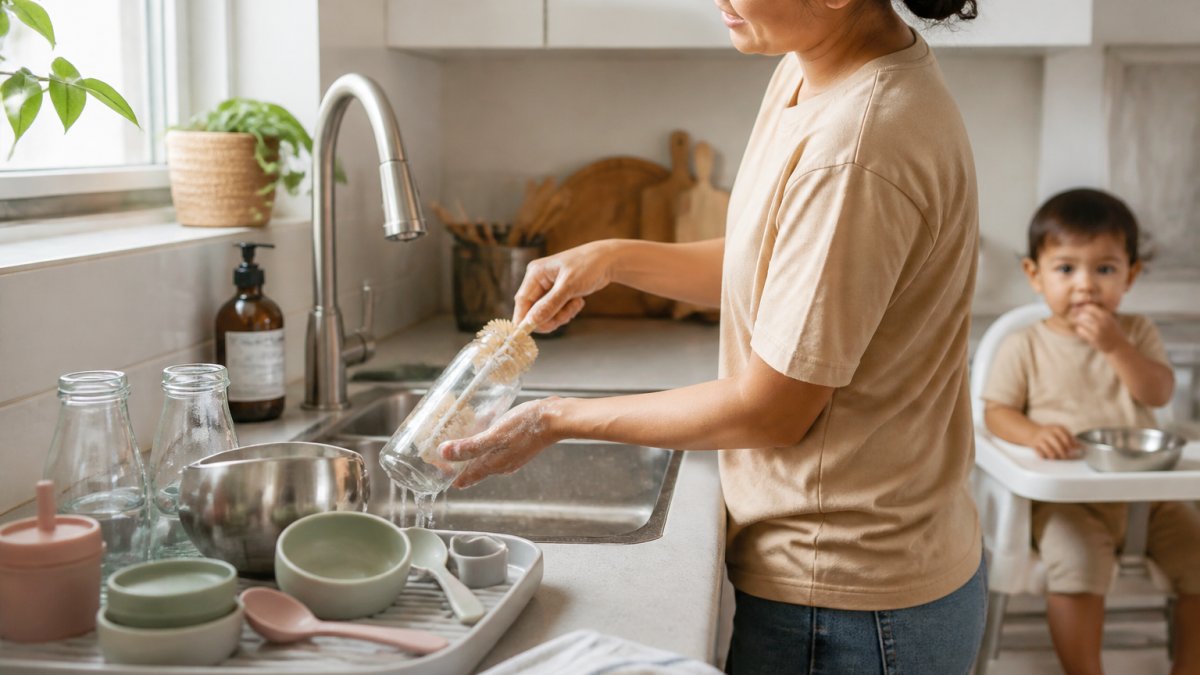
Priority Order: What to Replace First
- Anything that goes in the microwave. This is the highest-exposure habit and the cheapest to fix, reheat in glass, serve in whatever you already own.
- Scratched, cloudy, or warped plastic. Wear is the mechanism that increases leaching and shedding, so worn items are the ones worth retiring first.
- Bottles and sippy cups used daily. These see heat, repeated washing, and long contact time with milk or formula.
- Utensils and spoons. Cheap to replace, high contact frequency, and easy to find in steel, silicone, or wood.
- Plates, bowls, and storage. Replace as they wear out rather than all at once.
Stage 1: Bottles (0-6 months)
Start with glass bottles for home feeds, they're inert, don't stain, and don't hold onto milk smells. Keep one lightweight bottle for outings and daycare, where glass is impractical. A silicone sleeve reduces breakage and makes gripping easier for tired hands at 3 a.m.
Stage 2: Purees and Weaning (6-9 months)
This is where soft-contact tools matter most. Add silicone spoons and a steel or glass bowl for purees. Silicone is the right call here because it's gentle on gums and won't chip. If you're batch-prepping purees, glass storage jars reheat cleanly and don't stain from orange and green vegetables the way plastic does.
Stage 3: Self-Feeding and Baby-Led Feeding (9-18 months)
Move to stainless steel plates, steel cutlery, and open cups. This is the stage where gear takes the most abuse, dropped, thrown, banged on the tray, and steel is the only material that shrugs it off. Suction bases help here, but check that the suction actually holds on your specific tray; performance varies widely by surface.
Stage 4: Toddler Meals (18 months+)
Replace single-use food pouches with reusable pouches and steel snack containers. Reusable pouches pay for themselves quickly if you're buying pouches regularly, and steel containers survive being tossed in a bag without cracking.
Accessibility and Practical Use
Not every baby feeds the same way. If your child has motor delays, low muscle tone, or is working with a feeding therapist, the priorities shift:
- Weight matters. Steel plates and cups can be heavy for small hands. Silicone or bamboo may be easier to lift.
- Grip matters. Thicker, textured handles on spoons help children with a weak grasp. Silicone-coated steel spoons are a common compromise.
- Suction matters. A bowl that slides is a bowl that ends up on the floor. Test suction on your actual high chair tray before committing.
- Portability matters. For caregivers and daycare, lightweight and unbreakable usually beats inert and heavy. It's fine to use different materials in different settings.
Care Instructions and Product Lifespan
How you clean gear decides how long it lasts, and how long it lasts decides how much exposure you're actually reducing.
- Glass: dishwasher safe; inspect rims and bodies monthly for chips and hairline cracks. Retire at the first chip.
- Stainless steel: dishwasher safe; lasts for years. Discard if it develops deep dents that trap food or if the surface pits.
- Silicone: hand wash when possible; dishwasher top rack is usually fine. Replace when it turns tacky, discolors, or holds onto odors after washing.
- Wood and bamboo: hand wash, dry immediately, oil occasionally with food-safe mineral oil. Never soak. Replace if it cracks or splinters.
- Plastic: replace at the first sign of scratches, cloudiness, or warping. Do not put it in the microwave or the bottom rack of a hot dishwasher.
A Budget-Conscious Approach
You don't need a matching set. A workable starter kit is one glass bottle, two steel bowls, two silicone spoons, and one steel cup, enough to cover the highest-exposure moments for a single baby.
For families who want a simple starting point, our 360° Rotate Spill-Proof Baby Bowl is a practical, BPA-free pick for early self-feeding. Just remember it's not microwave safe, so reheat in glass first.

Frequently Asked Questions
Which is better for babies, silicone or stainless steel?
It depends on the job. Stainless steel baby feeding supplies handle heat, dishwashing, and heavy daily use without scratching, so they suit bowls, plates, and utensils. Silicone baby feeding products are soft, flexible, and gentle on gums, which makes them a good fit for spoons, teethers, and suction-based plates. Many families use both: stainless steel for hot or acidic foods, silicone for self-feeding tools. Whichever you pick, check that it is labeled food-grade and follow the maker's care instructions.
Are glass baby bottles safer than plastic bottles?
Glass baby bottles do not contain the plastic additives that raise concern, and glass does not scratch into the food the way some plastics can. That said, glass is heavier and can break, so you need to handle it carefully and inspect for chips. If you want to reduce plastic contact with milk, glass is a reasonable first choice. If breakage is a real worry, stainless steel bottles are another plastic-free option worth trying.
How can I reduce my baby's exposure to microplastics during feeding?
Start with the items that touch food and heat most often. Replace scratched plastic plates, bowls, and cups, since wear and tear can release particles into food. Avoid microwaving plastic, even BPA-free plastic, because heat exposure increases chemical leaching. Swap in glass, stainless steel, or silicone for daily meals, and hand-wash or use the top rack for anything fragile. You do not need to replace everything at once; changing the most-used items first gets you most of the benefit.
Does BPA-free labeling mean a feeding product is safe?
No. BPA-free only means bisphenol A was not used. Some replacements, including BPS and BPF, are structurally similar and have drawn similar questions from researchers. BPA-free plastic can also still scratch, wear, and leach when heated. Treat BPA-free as one data point, not a guarantee. If you want to avoid the whole category of concern, glass, stainless steel, and food-grade silicone sidestep the bisphenol question entirely.
Switching to plastic-free feeding gear can feel overwhelming when you're already juggling a newborn. Start with one stage, not your whole kitchen. At Tender Tots & Wellness, we make that easier with a curated mix of baby gear, free worldwide shipping, and fair prices on products chosen to fit a modern family's needs. Browse our feeding essentials and take the first swap today.