

How to Create a Montessori Reading Corner at Home
Quick Summary
A montessori reading corner is a small, calm space where books sit at a child's level, spine-out or cover-facing, so a toddler can choose and return them alone. Set it up in a quiet spot near natural light, using low shelving, a cushion and a soft rug. Keep only 6 to 8 books on display.
- Shelf top edge should sit 12 to 18 inches off the floor for a seated toddler.
- Keep at least 24 inches of clear floor in front of each shelf.
- Use a rug about 3 by 4 feet for a single-child nook.
- Rotate the displayed books every 2 to 4 weeks.
- Leave a favorite book on the shelf for at least two weeks before rotating it out.
Table of Contents
- Why a Montessori Reading Corner Works for Toddlers
- Choosing the Right Location and Natural Lighting
- Setting Up Child-Sized Furniture and a Montessori Book Display Shelf
- Adding Soft Textures, Rugs and a Cozy Atmosphere
- Selecting and Organizing Books by Developmental Stage
- How to Rotate Books in a Montessori Home
- Setting Up Your Reading Corner This Weekend
- Frequently Asked Questions
Last Updated: November 3, 2026
Want a reading corner that makes your toddler reach for books on their own? A Montessori reading corner does exactly that. It is a small, calm space where books sit at a child's level, spine-out and easy to grab, and where the reader can settle in without a grown-up hovering. This guide shows you how to set one up in a single weekend, even in a small apartment on a modest budget.
Why a Montessori Reading Corner Works for Toddlers
A Montessori reading corner is a dedicated spot where children can explore books independently. The approach is built on the idea that young children learn best when their environment invites them to act on their own.
Here is what makes it work:
- Books are visible. Spine-out shelves show the covers, which draws curious hands.
- The space is calm. A defined nook signals that reading is a quiet, focused activity.
- Choice is built in. A small, rotating selection means the child picks what to explore.
- Everything is reachable. Low shelves and floor seating remove the need to ask for help.
Parents often notice that a child who can pick a book alone tends to sit with it longer. Many early childhood educators describe reading time as one of the most useful parts of a child's day, and a well-set-up corner makes that time easier to protect.
Choosing the Right Location and Natural Lighting
The best spot is quiet, out of the main traffic path, and close enough to a window to get daylight. Avoid corners where people walk through every few minutes. A bedroom corner, a spot beside a living room window or a wall alcove often works well.
Check these details before you commit:
- Natural light: Choose a spot near a window if you can. Daylight is easier on the eyes than a single overhead bulb.
- Walking paths: Keep the nook out of the route between the kitchen and the front door.
- Floor space: You need room for a rug or cushion and a low shelf, roughly a few feet by a few feet.
- Outlets and cords: Skip spots with cords or heaters nearby for safety.
Lighting matters even after you pick a spot. Add a warm, dimmable lamp for evenings, but keep the light low and indirect so it does not glare off the pages.
Setting Up Child-Sized Furniture and a Montessori Book Display Shelf
The furniture should fit your child, not you. A toddler who can sit and stand without help will use the corner far more often. Low, sturdy pieces that your child can move safely are the goal.
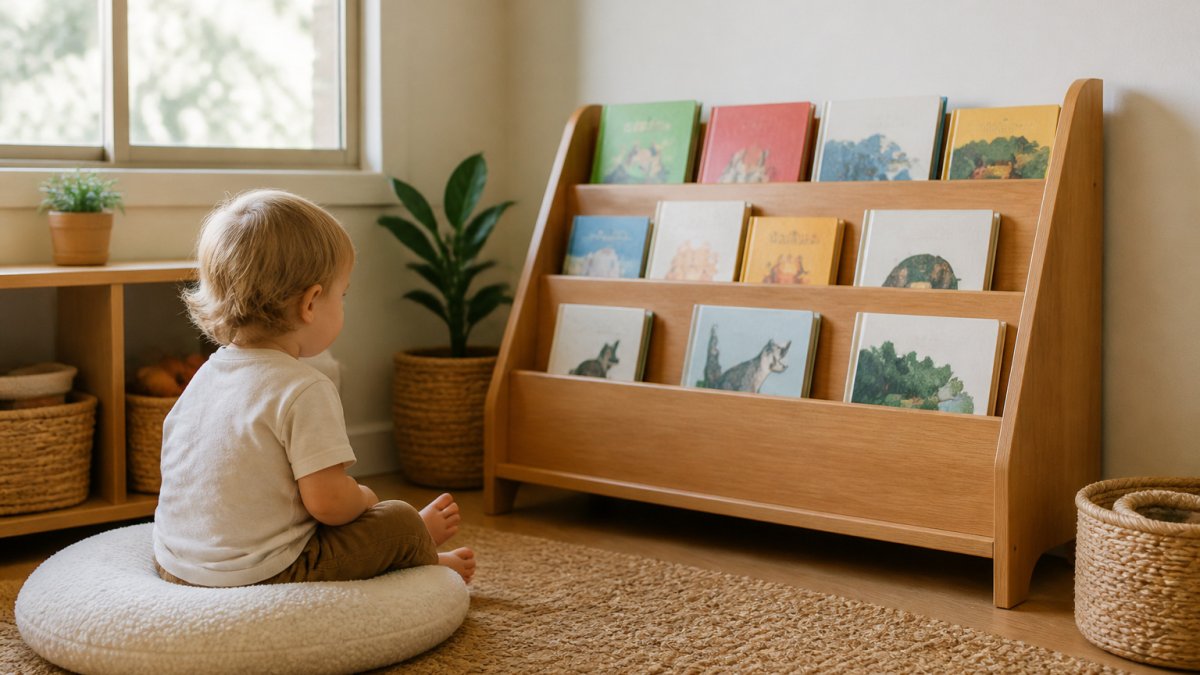
Start with a few basics:
- A low shelf with two or three levels, placed at the height of your child's eyes when seated.
- A floor cushion or small bean bag sized for one child, roughly 20 to 24 inches across.
- A soft rug to mark the reading zone and soften the floor, about 3 by 4 feet for a single-child nook.
A Montessori book display shelf works best when it shows covers, not just spines. Front-facing shelves let your child recognize a book by its picture.
Floor-Level Shelving and Accessibility
Floor-level shelving is the heart of accessibility. When books sit where your child can reach them, they can choose, carry and return them alone. Keep the top shelf no higher than your child can comfortably reach while sitting or standing, and leave the lowest shelf for the heaviest, most-used board books so the shelf stays stable.
A few accessibility tips:
- Use shelves with no sharp corners, and anchor any tall piece to the wall with a furniture strap to reduce tipping risk.
- Place a basket or bin on the lowest shelf for board books that little hands can grab.
- Leave at least 24 inches of clear floor in front of each shelf so your child can pull out a book without bumping into anything.
- Check that shelf edges are sanded or capped; a raw plywood edge will splinter after a few months of daily use.
Budget-Friendly DIY Options for Small Spaces
You do not need expensive furniture to build a good corner, and a full setup can be affordable if you build the display yourself. Many families use what they already own.
- Repurpose a sturdy low table or step stool as a display surface, adding a cloth-covered box for storage.
- Use a shallow crate turned on its side as a book cubby.
- Make a cushion by covering a firm pillow with a washable fabric.
- Hang a fabric pocket organizer on a closet door or the side of a shelf for extra storage without taking floor space.
For a front-facing ledge on a budget, a simple board with two small brackets and a dowel across the front can make a cover-facing shelf. Sand the edges and seal the wood before mounting it at a height your child can reach.
In small spaces, one wall of low shelving and a single cushion can be enough.
Watch out: A shelf mounted only into drywall with plastic anchors may pull out under a child's weight.
The article gives these measurements for setting up the furniture and display shelf.
| Item | Value | Note |
|---|---|---|
| Shelf top edge height | 12 to 18 inches | Off the floor for a seated toddler |
| Shelf depth | About 10 inches | Front to back, so small arms reach the back row |
| Floor cushion size | 20 to 24 inches | Across, sized for one child |
| Rug size | About 3 by 4 feet | For a single-child nook |
| Clear floor in front of shelf | 24 inches | So the child can pull out a book |
Adding Soft Textures, Rugs and a Cozy Atmosphere
Soft textures make a reading corner feel like a place to rest. A rug, a throw blanket and a few floor pillows signal comfort. Choose natural materials like cotton, wool or linen where you can, since they are easy to clean and feel pleasant to touch.
WordWise Blocks - Fun Learning For Kids →
Keep these points in mind:
- Pick a rug with a low pile so it is easy to clean and does not trap crumbs.
- Use washable covers on cushions and pillows.
- Limit the color palette. Muted tones feel calm. Bright, busy patterns can pull attention away from the books.
- Add one meaningful item, such as a small plant or a framed print at child height, for a personal touch.
A cozy corner should feel inviting, not crowded. Leave some open floor so your child can sit, lie down or stretch out.
Selecting and Organizing Books by Developmental Stage
Not every book suits every age, and the corner itself should change as your child grows.
- Babies (0 to 12 months): Board books with high-contrast images and simple faces. Touch-and-feel books work well. At this stage the corner is really a floor mat with two or three books within rolling reach; a low shelf is optional and a shallow basket on the floor is safer.
- Young toddlers (12 to 24 months): Sturdy board books with one object per page, plus lift-the-flap books. Add the front-facing ledge now, but keep only 4 to 6 books on it. Expect mouthing, so skip anything with flaps that tear easily.
- Older toddlers (2 to 3 years): A mix of board books and short picture books. This is when the child starts returning books to the shelf, so a shelf with a visible home for each book matters more than the book count.
- Preschoolers (3 to 5 years): Picture books with short stories, rhyme and familiar routines. The shelf can move up an inch or two, and you can introduce a small basket of paper-page books for supervised reading.
Organize books by stage so your child always finds something their level. Keep the most-used titles on the lowest shelf.
For a practical start, try this simple set:
- 6 to 8 books on display at one time
- A mix of two or three stories, two concept books and one or two that match your child's current interests
- Board books for chewing and grabbing, paper picture books for sitting and reading together
Choose books with sturdy construction and simple, honest illustrations. Your child will handle them often, so durability counts.
Watch out: Moving to paper-page picture books too early is a common mistake.
How to Rotate Books in a Montessori Home
Rotating books is one of the most effective habits in a Montessori reading corner. Keeping the full collection out at once can feel overwhelming.
Try this simple routine:
- Store extra books in a closed bin or cabinet out of sight.
- Choose 6 to 8 books to display on the shelf.
- Swap the display every 2 to 4 weeks, or when your child stops reaching for certain titles.
- Watch what your child picks. Favorites can stay longer, and new picks show what they are curious about.
Rotation also makes it easy to match books to what your child is learning, like animals, colors or bedtime routines. Bringing a familiar book back after a few weeks often sparks renewed interest.
Watch out: If you swap books too often, your child may not get the chance to revisit a favorite.
Setting Up Your Reading Corner This Weekend
You can have a working reading corner by the end of the weekend. Work through the steps in order, and do not worry about making it perfect on day one.
- Clear and measure the spot. Pick your location and note its size.
- Place the rug and cushion first to define the reading zone.
- Set up the low shelf and anchor it to the wall if needed.
- Choose 6 to 8 books for the first display, mixing ages and interests.
- Add soft textures like a throw or pillow, and check the lighting.
- Invite your child in and let them explore without guidance.
Once it is set up, step back and watch. Notice which books get picked up and how long your child stays.
The best reading corner is one your child actually uses. Start simple, keep it calm and let your child lead.
Frequently Asked Questions
What makes a reading corner Montessori-friendly?
A Montessori-friendly reading corner is built around the child: low, open shelves that a toddler can reach, a small number of books facing outward, a soft floor spot instead of a high chair, and a calm, uncluttered space. Everything should be at the child's height so they can choose a book, carry it, and return it without help. Natural materials such as wood, cotton and wool fit the approach, and the space should invite independent use rather than adult-led reading.
How many books should be in a Montessori reading corner?
Most families do well with about 8 to 12 books displayed at one time, with the rest stored out of sight. A small selection makes it easier for a toddler to focus and to see every title. Rotating the set every two to four weeks keeps the corner feeling fresh without buying new books. Start smaller than you think you need; you can always add a few titles later if your child keeps returning to the same shelf.
Where should a reading corner be placed in a house?
Choose a quiet spot away from the busiest traffic route, ideally near a window for natural daylight and away from loud appliances. Bedrooms, playrooms and living room corners all work well. Make sure the spot is comfortable during the time your child usually reads, such as after breakfast or before nap time. A nook that feels separate from the rest of the room helps signal that it is a place for calm, focused activity.
What kind of furniture is best for a Montessori reading nook?
Low, sturdy furniture that a toddler can use independently is ideal. A floor-level bookshelf with open cubbies, a small floor cushion or a low basket of soft pillows, and a washable rug usually cover the essentials. Avoid tall bookcases, bean bags that are hard for little ones to climb out of, and anything with tipping risk. Wooden or natural-fiber pieces also match the Montessori emphasis on natural materials.
