

Non-Toxic Baby Play Mats for Floor Time: A Guide
Table of Contents
- What Makes a Baby Play Mat Non-Toxic
- Baby Play Mat Materials: What You Need to Know
- Foam Play Mat Safety: Testing and Standards
- Cushioning and Comfort for Baby Tummy Time Mat Use
- Washable Baby Play Mat Features and Durability
- Size, Coverage, and Room Setup for Floor Play
- Common Mistakes Parents Make When Choosing Play Mats
- Frequently Asked Questions
Last Updated: October 18, 2026
What Makes a Baby Play Mat Non-Toxic
Non-toxic baby play mats are designed with materials that don't contain harmful chemicals like phthalates, BPA, lead, or volatile organic compounds (VOCs). The term "non-toxic" means the mat has been tested and certified to meet safety standards that protect your baby during floor play and tummy time.
We understand that distinguishing mats made from rigorously evaluated materials from those carrying a marketing label without third-party verification matters because babies spend hours on these mats, often putting hands and mouth directly on the surface.
A truly non-toxic play mat starts with material selection: foam, fabric, or rubber sourced from suppliers who test for harmful substances. Manufacturing matters too, since even safe raw materials can pick up contaminants during production. That's why certifications and third-party testing are critical.
The real difference between a non-toxic mat and a standard one often comes down to transparency. Manufacturers willing to share testing results and certifications are typically more confident in their product's safety.
Baby Play Mat Materials: What You Need to Know
EVA Foam vs. Natural Alternatives
EVA foam (ethylene-vinyl acetate) is the most common material in baby play mats because it's lightweight, affordable, and offers decent cushioning. EVA is petroleum-based but can be manufactured without phthalates or BPA with the right formulation. Not all EVA is created equal, though, and some manufacturers cut corners to reduce costs.
Natural alternatives include natural rubber latex, organic cotton, and cork. Latex offers excellent cushioning and is naturally antimicrobial, but requires careful processing to remove allergenic proteins, and some families have latex sensitivities. Organic cotton is softer and more breathable but offers less impact cushioning. Cork is durable and moisture-resistant, though firmer than foam and less common in baby products.
The trade-off with natural materials is usually price and availability. An organic cotton and natural latex mat costs more than standard EVA foam, and selection may be limited. Many parents find a high-quality, phthalate-free EVA foam mat strikes the right balance between safety, comfort, and cost.
Certifications and Third-Party Testing
Look for mats carrying certifications from recognized testing organizations. CPSIA (Consumer Product Safety Improvement Act) requires all children's products sold in the U.S. to meet specific safety standards, but that's a baseline, not a quality differentiator. More meaningful certifications include GREENGUARD Gold (tests for VOCs and other chemicals), Oeko-Tex Standard 100 (evaluates textiles for harmful substances), and third-party lead and phthalate testing.
When a manufacturer displays these certifications, an independent lab has tested the product and verified it meets the stated standards. That's different from a company simply claiming its product is "safe", claims without testing are marketing language, not evidence.
Ask manufacturers for their testing reports; reputable companies are happy to share them. If a company can't provide documentation of third-party testing, look elsewhere. The mat your baby spends hours on deserves more than an unverified promise.
Foam Play Mat Safety: Testing and Standards
Most baby play mats sold in the U.S. must comply with CPSIA standards covering lead content, phthalate levels, and small parts that could pose a choking hazard. But CPSIA sets minimum thresholds, meeting the requirement doesn't mean the product is optimally safe or non-toxic.
Beyond CPSIA, many manufacturers pursue additional testing for volatile organic compounds (VOCs), chemicals that off-gas from foam and can irritate a baby's respiratory system. A mat that off-gases heavily will have a strong chemical smell when new, that smell indicates VOCs being released into the air your baby breathes.
Phthalates are plasticizers that make foam softer and more flexible, but they're also endocrine disruptors linked to developmental concerns (pubmed.ncbi.nlm.nih.gov). Phthalate-free formulations cost only slightly more to manufacture, so any mat claiming to be non-toxic should explicitly state it's phthalate-free.
Testing standards vary by region and manufacturer. A mat certified for European markets (which have stricter chemical regulations) may exceed U.S. requirements. When comparing options, a mat meeting both EU and U.S. standards is generally safer than one meeting only U.S. minimums.
Cushioning and Comfort for Baby Tummy Time Mat Use
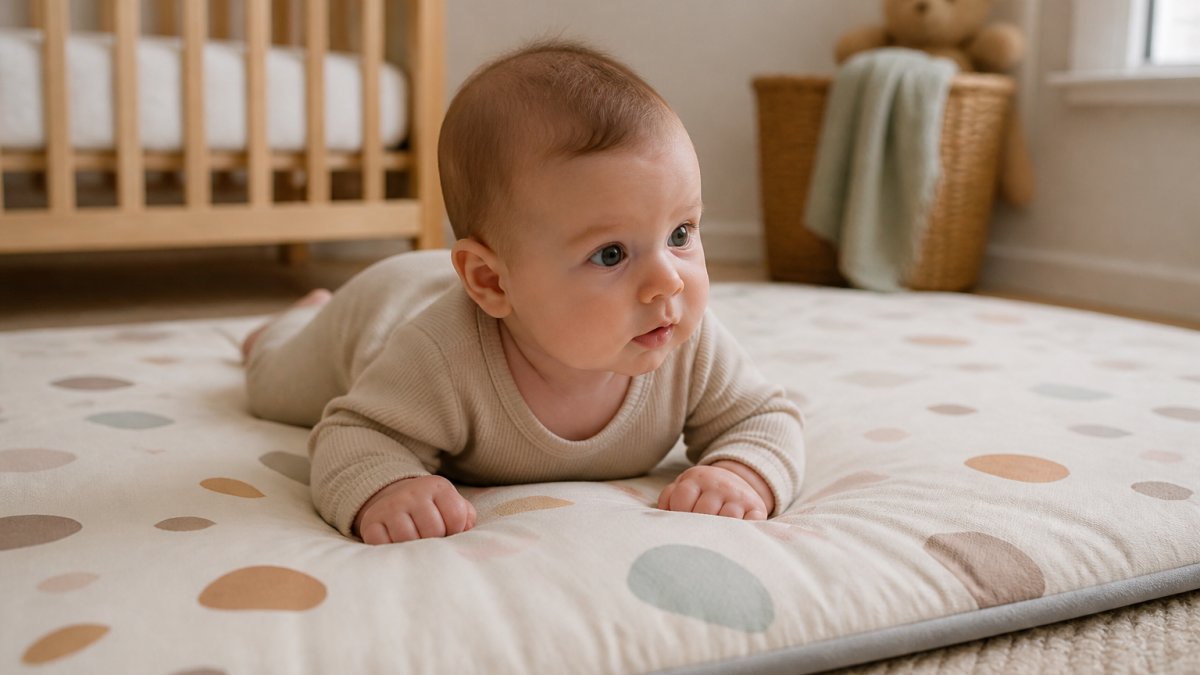
Cushioning quality directly affects how comfortable your baby is during tummy time and floor play. A mat that's too firm won't adequately support developing joints and muscles; one that's too soft may compress under your baby's weight, reducing its protective benefit.
The ideal non-toxic baby play mat for tummy time offers moderate cushioning, firm enough to support your baby's body without sinking too much, soft enough for extended floor time. During tummy time, your baby works against gravity to lift their head and chest, building neck and shoulder strength. Too hard makes this effort uncomfortable; too soft provides no stable ground to push against.
Thickness and Firmness for Developmental Support
Most quality baby play mats range from 0.5 to 1 inch thick. Thinner mats (0.5 inches) offer basic cushioning and are easier to fold and transport, but protect less from hard floors. Thicker mats (0.75 to 1 inch) absorb more impact and suit extended floor play on concrete or tile.
Firmness is measured by how much the mat compresses under pressure. A durometer rating of 25-35 is typical for baby play mats, soft enough to be comfortable, firm enough to support your baby's body. To test, press your thumb into the mat: it should indent slightly but spring back quickly. If your thumb sinks deep and the mat stays compressed, it's too soft.
Your baby's developmental stage matters. Newborns benefit from slightly softer cushioning since they're not yet bearing weight. Around 2-3 months, when tummy time begins, moderate firmness becomes more important because they're pushing against the mat to build strength. By 6-9 months, when crawling, a firmer mat provides better stability and protection.
Impact Absorption and Floor Protection
A primary function of a play mat is protecting your baby from the hard surface beneath it. Concrete, tile, and hardwood transmit impact directly to your baby's bones and joints. A quality mat absorbs that shock, reducing injury risk if your baby falls or tumbles.
Impact absorption depends on both thickness and foam density. Denser foam absorbs impact more effectively than lightweight foam, though it's heavier and less portable. Most non-toxic baby play mats use closed-cell foam, which doesn't absorb water and resists mold, important for mats cleaned frequently or used in humid environments.
The mat also protects your floor from damage, spills, and stains: a waterproof or water-resistant mat prevents liquids from seeping into hardwood or carpet underneath. This dual protection, for your baby and your home, makes a quality mat a practical investment.
Washable Baby Play Mat Features and Durability
A washable baby play mat is essential because babies will spill, drool, and have accidents on it. Mats with removable, machine-washable covers are easier to maintain than those requiring spot-cleaning or hand-washing. Look for durable, easy-care fabrics like polyester or microfiber.
Some mats have waterproof backing that prevents liquids from soaking into the foam underneath, significantly extending lifespan since moisture breaks down foam and encourages mold and mildew. A truly durable non-toxic baby play mat will have both a washable cover and a waterproof base layer.
Cleaning Methods and Long-Term Care
Most washable covers can be machine-washed on a gentle cycle with mild detergent. Check the manufacturer's instructions first, some covers require cold water or specific detergents. Air-drying is preferable to machine drying because high heat can damage the fabric or the foam underneath.
For spot-cleaning between washes, a damp cloth and mild soap usually suffice. Avoid harsh chemicals or bleach, which can degrade materials and leave residues your baby might ingest. For stubborn stains, a mixture of water and white vinegar works well and is safe for baby products.
The foam base typically doesn't need washing. If it gets wet, let it air-dry completely before reuse. Store the mat in a dry location to prevent moisture buildup, a mat kept in a damp basement or humid nursery deteriorates faster than one stored in a climate-controlled space.
Durability depends on how frequently the mat is used and cleaned; daily use wears faster than occasional use. Most quality non-toxic baby play mats last 2-4 years with proper care.
Size, Coverage, and Room Setup for Floor Play
The right mat size depends on your space and how you plan to use it. A small mat (around 3 feet by 3 feet) works for tummy time and focused play but won't protect a larger floor area.
Consider your room layout when choosing size: the mat should fit without becoming a tripping hazard or dominating the room. In a small nursery, a medium-sized mat may be the practical limit.
Modular mats, interlocking foam tiles that connect together, offer flexibility. Start with a few tiles and add more as your baby grows or your needs change. This approach is more affordable upfront and lets you customize shape and coverage to your space.
Placement matters for safety. Position the mat away from furniture edges, cords, and other hazards. Ensure it won't slip: some mats have non-slip backing, while others need a non-slip rug pad underneath. A mat that slides when your baby moves on it creates an instability risk.
Common Mistakes Parents Make When Choosing Play Mats
The biggest mistake is assuming all mats labeled "safe" or "non-toxic" have been tested equally. Marketing language is cheap.
Another common error is choosing a mat based solely on price. The cheapest option often uses lower-grade foam that compresses quickly, has a shorter lifespan, and may contain untested chemicals.
Parents also sometimes buy mats that are too soft or too thin for their baby's actual needs. A mat that looked fine in photos might feel inadequate once used daily.
Underestimating a washable cover is another misstep. A mat with a permanent cover that can't be washed will accumulate dirt and germs over time.
Finally, many parents forget their home's specific conditions. A mat used in a humid climate or near a bathroom needs better moisture resistance than one in a dry living room.
Choosing a non-toxic baby play mat means looking beyond marketing claims to actual testing and materials. We curate baby gear and play products that meet these standards, combining timeless quality with modern safety practices.
Frequently Asked Questions
What is the safest material for a non-toxic baby play mat?
The safest materials are those certified free of phthalates, BPA, and heavy metals. EVA foam mats that meet ASTM F963 toy safety standards are widely used. Natural latex, organic cotton covers, and PVC-free options are also safe choices. Look for mats with third-party testing certifications from independent labs, not just manufacturer claims. Check that the mat has passed lead testing and meets U.S. Consumer Product Safety Commission standards for children's products.
Are foam play mats safe for babies to use on the floor?
Yes, foam play mats are safe when they meet safety standards and contain no toxic chemicals. EVA foam is the most common material and is non-toxic when manufactured properly. Ensure the foam mat has been tested for phthalates, lead, and other harmful substances. Avoid mats with strong chemical odors, which can indicate off-gassing. Proper ventilation when first unpacking and regular cleaning help maintain safety. Always verify third-party testing and certifications before purchasing.
How thick should a baby play mat be for safe tummy time?
For tummy time and floor play, mats should be between 0.5 to 1 inch thick. This thickness provides adequate cushioning for impact absorption while maintaining firmness so babies don't sink or struggle to lift themselves. Thinner mats (under 0.5 inches) offer minimal protection and can be uncomfortable for extended floor time. Thicker mats (over 1.5 inches) may be too soft and make it harder for babies to develop core strength. Consider your floor type: harder floors need thicker mats for better shock absorption.
What should I look for in a washable baby play mat?
Choose mats with removable, machine-washable covers when possible, or surfaces that wipe clean with mild soap and water. Check that the mat resists moisture and doesn't absorb liquids, which can trap bacteria and odors. Durable, non-porous materials like quality EVA foam or sealed cotton blends are easier to maintain. Avoid mats that stain easily or develop mold in humid environments. Read cleaning instructions carefully to ensure the mat won't degrade with regular washing and that any covers or inserts are truly removable for thorough cleaning.