

Safe Sleep Environment Tips for Newborn Babies
Table of Contents
- 1. The Safe Sleep Environment Checklist Every New Parent Needs
- 2. Back Sleeping for Every Sleep: Naps and Overnight
- 3. What Should a Newborn Wear to Sleep?
- 4. Safe Sleep Temperature for Babies: Avoiding Overheating
- 5. Room Sharing with Newborn: How Long and How to Do It Safely
- 6. When Baby Falls Asleep in a Car Seat, Swing, or Other Sitting Device
- 7. Swaddling Safety and When to Stop Swaddling
- 8. Safe Sleep for Premature or Medically Complex Infants
- Frequently Asked Questions
Last Updated: October 8, 2026
1. The Safe Sleep Environment Checklist Every New Parent Needs
A safe sleep environment means a newborn lies on their back, on a firm, flat surface, with nothing soft or loose within reach, the most important thing to get right before the first night home.
At Tender Tots & Wellness, we hear the same worry from new parents every week: there is so much advice, and none of it agrees. The American Academy of Pediatrics safe sleep recommendations and the Safe to Sleep campaign from the NIH both point to the same core habits, and those habits are what this guide covers.
Below are eight safe sleep environment tips for newborns, from mattress fit to room sharing to car seat dozing.
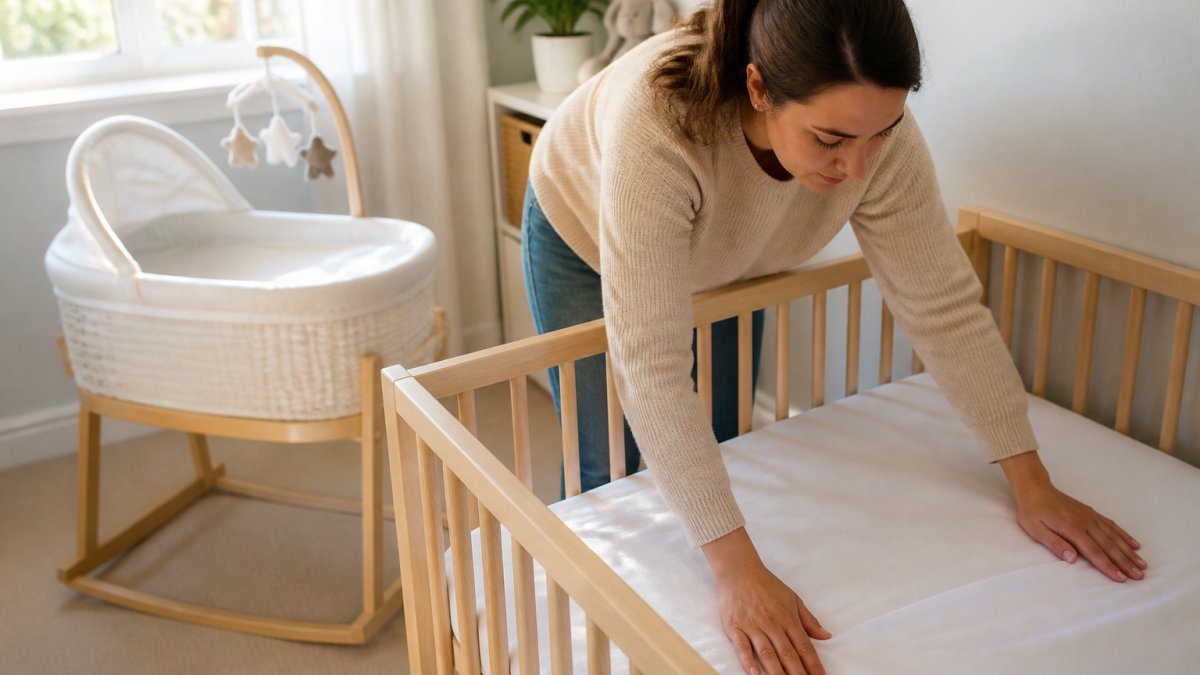
The Two-Finger Gap Check and Other Setup Verifications
A snug sheet and well-fitted mattress do more work than most parents realize. Run this checklist before the first night:
- Place your baby on their back for every sleep, naps included
- Use a firm, flat sleep surface with no incline
- Confirm the crib, bassinet, or play yard meets current safety standards
The two-finger gap check takes seconds and catches the most common setup mistake: a mattress that looks fine until you press on it, letting a newborn's face slip between mattress and frame.
| Setup Check | What to Do | Why It Matters |
|---|---|---|
| Mattress fit | Two-finger gap check | Prevents face entrapment in gaps |
| Sheet | Tight, no wrinkles | Loose fabric can cover the face |
| Surface | Firm and flat, no tilt | Soft or angled surfaces raise suffocation risk |
| Contents | Remove all soft items | Loose bedding can block breathing |
| Frame | Verified safety-approved | Older or modified cribs may not meet standards |
2. Back Sleeping for Every Sleep: Naps and Overnight
Back sleeping is the position every caregiver should use for every sleep, naps included.
Stomach sleeping lets babies re-breathe exhaled air and sink into soft surfaces; back sleeping keeps the airway open and the face clear.
What most guides miss is how often "just this once" creeps in, a grandparent laying the baby on their side, a tired parent skipping the roll-back after a night feed.
A few things that help:
- Tell every caregiver the rule, not just your partner
- Put the baby down drowsy but awake, on their back, every time
- If your baby rolls onto their stomach on their own, they can stay there once they can roll both ways
3. What Should a Newborn Wear to Sleep?
A newborn should wear one layer more than you would sleep in for the same room. Sleep clothing replaces blankets entirely.
The safest option is a fitted sleeper or bodysuit that stays in place and leaves the face and head clear. Loose gowns, long strings, and hoods are not sleepwear.
For most nurseries, a cotton bodysuit or full-length cotton romper is enough; if the room runs cool, add a correctly sized sleeveless sleep sack. Our Baby Cotton Onesie is a 95% cotton snap-button bodysuit that layers under pants or a sleep sack, and the Baby Cotton Romper Jumpsuit covers shoulder to ankle for cooler nights.


4. Safe Sleep Temperature for Babies: Avoiding Overheating
A safe sleep temperature for babies is roughly 68°F to 72°F, with light clothing and no blankets.
You do not need a perfect number, just a room comfortable to a lightly dressed adult, plus a baby in one extra layer.
Signs your baby is too warm:
- Sweaty neck or back
- Flushed, damp skin
- Restless, frequent waking
Check the back of the neck, not the hands or feet, a newborn's extremities run cool even when their core is fine.
5. Room Sharing with Newborn: How Long and How to Do It Safely
Room sharing with a newborn means keeping your baby's sleep space in your room, close to your bed, for at least the first six months. The AAP policy statement on sleep-related infant deaths recommends room sharing without bed sharing for that period, and longer if it works for your family.
Close matters, but not too close: a separate sleep surface within arm's reach, near enough to see and hear your baby, far enough that bedding, pillows, or an adult rolling over cannot reach them.
How to Set Up the Room
Most parents treat room sharing as "put the bassinet somewhere in the bedroom." A few choices make it safer:
- Place the bassinet or play yard beside your bed, with the baby's sleep surface at roughly mattress height so you can reach in without leaning over a rail
- Leave at least a foot of clear space on all sides of the bassinet so nothing drapes over the edge
- Keep the bassinet away from windows, blinds, curtains, and any cord, monitor cords, lamp cords, and phone chargers included
Bed Sharing Is Not Room Sharing
Bed sharing on an adult mattress, couch, or armchair is not the same thing: adult mattresses are softer, bedding is loose, and an adult can roll onto a baby without waking. The AAP advises against it, and risk is higher if anyone in the bed smokes, has consumed alcohol or sedatives, or is extremely tired. If you might fall asleep while feeding, feed in a bed with no pillows or blankets near the baby rather than a couch or armchair, and move the baby back to their own surface as soon as you can.
When to Move Your Baby to Their Own Room
When to move your baby to their own room is a judgment call. Many families move around six months, some wait until a year.
Baby Cotton Onesie – Soft Long Sleeve Infant Bodysuit with Snap Buttons →
What matters more is that the separate sleep space meets the same rules: back position, firm and flat surface, clear of soft items. Keep the same mattress, tight sheet, and empty space so only the address changes.
6. When Baby Falls Asleep in a Car Seat, Swing, or Other Sitting Device
A baby who falls asleep in a car seat, swing, bouncer, or carrier should be moved to a firm, flat sleep surface as soon as you safely can. Sitting devices are not sleep spaces, even when marketed for napping.
Why Sitting Devices Are Not Sleep Surfaces
Inclined and tilted surfaces let a newborn's head fall forward, which can narrow the airway. That is why the Consumer Product Safety Commission guidance on infant sleep products treats inclined sleepers and similar products as unsafe for sleep, and why the Safe Sleep for Babies Act banned the sale of inclined sleepers for infants.
Car seats, swings, and bouncers are designed for transport or play, not extended sleep. A properly installed car seat is the safest place for a baby in a moving vehicle, but none substitutes for a crib, bassinet, or play yard once the ride is over.
A Simple Transfer Protocol
Use the same sequence every time so it becomes automatic:
- Arrive and stop. Park the car, or finish the swing session, before you move the baby.
- Unbuckle and lift. Support the head and neck, and lift the baby out of the device.
- Place on the back. Lay the baby on their back on a firm, flat surface, crib, bassinet, or play yard.
- Check the space. Confirm the surface is clear of pillows, blankets, toys, and cords.
- Leave them be. If the baby wakes, that is fine. If they stay asleep, they are now in a safe position.
On a long drive, plan breaks so your baby is not left sleeping in the seat once you arrive. Never leave a sleeping baby in a swing or bouncer unattended, and never let a baby sleep overnight in a car seat, swing, or carrier.
What Not to Add
Do not add padding, inserts, or head supports to a car seat to make it "more comfortable." Aftermarket inserts can change harness fit and push a newborn's head forward. If the seat came with an insert, use only that one and follow the manual for when to remove it.
7. Swaddling Safety and When to Stop Swaddling
Swaddling can calm a newborn, but it has a clear expiration date: stop as soon as your baby shows signs of rolling, often around two to three months.
The rules that keep swaddling safe:
- Swaddle with arms in and hips loose enough to bend
- Use a thin, breathable swaddle, never a thick quilt
- Always place a swaddled baby on their back
Once rolling starts, switch to a sleep sack that leaves the arms free. A swaddled baby who rolls onto their stomach cannot push back up, and that is the danger.
8. Safe Sleep for Premature or Medically Complex Infants
Premature and medically complex infants need the same safe sleep rules plus extra attention to their health needs.
Some babies come home on monitors, oxygen, or feeding tubes.
A few points we would stress:
- Ask your care team directly whether any position other than back sleeping is medically advised, and get it in writing
- Keep follow-up appointments so weight and breathing are tracked
- Bring the same safe sleep checklist to every caregiver, including anyone helping overnight
Getting the sleep space right takes an evening of setup, then consistency night after night from every caregiver.
At Tender Tots & Wellness, we built our baby essentials to make those nights easier.
Frequently Asked Questions
What is the safest sleep environment for a newborn?
The safest sleep environment for a newborn includes a firm, flat sleep surface with a tight-fitting sheet, free of pillows, blankets, bumpers, and toys. Always place your baby on their back for every sleep. The crib or bassinet should meet current safety standards, and the sleep space should be in your room for at least the first six months. Keep the room at a comfortable temperature and avoid overheating.
Should newborns sleep in a crib or bassinet?
Both are safe if they meet current safety standards. A bassinet keeps your newborn close for room sharing, which is recommended for at least the first six months. A crib works well too, especially if you plan to transition your baby to their own room later. Whichever you choose, use a firm, flat mattress with a tight-fitting sheet. Avoid inclined or tilted sleep surfaces, and never add soft bedding or bumpers.
Can a newborn sleep in a room with a fan?
Yes, a fan can be used in a newborn's room as long as it does not blow directly on the baby and the room does not become too cool. A fan can help circulate air and may reduce the risk of overheating. Keep the room at a comfortable temperature, dress your baby in light layers, and check for signs of overheating such as sweating or a hot chest. Always place your baby on their back on a firm, flat surface.
Is it safe for a newborn to sleep in a car seat at home?
No. Car seats, swings, and other sitting devices are not safe for unsupervised sleep. If your newborn falls asleep in a car seat during travel, transfer them to a firm, flat sleep surface as soon as you arrive. When using a car seat, ensure it is properly installed and that your baby's head and neck are positioned correctly. Never leave a baby unattended in a car seat, swing, or bouncer for sleep.
What should you do if your newborn falls asleep while being held?
If your newborn falls asleep while being held, place them on their back on a firm, flat sleep surface as soon as possible. Holding a sleeping baby is comforting, but falling asleep with your baby in your arms increases the risk of suffocation and falls. If you feel drowsy, put your baby in their crib or bassinet before you fall asleep. Room sharing with your baby nearby lets you stay close while keeping them safe.