

Affordable Montessori Toys for Families: 2026 Guide
Table of Contents
- Why Affordable Montessori Toys Matter for Child Development
- Montessori Toys for 1 Year Olds: Building Foundations
- How to Choose Montessori Toys: Identifying Real Quality
- Top Affordable Montessori Toys Under $60
- DIY Montessori Activities at Home: Less-Is-More Philosophy
- Maintenance and Sanitation of Wooden Toys
- Budget Shopping Strategies and Second-Hand Options
- Conclusion
- Frequently Asked Questions
Last Updated: August 31, 2026
Why Affordable Montessori Toys Matter for Child Development
Many parents assume "Montessori toys" means premium pricing. The reality is different. Affordable Montessori toys offer the same developmental benefits as expensive alternatives when you understand what actually matters.
At Tender Tots & Wellness, we've helped parents build thoughtful play environments without overspending. The key isn't finding the cheapest option, it's choosing toys that align with how children actually learn: through hands-on exploration, repetition, and self-directed discovery.
Montessori education emphasizes child-led learning, where toys serve as tools for developing fine motor skills, problem-solving ability, and independence. A wooden block costs a fraction of branded alternatives but teaches spatial awareness just as effectively. The difference between a $5 toy and a $50 toy often comes down to marketing, not educational value.
This guide covers how to identify authentic affordable Montessori toys, avoid marketing traps, and build a curated collection that grows with your child.
Montessori Toys for 1 Year Olds: Building Foundations
At one year old, children develop gross motor control, begin understanding cause and effect, and explore the world through sensory input. Montessori toys for 1 year olds should emphasize natural materials, simple mechanisms, and safe repetitive play.
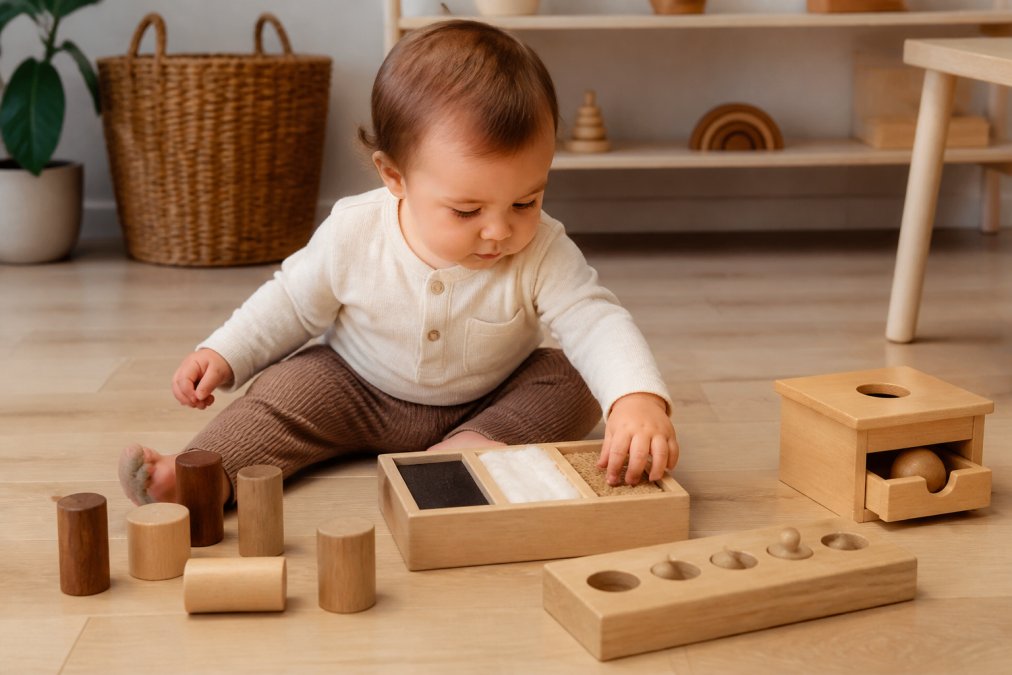
Sensory Exploration and Fine Motor Skills
Sensory exploration builds neural pathways. Wooden rattles with different weights, smooth grasping balls, and textured objects teach babies about cause and effect while developing hand strength. A simple wooden rattle costs under $10 but provides the same tactile feedback as premium alternatives.
Fine motor skills develop through repetition. Toys that encourage grasping, shaking, and transferring objects between hands build the foundation for later writing and self-feeding skills. Natural wood toys are ideal because they're durable, non-toxic, and provide authentic sensory feedback that plastic alternatives cannot match.
Open-Ended Play Options Under $30
Open-ended toys have no single "correct" way to play. A wooden block can be a building material, teething toy, stacking challenge, or sound maker. This flexibility extends the toy's lifespan and encourages problem-solving.
Wooden stacking rings cost around $12-18 and develop hand-eye coordination while teaching size discrimination. Nesting bowls under $20 offer similar benefits with added durability for teething. The key is choosing toys that grow with your child, a wooden block used at one year for grasping becomes a building tool at two and a construction element at three.
How to Choose Montessori Toys: Identifying Real Quality
The Montessori toy market has exploded, and not all products labeled "Montessori-inspired" actually follow Montessori principles. Real quality comes down to materials, design philosophy, and durability, not price tags or brand names.
Natural Materials and Non-Toxic Safety Standards
Authentic Montessori toys prioritize natural materials: wood, metal, fabric, and ceramic. These materials are safer than plastics, more durable, and provide better sensory feedback. Wood toys should be finished with non-toxic, water-based stains or left natural.
Check for safety certifications. In the United States, toys should meet Consumer Product Safety Commission standards for lead content, phthalates, and choking hazards. Look for toys tested to ASTM F963-17 standards. Reputable manufacturers list materials transparently and use FSC-certified or sustainably sourced wood.
Avoid toys with synthetic dyes, chemical odors, cracked wood, small detachable parts for children under three, plastic coatings, or unclear country of origin.
Spotting Marketing Hype vs. Authentic Design
Many toys slap "Montessori-inspired" on packaging without understanding Montessori principles. Authentic Montessori toys follow these principles:
- Single-purpose or limited-purpose design
- Natural aesthetics without bright primary colors or cartoon characters
- Proportions suited to a child's hand size
- Materials that reveal how they work
- Minimal or no batteries, sounds, or lights
- Durability for years of use
Marketing hype often includes bright plastic packaging, unsubstantiated brain development claims, unnecessary features, price premiums for branding, and unrealistic play scenarios.
The Montessori approach emphasizes child-led discovery rather than adult-directed learning, so look for toys that invite exploration without instructions or predetermined outcomes.
Top Affordable Montessori Toys Under $60
These recommendations represent genuine developmental value at accessible price points.
1. Wooden Tool Disassembly Playset ($55.99)
The Tender Tots Wooden Tool Disassembly Playset builds fine motor skills and problem-solving ability. Kids take apart and reassemble pieces using realistic tool simulation, developing hand-eye coordination and spatial reasoning through repetitive, self-directed play.
Twisting, turning, and fitting pieces together builds the muscle control needed for writing. The open-ended nature means children play repeatedly without boredom. Research on hands-on learning shows that manipulative play strengthens neural connections associated with spatial reasoning and problem-solving.
Best for: Children ages 3 and up; families who value screen-free, independent play.
2. WordWise Blocks Learning Game ($25.00)
WordWise Blocks combines wooden construction with literacy development. The eco-friendly wooden blocks pair with 40 activity cards, creating an interactive system for spelling and word recognition. Unlike flashcard-based learning, this toy demands active engagement, children physically build words using blocks.
At $25.00, it's affordable but offers educational depth that justifies the price. The wooden construction ensures durability, and the card-based system grows with your child from early letter recognition through multi-syllable words.
Best for: Ages 2-6; families building early literacy skills.
3. Phonics Learning Posters Set ($12.33)
At $12.33, the Tender Tots Phonics Learning Posters Set is the most budget-friendly option. The 10-piece collection transforms any wall into a learning environment, providing visual reinforcement for phonics concepts without requiring active parent involvement.
When phonics concepts are visible daily, children absorb them passively while playing elsewhere. Pair posters with hands-on toys like WordWise Blocks for maximum effectiveness.
Best for: Budget-conscious families; homes with space constraints; children ages 3-7.
DIY Montessori Activities at Home: Less-Is-More Philosophy
The Montessori environment emphasizes quality over quantity. A room filled with toys overwhelms children and reduces engagement. The "less is more" philosophy suggests rotating a small, carefully curated collection rather than keeping everything accessible.
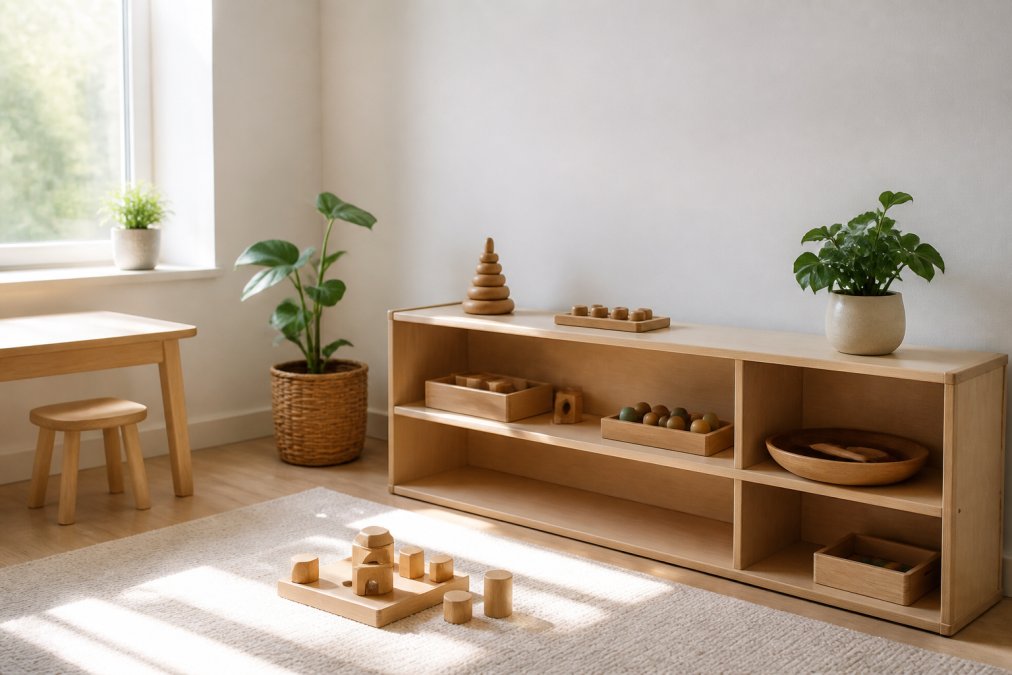
Rotating Toys to Maximize Engagement
Toy rotation is the secret to maintaining engagement without purchasing constantly. Store most items and rotate a small selection every 2-4 weeks. When toys reappear after time away, children rediscover them with fresh interest.
A typical rotation includes 8-12 toys accessible at once. This number is small enough to avoid overwhelm but sufficient for variety. Benefits include reduced visual clutter, extended toy lifespan, maintained novelty, improved focus, and simplified cleanup.
Creating Practical Life Activities with Household Items
Montessori emphasizes "practical life" skills, activities that mirror adult tasks and build independence. Many require no purchased toys. Household items become learning tools when presented thoughtfully.
Water pouring stations, sorting activities using dried beans or pasta, sweeping with child-sized tools, matching socks, arranging objects on shelves, and preparing simple snacks all build skills. These activities are more engaging than expensive toys because they're genuinely useful, children understand they're doing "real work," not playing.
Maintenance and Sanitation of Wooden Toys
Wooden toys require minimal maintenance but benefit from proper care. Clean with a damp cloth and mild soap. Avoid soaking, as excess water causes warping. Dry immediately after cleaning.
For frequently mouthed toys or illness exposure, use a cloth dampened with a 1:1 white vinegar and water solution, then dry thoroughly. Inspect monthly for splinters, cracks, or damage. Sand rough spots gently with fine-grit sandpaper. Store in dry, climate-controlled environments away from direct sunlight.
Proper maintenance extends toy lifespan significantly, allowing toys to be passed to younger siblings or sold second-hand.
Budget Shopping Strategies and Second-Hand Options
Building an affordable Montessori toy collection requires strategy. New toy shopping strategies include buying during sales, comparing prices across retailers, prioritizing multi-age appeal toys, investing in durable basics first, and delaying trendy items until prices drop.
Second-hand market options include Facebook Marketplace, Craigslist, Buy Nothing groups, online resale platforms like Poshmark and Mercari, estate sales, and consignment shops. When buying second-hand, inspect toys carefully for damage, missing pieces, and safety concerns. Clean thoroughly before introducing to your child.
Second-hand shopping works particularly well for toys children outgrow quickly, reducing waste and supporting sustainable consumption.
Conclusion
Building an affordable Montessori toy collection is entirely achievable without premium pricing. The Tender Tots Wooden Tool Disassembly Playset at $55.99, WordWise Blocks at $25.00, and the Phonics Learning Posters Set at $12.33 represent genuine developmental value at accessible price points. Combine these with DIY activities, toy rotation, and second-hand shopping to create a rich learning environment on any budget.

The philosophy matters more than the price tag. Montessori toys succeed because they're simple, durable, and invite open-ended exploration. When you understand what actually drives child development, hands-on discovery, repetition, and independence, you stop chasing expensive marketing and start making intentional choices.
Shop now at Tender Tots & Wellness to explore our curated selection of affordable Montessori toys. Enjoy free worldwide shipping as you build a play environment that sparks joy and supports your child's developmental journey.
| Toy | Price | Age Range | Key Benefit | Best For |
|---|---|---|---|---|
| Wooden Tool Disassembly Playset | $55.99 | 3+ years | Fine motor & problem-solving | Children who love hands-on exploration |
| WordWise Blocks | $25.00 | 2-6 years | Early literacy & word recognition | Families building reading skills |
| Phonics Learning Posters | $12.33 | 3-7 years | Visual phonics reinforcement | Budget-conscious families & classrooms |
Frequently Asked Questions
How can I identify authentic Montessori toys versus marketing trends?
Authentic Montessori toys feature natural materials like wood, focus on open-ended play without batteries or screens, and encourage child-led discovery. Look for toys that develop specific skills (fine motor, problem-solving, sensory exploration) rather than flashy colors or character branding. Check for safety certifications like ASTM F963-17 and non-toxic finishes. Many brands use 'Montessori-inspired' marketing without meeting actual principles, verify the toy allows independent, repetitive play and doesn't direct a single 'correct' way to use it.
What are the best affordable Montessori toys for 1 year olds?
At 12 months, focus on toys supporting gross motor development, hand-eye coordination, and tactile feedback. Wooden stacking rings, sorting toys, and simple nesting cups work well. The Wooden Tool Disassembly Playset ($55.99) develops fine motor skills through satisfying build-and-disassemble play. For budget-conscious families, wooden blocks, sensory balls, and DIY activities using safe household items (wooden spoons, fabric scraps, containers) provide excellent developmental value without premium pricing.
Why are Montessori toys more expensive than regular toys?
Quality Montessori toys cost more because they use sustainable natural materials, non-toxic finishes, and durable construction designed to last through multiple children. They're engineered to support specific developmental milestones rather than entertain briefly. However, affordable options exist, Tender Tots & Wellness offers budget-friendly alternatives like the Phonics Learning Posters ($12.33) and WordWise Blocks ($25.00) that deliver educational value without premium pricing. Second-hand markets and toy rotation also stretch budgets significantly.
Can I make Montessori toys at home instead of buying them?
Yes, DIY Montessori activities are highly effective and cost-free or minimal. Practical life activities like water pouring (using small pitchers), sorting by color or size, and sweeping develop real skills. Wooden spoons, fabric scraps, and safe kitchen containers create sensory exploration toys. The key is ensuring child-led discovery and repetitive play without adult direction. Homemade options work best alongside a few quality purchased items to balance your curated collection and support different developmental areas.
This article was written using GrandRanker