

How to Identify Authentic Montessori Toys: A 2026 Guide
Table of Contents
- What Makes a Toy Authentically Montessori
- Step 1: Check Safety Certifications and Montessori Toy Safety Standards
- Step 2: Identify Control of Error and Open-Ended Play Features
- Step 3: Assess Material Quality and Craftsmanship
- Montessori Toys for 1 Year Olds: Age-Appropriate Authentication
- Benefits of Montessori Toys and Why Authenticity Matters
- How to Spot Fake Montessori Products and Second-Hand Authentication
- DIY vs. Purchase: Making the Right Choice
Last Updated: August 25, 2026
What Makes a Toy Authentically Montessori
When shopping for toys that support your child's development, "Montessori" gets thrown around everywhere. But most toys labeled as Montessori-inspired fall short of the actual philosophy. At Tender Tots & Wellness, we've curated products that genuinely reflect Montessori principles.
An authentic Montessori toy supports self-directed learning through hands-on exploration, using natural materials and thoughtful construction that allows children to discover how things work independently. The core distinction separates toys that look Montessori from toys that function as Montessori tools. A wooden toy isn't automatically authentic just because it's made of wood. What matters is whether it follows the pedagogical principles Dr. Maria Montessori developed over a century ago.
Core Montessori Principles in Toy Design
Authentic Montessori toys embody five non-negotiable principles. First, they prioritize self-correction and control of error, the toy itself teaches the child whether they've succeeded or failed, without requiring adult intervention. A shape-sorter toy with properly sized holes teaches a child that a square block won't fit through a round opening.
Second, they support purposeful work. Every element serves a developmental function. There's no flashing lights, no sounds, no unnecessary decoration.
Third, they encourage independent exploration. A child should be able to pick up the toy and understand what to do without instructions or adult demonstration.
Fourth, Montessori toys respect developmental appropriateness, designed for specific age ranges and skill levels matching what a child's brain and hands are capable of.
Fifth, they use natural, non-toxic materials. Wood, organic cotton, and sustainably sourced materials aren't aesthetic choices, they're pedagogical ones. Natural materials provide authentic sensory feedback that plastic can't replicate.
Natural Materials vs. Synthetic: The Real Difference
The material choice in authentic Montessori toys isn't about being trendy; it's about sensory development and durability.
Solid wood toys provide tactile feedback that teaches a child about weight, texture, and natural variation. A wooden block feels different in a child's hand than plastic does. Natural materials also age gracefully. A wooden toy loved for five years shows patina and character; a plastic toy looks worn and cheap.
Synthetic materials, particularly cheap plastics, often contain chemical finishes that aren't food-safe. Since toddlers put everything in their mouths, this becomes a real health consideration. Not every authentic Montessori toy is 100% wood, some include metal components or organic fabric, but each material serves a developmental purpose and meets safety standards.
Step 1: Check Safety Certifications and Montessori Toy Safety Standards
Before you buy any toy, verify that it meets current safety standards. This is non-negotiable.
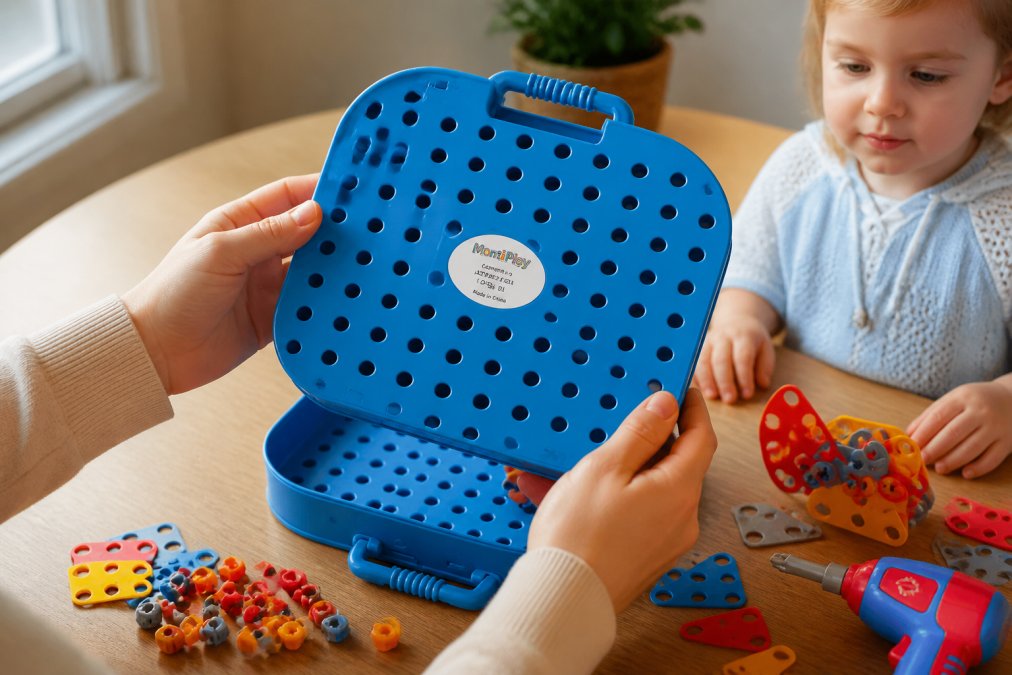
Understanding ASTM and CPSIA Requirements
Two standards govern toy safety in the United States: ASTM F963-22 (the American Society for Testing and Materials standard) and the Consumer Product Safety Improvement Act (CPSIA).
ASTM F963-22 covers mechanical hazards, flammability, and chemical safety. It requires testing for small parts that could pose choking hazards, sharp edges, and toxic finishes. CPSIA compliance is federal law, mandating that all toys sold in the United States meet specific lead and phthalate limits. Manufacturers must provide a Children's Product Certificate (CPC) documenting third-party lab testing.
Look for toys that clearly state they meet both standards. Legitimate sellers will have this information readily available.
Verifying Regulatory Certification
Before purchasing, ask the seller for proof of third-party testing. Legitimate manufacturers have nothing to hide. They'll provide test reports from accredited labs like SGS, Intertek, or Bureau Veritas.
Check the product listing for specific language: "Tested and certified to ASTM F963-22" and "CPSIA compliant with third-party testing." If a seller can't provide this documentation when asked, that's a red flag.
Step 2: Identify Control of Error and Open-Ended Play Features
Control of error means the toy itself provides feedback about whether the child succeeded. A nesting doll set with properly sized pieces teaches the child through the toy's design, larger dolls won't fit inside smaller ones. The child discovers this through trial and error, building problem-solving skills without adult correction.
Open-ended play means the toy doesn't have one "correct" way to be used. A set of wooden blocks can become a tower, a wall, a bridge, or an abstract structure. The child's imagination determines how they use it. Look for toys that invite multiple uses across different developmental stages.
Step 3: Assess Material Quality and Craftsmanship
Run your hands over the toy. Authentic Montessori toys have smooth, finished surfaces without splinters. The wood should feel substantial, not flimsy. Joints should be tight and secure, not wobbly.
Check the finish. Non-toxic, food-safe finishes are standard. The finish should feel like it's part of the wood, not a coating that could chip or peel. Weight matters, a toy that feels appropriately weighted suggests solid construction. Seams and connections should be seamless, indicating careful craftsmanship.
Montessori Toys for 1 Year Olds: Age-Appropriate Authentication
For children around 12 months old, authentic Montessori toys support specific developmental milestones: grasping, transferring objects between hands, exploring cause and effect, and developing fine motor coordination.
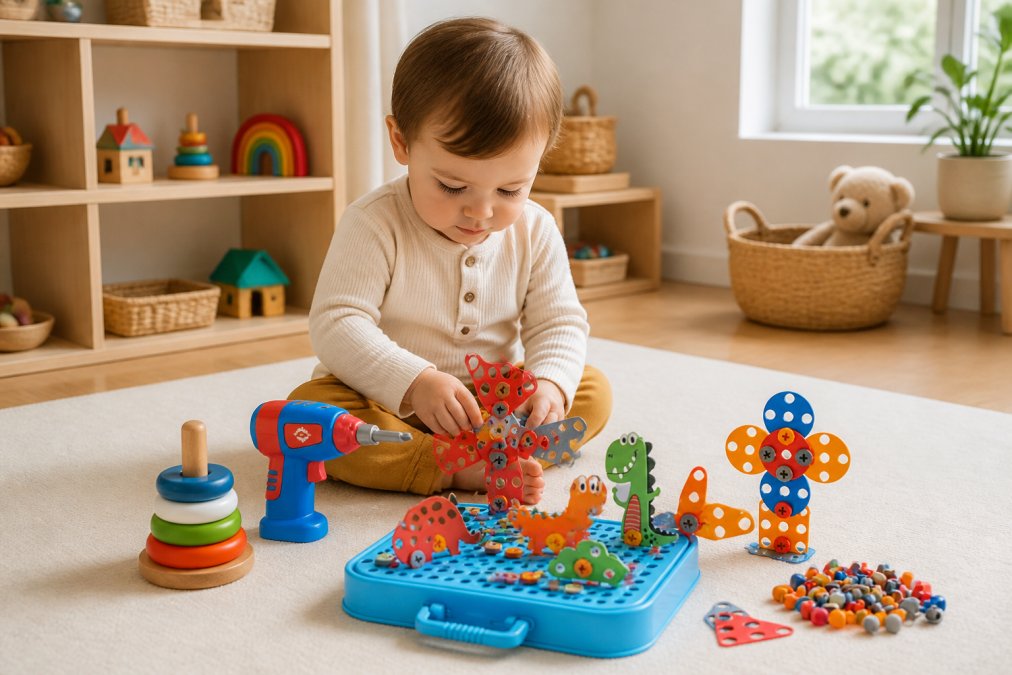
At this age, the best Montessori toys are sized appropriately for small hands (roughly 2-4 inches), don't require batteries or adult operation, and provide immediate sensory feedback. Wooden rings that stack on a dowel, cloth books with high-contrast images, and simple grasping toys with varied textures all meet these criteria.
Avoid toys marketed for 1-year-olds that include electronic components, small detachable parts, or complex mechanisms. Authentic Montessori design for this age is intentionally simple.
The Soft Baby Cloth Learning Book from Tender Tots & Wellness provides high-contrast visual exploration and tactile variety at $25. The MontiPlay Magic Montessori Play Toolbox at $45 grows with your child from 12 months through early childhood, offering open-ended play possibilities.

Benefits of Montessori Toys and Why Authenticity Matters
Authentic Montessori toys build confidence in children because they allow self-directed discovery. A child who figures out how to stack rings independently develops a different sense of capability than a child who's told "Good job!" after an adult demonstrates the task.
These toys also reduce screen time naturally. Because they're genuinely engaging and developmentally appropriate, children choose them over passive entertainment. Long-term, authentic Montessori toys support cognitive development differently than conventional toys. Open-ended play builds creativity and problem-solving. Control of error develops critical thinking.
Authenticity also means durability. A well-made wooden toy lasts through multiple children and years of daily use. Choosing authentic Montessori toys aligns with values many modern parents hold: supporting child development over consumerism, choosing quality over quantity, and investing in sustainability.
How to Spot Fake Montessori Products and Second-Hand Authentication
The term "Montessori-inspired" has become meaningless in marketing. Here's how to distinguish authentic from fake.
Red Flags in Product Descriptions and Marketing
"Educational and fun!" Authentic Montessori toys don't need to be "fun" in the entertainment sense. They're engaging because they support genuine learning.
Bright primary colors and cartoon characters. Montessori environments are intentionally calm and minimalist. Toys with loud colors distract from actual learning.
"Develops 10 different skills!" Authentic Montessori toys develop one or two specific skills well. Toys marketed as developing everything appeal to anxious parents, not actual development.
No mention of materials or construction. Legitimate makers describe exactly what their toys are made from and why.
Extremely low prices. Authentic Montessori toys require quality materials and careful construction. Significantly low prices indicate corners were cut.
No available safety documentation. If a seller can't provide ASTM or CPSIA testing information, the toy probably hasn't been tested.
Authenticating Second-Hand and Vintage Montessori Toys
Authentic wooden toys show natural patina and wear but remain structurally sound. Fake toys often show cracking, peeling finishes, or structural damage.
Check for safety issues specific to vintage toys. Older toys may have been finished with non-toxic stains, but verify this if possible. Authentic vintage Montessori toys often have maker's marks or labels. Research the manufacturer if you see one.
Be cautious of toys described as "vintage Montessori" without clear provenance. Just because a wooden toy is old doesn't mean it was designed according to Montessori principles.
DIY vs. Purchase: Making the Right Choice
Some parents consider making their own Montessori toys to save money. This works in some cases but has real limitations.
When DIY makes sense: Simple sensory toys like treasure baskets with natural objects, or basic wooden block sets can be cost-effective and personalized.
When purchasing is better: For toys requiring precision engineering, shape sorters with exact sizing, stacking toys with specific proportions, or anything that needs safety testing, purchasing from reputable makers is the right choice. A homemade shape sorter with slightly oversized holes defeats the control-of-error principle. A DIY toy that hasn't been tested for sharp edges or toxic finishes creates safety risks.
For most parents, purchasing from makers who specialize in Montessori design is the practical choice. You get toys designed by people who understand the pedagogy, made with appropriate materials, and backed by safety testing.
Tender Tots & Wellness offers curated options that balance quality, authenticity, and fair pricing. The Wooden Rainbow Stacking Toy at $25 provides open-ended play and control of error. The Montessori Wooden Tangram Puzzle Game at $14.30 delivers spatial reasoning development and durability.

Identifying authentic Montessori toys requires understanding the pedagogy behind them, not just recognizing wooden materials or minimalist aesthetics. The real markers, control of error, open-ended design, developmental appropriateness, and safety certification, separate genuine tools for learning from expensive toys with a Montessori label. When you shop at Tender Tots & Wellness, you're choosing from products that meet these standards: sustainably sourced materials, thoughtful design that supports actual development, and transparent safety documentation. Start with one quality toy that matches your child's current developmental stage, verify its certifications, and watch how genuine Montessori design holds your child's attention and grows with them through multiple stages. That's the difference authenticity makes.
| Feature | Authentic Montessori Toy | Marketing "Montessori-Inspired" Toy |
|---|---|---|
| Primary material | Solid natural wood, organic cotton, sustainably sourced | Plastic, composite materials, synthetic finishes |
| Control of error | Built into toy design; child self-corrects | Requires adult validation or doesn't apply |
| Open-ended play | Multiple uses across developmental stages | Single predetermined use |
| Safety testing | ASTM F963-22 and CPSIA certified with documentation | Vague "meets safety standards" or no documentation |
| Color palette | Natural wood tones, soft colors, or high-contrast black/white | Bright primary colors, cartoon characters |
| Price range | $14-$60+ for quality toys | Extremely low prices suggesting cost-cutting |
| Longevity | Lasts through multiple children; shows patina not deterioration | Deteriorates quickly; peeling finishes, structural damage |
| Maker transparency | Detailed material and design information available | Marketing language without construction details |
According to American Academy of Pediatrics guidance on toy safety, toys for infants and toddlers should be free of small parts, sharp edges, and toxic finishes, standards that authentic Montessori design prioritizes by default.
The Consumer Product Safety Commission's toy safety requirements mandate third-party testing for all toys sold in the United States, making CPSIA compliance non-negotiable regardless of whether a toy claims Montessori authenticity.
Research from developmental psychology studies on self-directed learning shows that toys supporting independent problem-solving build stronger cognitive development than toys requiring adult guidance, which explains why control of error is central to authentic Montessori design.
Frequently Asked Questions
How can I tell if a toy is truly Montessori or just marketed that way?
Authentic Montessori toys have specific characteristics: they use natural materials like solid wood, feature control of error (built-in feedback so children can self-correct), encourage open-ended play without batteries or lights, and support one skill at a time. Check for ASTM and CPSIA certifications, verify the materials are non-toxic and sustainably sourced, and look for purposeful design without flashy electronics or distracting features. Brands like Tender Tots & Wellness focus on these core principles in their curated selection.
What are the main safety standards I should verify for Montessori toys?
In the United States, toys must meet ASTM F963-23 (American Society for Testing and Materials) and CPSIA (Consumer Product Safety Improvement Act) requirements. For Montessori toys specifically, look for non-toxic finishes, no small parts for children under 3, lead-free paint or stain, and solid construction with no sharp edges or splinters. Reputable sellers provide documentation of third-party testing. Always check product listings for these certifications before purchasing.
Are plastic Montessori toys ever authentic, or should they be wood only?
While traditional Montessori emphasizes natural materials like wood and organic cotton for tactile quality and developmental appropriateness, some plastic components can be acceptable if they meet safety standards and serve a specific pedagogical purpose. However, most authentic Montessori toys prioritize solid wood, organic cotton, and natural finishes. Avoid plastic toys with bright colors, electronic sounds, or flashy features, these contradict Montessori principles of minimalist design and active engagement.
What benefits do authentic Montessori toys offer compared to regular toys?
Authentic Montessori toys support fine motor skills, cognitive development, and sensory-based learning through purposeful design. They encourage independent exploration and child-led activity rather than passive play. The control of error feature allows children to discover mistakes themselves, building confidence and problem-solving skills. Open-ended play fosters creativity and sustained engagement. These developmental benefits make authenticity important, toys without these features may look similar but won't provide the same learning value.
This article was written using GrandRanker