

Best Lovevery Alternatives for Modern Families
Table of Contents
- Why Parents Are Looking for Lovevery Alternatives
- Montessori Toys for 1 Year Olds: What Actually Matters
- How to Choose Montessori Toys for Toddlers: A Parent's Framework
- Subscription Box Alternatives vs. One-Time Purchases
- Budget-Friendly Montessori-Aligned Toys You Can Buy Individually
- Safety Standards and Material Quality: What to Verify
- Building a Montessori Play Collection That Grows With Your Child
- Conclusion
Last Updated: August 19, 2026
Why Parents Are Looking for Lovevery Alternatives
Lovevery built a loyal following by packaging developmental play into subscription boxes with a curated, minimalist aesthetic. But the model comes with real tradeoffs: monthly commitments, limited flexibility, and a price point that stretches many family budgets. Parents searching for lovevery alternatives often discover they don't need a subscription at all, they need a smarter approach to sourcing individual toys that actually align with their child's developmental stage.
The shift away from subscription-based play kits reflects a broader change in how modern families shop. Many parents want control over what comes into their homes, the ability to pause or skip months, and access to toys at varying price points. Some discover that building a collection piece by piece from trusted sources offers better long-term value. Others realize their nursery aesthetic clashes with the typical primary-color toy explosion, and they're hunting for alternatives that match their minimalist or modern design preferences.
At Tender Tots & Wellness, we've learned that the best approach depends less on which brand you choose and more on understanding what your child actually needs at each developmental stage. The good news: you don't need an expensive subscription to get there.

Montessori Toys for 1 Year Olds: What Actually Matters
What makes a toy genuinely Montessori-inspired versus just marketed that way comes down to a few core principles: open-ended play, natural materials, and alignment with real developmental milestones. A true Montessori toy for a 1-year-old supports the child's emerging fine motor skills, sensory exploration, and object permanence, not entertainment for its own sake.
At this age, children are developing their grasping reflex and learning cause-and-effect relationships. They benefit from toys with varied textures, weights, and movements they can control. Wooden stacking rings, soft cloth books with high-contrast patterns, and simple puzzles with large pieces all fit this profile. The toy should be something the child can manipulate independently, without needing adult direction on how to "play correctly."
The mistake many parents make is conflating aesthetic minimalism with developmental appropriateness. A beautiful wooden toy is only valuable if it actually engages the child's cognitive development. Similarly, a toy doesn't need to be expensive to be Montessori-aligned. Many affordable options from mainstream retailers hit the same developmental targets as premium alternatives.
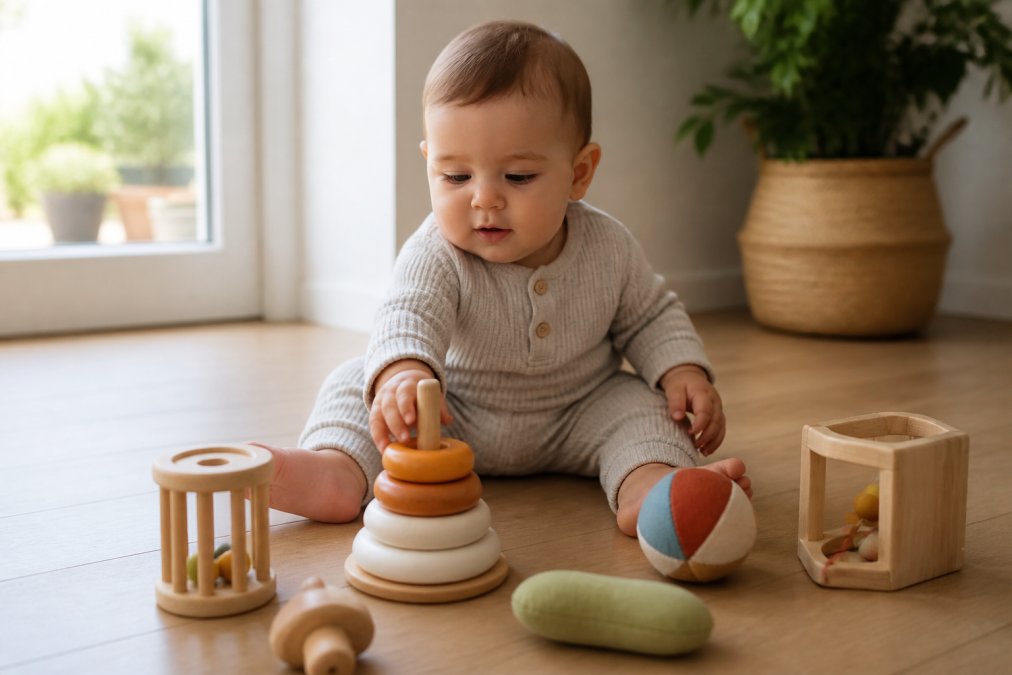
When evaluating toys for this age, ask: Can my child operate it independently? Does it encourage exploration rather than passive consumption? Is it made from durable, non-toxic materials? If the answer to all three is yes, it's probably doing the job regardless of the brand name on the box.
How to Choose Montessori Toys for Toddlers: A Parent's Framework
Choosing Montessori toys for toddlers requires a framework that moves beyond brand loyalty or aesthetic preferences. Start by identifying your child's current developmental stage, not their age, but where they actually are in terms of motor skills, attention span, and problem-solving ability. A 2-year-old who's already stacking blocks needs different challenges than one who's still exploring cause-and-effect.
The second step is assessing what's already in your home. Many families accumulate toys haphazardly, then wonder why their child seems overwhelmed or bored. Before buying anything new, audit your existing collection. Which toys does your child actually use? Which ones gather dust? This tells you what types of play genuinely engage your child versus what you thought would be educational.
Next, consider the material quality and safety standards. Look for toys made from sustainably harvested wood, non-toxic finishes, and durable construction that can survive multiple children or years of play. Check for safety certifications, in the US, toys should meet ASTM International standards and Consumer Product Safety Commission guidelines. This isn't about premium pricing; many affordable toys meet these standards.
Finally, think about storage and integration. Montessori environments emphasize order and accessibility. Toys should be stored where your child can see and reach them, rotated regularly to maintain novelty, and organized by type or developmental category. A well-organized collection of 20 intentional toys beats a chaotic pile of 100.
| Evaluation Criteria | What to Look For | Red Flags |
|---|---|---|
| Developmental Alignment | Matches child's current skills and stage | Too easy or too advanced for actual abilities |
| Material Quality | Sustainable wood, non-toxic finishes, durable construction | Cheap plastic, peeling paint, flimsy assembly |
| Safety Standards | ASTM certified, CPSC compliant, no small parts for younger toddlers | Unclear origin, no safety documentation |
| Open-Ended Play | Multiple ways to use; no "right" way to play | Single function, requires adult direction |
| Storage & Organization | Fits your space, accessible to child, easy to rotate | Requires special storage setup, pieces get lost |
| Longevity & Resale | Built to last years, holds value if resold | Trendy design, likely to break, no secondary market |
Subscription Box Alternatives vs. One-Time Purchases
The subscription model offers convenience and curation, but it comes with hidden costs. A typical play kit subscription runs $30-$50 per month, which adds up to $360-$600 annually. That's real money, and it assumes you're using the boxes consistently and not pausing during busy months.
One-time purchases give you control and flexibility. You buy what your child needs now, skip items that don't fit your aesthetic or space, and build a collection at your own pace. The tradeoff is that curation becomes your responsibility. You can't rely on someone else's expertise to guide your selections.
The hybrid approach works for many families: use a subscription for 3-6 months to understand what types of toys your child gravitates toward, then transition to individual purchases from sources like Tender Tots & Wellness, mainstream retailers, and resale platforms. This gives you the guidance without the long-term commitment.
Many parents also discover that the "curated" aspect of subscriptions can be limiting. If your child loves vehicles but the monthly box focuses on sensory play, you're stuck waiting for the next rotation. Building your own collection lets you follow your child's interests in real time.
Budget-Friendly Montessori-Aligned Toys You Can Buy Individually
The assumption that Montessori-inspired toys must be expensive is one of the biggest myths in early childhood education. Many affordable options deliver the same developmental benefits as premium alternatives.
Start with wooden stacking toys and rings, which run $15-$30 from quality makers. These support fine motor skill development and object permanence without requiring a subscription. Magnetic alphabet sets and phonics tiles cost $8-$20 and introduce letter recognition through tactile exploration. Wooden puzzles with large pieces are available from $10-$25 and develop spatial reasoning and problem-solving.
Soft cloth books with high-contrast patterns support sensory development for infants and early toddlers. Quality options exist at $20-$30. Simple wooden tool playsets, like the Tender Tots Wooden Tool Disassembly Playset at $55.99, teach cause-and-effect and fine motor control through hands-on exploration.
The key to budget-friendly shopping is knowing which features actually matter. A wooden rainbow stacking toy doesn't need to be a premium brand to develop fine motor skills, it just needs smooth edges, durable construction, and pieces your child can manipulate independently. Tender Tots & Wellness offers the Wooden Rainbow Stacking Toy for $25.00, which delivers exactly that without the subscription premium.

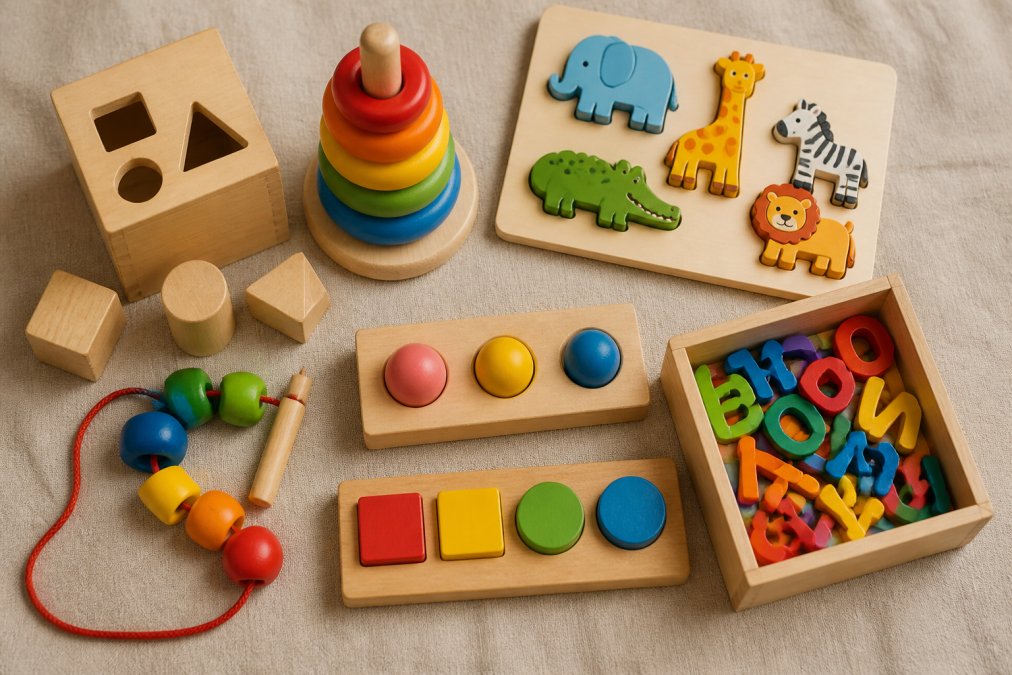
Build your collection strategically. Buy one quality piece each month rather than splurging on a subscription box. Rotate toys every 4-6 weeks to maintain novelty without constantly purchasing. Use resale platforms like Facebook Marketplace or Poshmark to find gently used items at 40-60% off retail. This approach lets you curate a collection that matches your child's actual interests and your family's aesthetic while staying within budget.
Safety Standards and Material Quality: What to Verify
Before buying any toy, verify it meets US safety standards. The Consumer Product Safety Commission requires all toys sold in the US to pass testing for lead content, phthalates, and other hazardous substances. Look for toys labeled as CPSC compliant or ASTM F963 certified.
For wooden toys, check that the finish is non-toxic and food-safe. Many quality makers use plant-based oils or water-based stains rather than chemical varnishes. This matters because 1-year-olds mouth everything. If a toy doesn't clearly state its finish, contact the maker before buying.
Material durability directly affects long-term value. Toys made from sustainably harvested wood with mortise-and-tenon joinery last through multiple children. Cheap plywood or particle board falls apart within a year. The difference in upfront cost is usually offset by the toy's lifespan and resale value.
Inspect toys for small parts that could pose choking hazards. The CPSC defines choking hazards as pieces smaller than 1.25 inches in diameter or 2.25 inches in length. For children under 3, avoid toys with detachable pieces entirely.
Many parents overlook the importance of toy rotation for safety. Toys with loose pieces or wear should be removed from circulation immediately. Store toys in a dry environment to prevent mold or mildew on wooden pieces.
Building a Montessori Play Collection That Grows With Your Child
A sustainable approach to toy ownership means building a collection that evolves with your child's developmental needs rather than constantly replacing toys as they outgrow them. This reduces waste, saves money, and teaches children that quality items have lasting value.
Start with foundational toys that support early developmental stages: stacking toys, soft books, and simple puzzles for infants and 1-year-olds. As your child develops fine motor skills and problem-solving ability, introduce more complex puzzles, building sets, and toys that encourage imaginative play.
The MontiPlay Magic Montessori Play Toolbox at $45.00 is designed to grow with your child, offering multiple ways to engage based on developmental stage. A 1-year-old might simply explore the textures and weights, while a 3-year-old uses it for imaginative play and problem-solving.

Organize your collection by developmental stage or type. Keep toys accessible on low shelves so your child can choose independently. Rotate toys every 4-6 weeks, storing unused items in a closet. This maintains engagement without overwhelming your child with too many options at once.
Document what works. Keep a simple list of toys your child loves and why. Note which items get heavy use and which gather dust. This information guides future purchases and helps you avoid repeating mistakes.
Consider the resale market as part of your long-term strategy. Quality wooden toys and educational sets hold value well. Selling outgrown toys funds new purchases and teaches children that items have worth beyond their novelty. The Montessori Wooden Tangram Puzzle Game at $14.30 is an example of a toy that maintains value because it develops skills across multiple age ranges.
Finding the right lovevery alternatives comes down to understanding your family's actual needs, not following marketing trends. Tender Tots & Wellness makes this easier by offering a curated selection of Montessori-inspired toys, books, and educational materials at fair prices with free worldwide shipping. Whether you're building a collection from scratch or looking to supplement an existing one, the products are chosen to support real developmental milestones while fitting modern family aesthetics. Shop now to discover toys that spark joy and foster genuine learning.
Frequently Asked Questions
What are some affordable alternatives to Lovevery?
Individual Montessori-aligned toys from retailers offer significant savings. The Montessori Wooden Tangram Puzzle ($14.30) and Magnetic Alphabet & Number Learning Set ($11.30) provide developmental value without subscription costs. Wooden stacking toys ($25) and sensory books ($25) deliver open-ended play that rivals subscription boxes. Building a collection gradually with one-time purchases lets you choose toys matching your child's actual developmental stage rather than paying for curated monthly boxes.
Are Lovevery toys truly Montessori-aligned, and how do I verify this for alternatives?
Authentic Montessori toys emphasize open-ended play, natural materials, and child-led learning, not just branded marketing. Check for non-toxic wood certification (ASTM F963), absence of batteries or screens, and pieces that encourage problem-solving rather than passive use. Look for toys that serve multiple developmental purposes: a wooden stacking toy builds fine motor skills, spatial reasoning, and creativity simultaneously. Tender Tots & Wellness products like the MontiPlay Montessori Play Toolbox ($45) prioritize hands-on learning and multi-sensory exploration aligned with actual Montessori principles.
Should I buy a subscription box or individual Montessori toys?
Subscription boxes work best for parents who want curated selections and guidance; individual purchases suit those with specific needs and budget constraints. A subscription typically costs $40-60 monthly. Buying individually, you might spend $100-150 to build a starter collection of 5-6 quality toys, then add pieces as your child develops. Individual purchases offer better long-term value, let you skip toys your child won't use, and allow integration with toys you already own. Consider your budget, storage space, and whether you prefer variety or focused depth.
How do I know if a Montessori toy will actually support my 1-year-old's development?
At 12 months, children develop object permanence, grasping reflex refinement, and tactile exploration skills. Choose toys with varied textures, safe pieces sized to prevent choking (larger than 1.25 inches), and no small parts. Wooden stacking rings, cloth learning books with high-contrast patterns, and soft sensory toys support this stage. Avoid toys requiring adult assembly or batteries. The Soft Baby Cloth Learning Book ($25) with black-and-white patterns aligns with visual development, while wooden toys encourage hand strength and coordination essential at this age.
What should I look for in terms of safety standards and material quality?
Verify compliance with ASTM F963 (toy safety standards) and CPSIA regulations for lead and phthalate testing. Choose non-toxic wood finishes certified by third-party labs. Check product descriptions for material transparency: sustainably sourced wood, water-based paints, and absence of plastic coatings. Avoid toys with rough edges, splinters, or weak joints. Tender Tots & Wellness products emphasize durable construction and safe materials. Request safety certifications before purchase, inspect items upon arrival for defects, and rotate toys to monitor wear. Quality toys maintain structural integrity through years of play and multiple children.
This article was written using GrandRanker