

Essential Newborn Feeding Supplies for Breastfeeding Mothers
Last Updated: October 23, 2026
Quick Summary
Essential newborn feeding supplies for breastfeeding mothers cover four jobs: feeding, comfort, storage, and cleaning. Start with a nursing pillow, nursing pads, nipple cream, 4 to 6 bottles with slow-flow nipples, a breast pump, milk storage bags, a bottle brush, and at least 6 burp cloths.
- Buy the pump before the storage bags, since you can't test storage without milk.
- Pack your hospital bag breastfeeding essentials by week 36, and leave the pump at home.
- Start with two or three bottles, because your baby may reject the nipple shape.
- Label every storage bag with the date and volume before it goes in the freezer.
- Buy for the first six weeks, not the first year, since your needs change fast.
Table of Contents
- What Newborn Feeding Supplies You Actually Need
- Your Breastfeeding Essentials Checklist
- Breast Pump and Milk Storage Bags: What to Buy First
- Hospital Bag Breastfeeding Essentials to Pack Early
- Breastfeeding Supplies for Travel With a Newborn
- Setting Up a Nursing Station at Home
- What to Skip: Supplies You Can Wait to Buy
- Conclusion
- Frequently Asked Questions
What Newborn Feeding Supplies You Actually Need
The list of essential newborn feeding supplies for breastfeeding mothers is shorter than most baby registries suggest. You need a way to feed your baby, a way to protect your body while it heals, and a way to keep milk safe when you're apart. Everything else is optional.
At Tender Tots & Wellness, we offer a curated selection of products to support new parents. A few good items, chosen well, beat a cart full of gadgets.
Here's the honest breakdown. Newborn feeding supplies are the tools that support milk production, feeding comfort, and safe milk storage in the first months. That's the definition worth keeping in your head while you shop.
- Something to feed with: your body, plus bottles for pumped milk
- Something to protect your body: nursing pads, nipple cream, a supportive pillow
- Something to store milk in: bags or bottles, plus a cooler for travel
- Something to clean with: bottle brush and a sterilizing method
That's the core. Below, we'll show you exactly what to buy first, what to pack, and what to skip entirely.
Your Breastfeeding Essentials Checklist
A breastfeeding essentials checklist should cover four jobs: feeding, comfort, storage, and cleaning. If an item doesn't do one of those jobs, it can wait.
Use this as your working list. Check items off as you buy them, and don't let a store display talk you into more.
- Nursing pillow or firm support pillow
- Nursing pads, reusable or disposable
- Nipple cream that's safe for baby
- 4 to 6 bottles with slow-flow nipples
- Breast pump, if you'll be apart from baby
- Milk storage bags or storage bottles
- Bottle brush and drying rack
- Burp cloths, at least 6
- Nursing bra, two to start
- Insulated bag for on-the-go milk
If you're building a full registry and want to make sure nothing essential slips through, a budget-friendly baby registry checklist for beginners gives you a wider list to work from.
A common mistake is buying twelve bottles before you know which nipple your baby accepts. Start with a small set and add once you know what works.
Breast Pump and Milk Storage Bags: What to Buy First
Buy the pump before the storage bags. You can't test storage without milk, and you can't make milk without a pump if you're separated from your baby.
Breast pump and milk storage bags are the two items that let someone else feed your baby. Get the pump right first, then match your storage to your pumping volume.
On pumps, you have three broad choices:
- Manual pump: cheap, quiet, good for occasional relief or a single daily session
- Single electric pump: faster than manual, fine for light use
- Double electric pump: the practical pick if you'll pump daily, since it collects from both sides at once
Check whether your insurance covers a pump. Many plans do, and the paperwork takes minutes compared to the cost of buying outright. The U.S. Department of Health and Human Services women's health guidance is a good starting point for understanding coverage options.
For storage, bags save space and freeze flat. Bottles are easier to wash and reuse. Most parents end up with both.
Cleaning matters as much as buying. How to sterilize baby bottles naturally walks you through safe methods for bottles and feeding equipment.
Here are the three pump types and what each one suits, so you can match the pump to how often you'll express.
| Pump type | Best for | Key difference |
|---|---|---|
| Manual pump | Occasional relief or a single daily session | Cheap and quiet |
| Single electric pump | Light use | Faster than manual |
| Double electric pump | Pumping daily | Collects from both sides at once |
Hospital Bag Breastfeeding Essentials to Pack Early
Pack your hospital bag breastfeeding essentials by week 36. Labor doesn't schedule itself, and a bag packed in a rush is a bag missing things.
The hospital provides some supplies, but not the ones that make feeding comfortable. Bring your own.
- Nursing pillow, if you have one you like
- Nipple cream
- Nursing pads
- Two nursing bras
- Loose front-opening tops or gowns
- A large water bottle with a straw
- Snacks that don't need refrigeration
- Phone charger with a long cable
Leave the pump at home unless your care team tells you otherwise. Hospitals have pumps, and you don't want yours sitting in a bag for days.
Large Capacity Mummy Baby Backpack – Insulated, Waterproof & Multi-Function →
One item people forget: a going-home outfit for yourself that's easy to feed in. You'll be in it before you know it.
Breastfeeding Supplies for Travel With a Newborn
Travel breastfeeding supplies come down to three needs: keeping milk cold, keeping gear clean, and keeping your hands free. Solve those and a trip with a newborn is manageable.
For milk, you need an insulated bag with room for ice packs or a frozen bottle. For cleaning, pack a small bottle brush and a few sterilizing bags. For carrying everything, a structured backpack beats a shoulder bag every time.
Our large capacity mummy baby backpack was built for exactly this. It has an insulated bottle compartment to keep pumped milk separate, dry/wet separation for messy items, and double shoulder straps so you can carry a baby and a bag at once. It's $69.99 and comes in five colors.

What most guides miss is the airport problem. Security may inspect pumped milk, and rules vary by carrier and checkpoint. The TSA guidance on traveling with breast milk confirms that breast milk is allowed in quantities above the standard liquid limit, but you should tell the officer before screening starts.
Setting Up a Nursing Station at Home
A nursing station is a small setup within arm's reach of where you feed most often. It removes the mid-feed scramble for water, burp cloths, or a phone charger.
Build one in the room where you spend the most daytime hours. It doesn't need to be elaborate.
- A firm chair with arm support
- A side table at elbow height
- Water bottle you can open one-handed
- Burp cloths within reach
- Nipple cream and nursing pads
- Phone charger
- A small basket for odds and ends
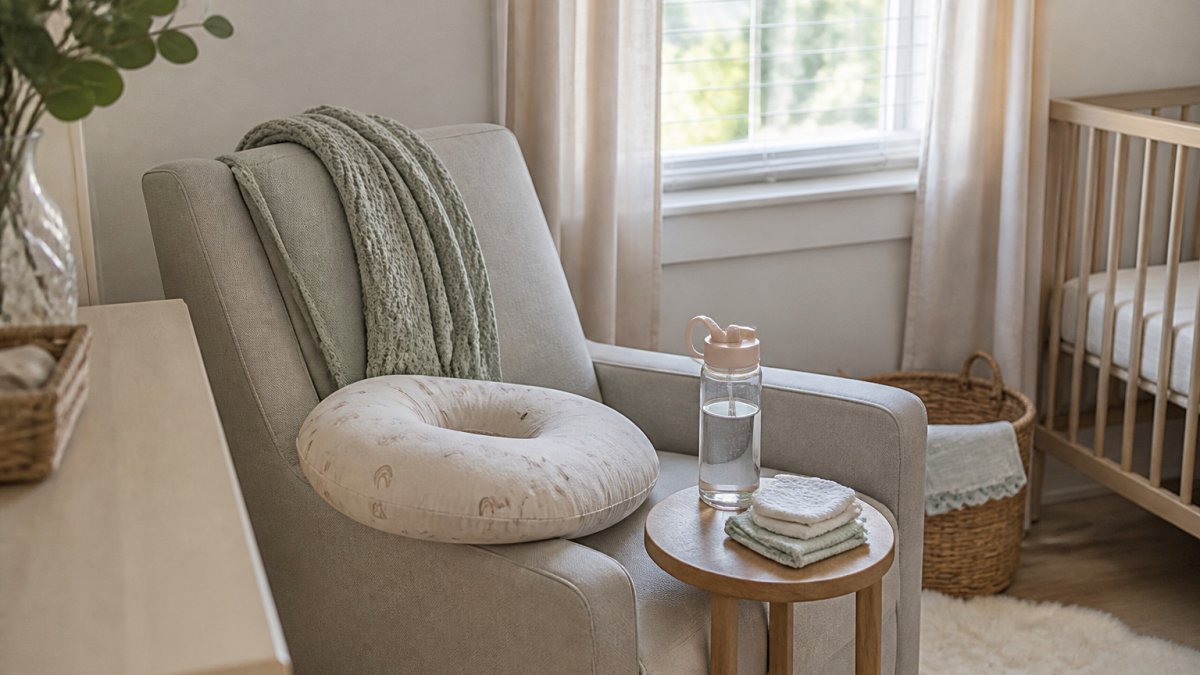
Keep the gear clean. How to clean and sanitize baby gear properly covers the practical steps for the items kept at your station.
The one thing nobody tells you about a nursing station: it saves more middle-of-the-night tears than any product you can buy. Everything in reach means you stay seated.
What to Skip: Supplies You Can Wait to Buy
Most newborn feeding supplies sold in starter bundles are not essential. They're convenient, and convenience has a price.
Wait on these until you know you need them:
- Bulk bottle sets. Your baby may reject the nipple shape. Buy two or three first.
- A second pump. One working pump covers most situations.
- Specialty nursing covers. A muslin blanket does the same job.
- Milk storage racks. Bags freeze flat in any freezer bin.
- Nipple shields. These are a tool for a specific problem. Get guidance before buying.
- Formula prep machines. Not needed if you're exclusively breastfeeding.
If you're worried about overbuying in general, our budget-friendly minimalist baby registry tips help you cut the list without cutting anything you'll actually use.
Conclusion
The hardest part of building a newborn feeding setup isn't the shopping. It's trusting that a short list is enough when every store wants to sell you more.
We built Tender Tots & Wellness around the opposite idea: fewer, better items at fair prices, with free worldwide shipping so the basics reach you without a markup. Our insulated diaper backpack, our curated baby gear, and our wellness picks are chosen to fit a modern family's real needs, not a registry checklist designed to upsell.
Start with the core list. Add as you learn what your baby and your body actually need. Shop now and set up your feeding station with gear that earns its place.
Frequently Asked Questions
What supplies do I need to breastfeed a newborn?
The basics cover you for the first few weeks: nursing bras, reusable or disposable nursing pads, nipple cream, burp cloths, and a nursing pillow. Add a breast pump and milk storage bags if you plan to express, plus a few bottles for occasional feeds. A structured diaper bag with an insulated bottle compartment, like the Large Capacity Mummy Baby Backpack at $69.99, keeps pump parts and bottles organized on the go. Buy the essentials first and add extras as your routine settles.
Do I need a breast pump if I plan to breastfeed?
Not always on day one, but most breastfeeding mothers end up needing one. A pump helps if you return to work, want someone else to handle a feed, or need to relieve engorgement. Start with a manual pump or a single electric model if you only plan occasional expression, and size up later if you pump daily.
What should I pack for breastfeeding in the hospital?
Pack nursing bras, nursing pads, nipple cream, a nursing pillow, loose front-opening tops, and a water bottle. Bring your insurance card and your pump if you already have one. Hospitals supply basics like pads and peri bottles, so you do not need to duplicate everything. Keep the bag packed by 36 weeks, and add a going-home outfit for you and baby so the first trip out stays simple.
What are the best supplies for storing breast milk?
Milk storage bags are the most space-efficient option for freezing, and they lay flat to thaw quickly. Use bottles for milk you plan to feed within a few days. Label every bag with the date and amount. Buy bags in small packs first to see which brand seals well for you.
