

How to Choose Easy-Clean Baby Bowls for Toddlers
Last Updated: November 2, 2026
Quick Summary
Easy-clean baby bowls have a smooth, seamless food contact surface, a sealed base with no hidden channels where puree can lodge, and a material that tolerates dishwasher heat and detergent without clouding, warping, or holding odor. One-piece molded bowls with rounded interior transitions clean fastest, while removable suction rings and sharp corners trap residue and odor.
- Food residue collects in three places: the inner curve, the rim, and the joint between bowl and suction base.
- Dishwashers commonly run 130°F to 150°F, which can bow thin polypropylene rims and break the suction seal.
- Run the smear, fingernail, sniff, suction, and warp tests before a bowl becomes your everyday pick.
- Stainless steel resists tomato and turmeric stains and holds no odor, but is not microwave safe.
- The 360° Rotate Spill-Proof Baby Bowl is top-rack dishwasher safe, comes in 1 to 4 packs, and costs $30.99.
Table of Contents
- What Makes a Baby Bowl Actually Easy to Clean
- How to Test a Bowl Before It Becomes Your Everyday Pick
- Best Baby Plates With Suction: What to Look For Beyond the Base
- Toddler Bowls With Lids: Portability, Storage, and Reheating
- Best Plates for Toddlers Non Toxic: Materials and Safety Checks
- Stainless Steel Baby Plates With Suction: Durability and Care Trade-Offs
- Pick the Bowl That Fits Your Mealtime Routine
- Frequently Asked Questions
What Makes a Baby Bowl Actually Easy to Clean
Easy-clean baby bowls have a smooth, seamless food contact surface, a base with no hidden channels where puree can lodge, and a material that tolerates the heat and detergent of a dishwasher without clouding, warping, or holding odor.
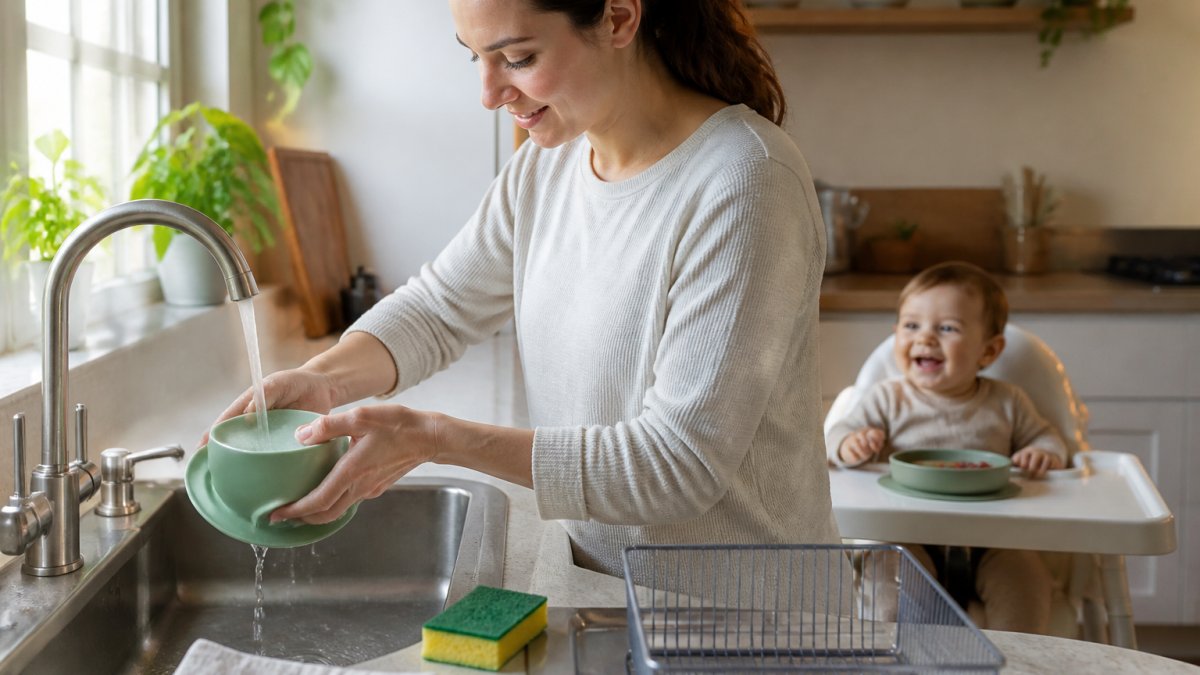
Many easy-clean baby bowls fail on seams as much as on surfaces. A bowl can look glossy and still hide a lip where the suction ring meets the body.
Smooth Surfaces, Seams, and Food Residue
Food residue collects in three places: the inner curve where the wall meets the floor, the rim, and the joint between the bowl and its suction base. A truly smooth interior with a rounded transition cleans in seconds. A sharp internal corner does not.
Residue behavior depends on the food, not just the bowl.
One-piece molded bowls are generally easier to clean than two-piece designs. If a bowl has a removable suction ring, that ring has a channel, and that channel needs rinsing separately.
Bowl geometry matters as much as the material. A deep bowl with a narrow floor forces a sponge into a tight curve; a shallow, wide bowl with a gently rounded transition wipes clean in one motion.
Dishwasher-Safe Designs and Hand-Washing Realities
Dishwasher safe usually means top rack, and top rack matters more than parents expect. Heat and sustained water exposure warp thin plastic and degrade some suction bases.
The mechanism is straightforward.
Hand-washing is not automatically gentler. A bottle brush with stiff bristles scratches silicone and soft plastic, and scratches are where residue and bacteria collect.
For deeper guidance on sanitizing spoons, cups and gear alongside your bowls, our guide on how to clean and sanitize baby gear properly walks through the full routine.
Comparing Cleaning Performance Across Bowl Designs
Easy-clean is not a single feature, it is the sum of four design decisions. Use this comparison to judge any bowl before you buy:
- One-piece molded body vs. two-piece with removable base: one-piece wins on residue and odor; two-piece wins on suction replacement if the ring wears out.
- Rounded interior transition vs. sharp corner: rounded wipes in one pass; sharp corners need a brush and still trap film.
- Open suction channel vs. sealed base: an open channel under the bowl holds water and food; a sealed, smooth underside rinses clean.
- Thin rim vs. thick rolled rim: thin rims have less underside to trap food; thick rims need a brush along the lip.
A bowl that scores well on all four is easier to clean by hand and less likely to hold odor after the dishwasher.
How to Test a Bowl Before It Becomes Your Everyday Pick
Run this five-minute check before a bowl earns counter space. It is the same sequence we suggest to parents deciding between a first bowl and a backup set.
- The smear test: spread a thick puree or yogurt across the interior. If residue clings in a line, that line is a seam.
- The fingernail test: run a fingernail along every joint. Any catch point will trap food.
- The sniff test: after washing, smell the bowl. Retained odor signals a porous or scratched surface.
- The suction test: press the base onto a clean, dry tray and lift the bowl edge. A base that releases easily will release mid-meal.
- The warp check: run it through a dishwasher cycle, then press the base flat on the counter. Rocking means warping.
| Test | What It Reveals | Passing Result |
|---|---|---|
| Smear test | Hidden seams and ridges | Wipes clean in one pass |
| Fingernail test | Joint gaps | No catch anywhere |
| Sniff test | Odor retention | No lingering smell |
| Suction test | Base grip strength | Holds firm on dry tray |
| Warp check | Heat tolerance | Sits flat, no rocking |
Best Baby Plates With Suction: What to Look For Beyond the Base
Baby plates with suction work best when they combine a strong base with a shape that resists use.
Look for a release tab. Without one, you will be wrestling the plate off the tray every night, and repeated tugging loosens the seal over time.
Compartment design matters too. A divided plate helps with portion separation and picky eaters, but every divider adds corners. Fewer, deeper compartments clean faster than many shallow ones.
Toddler Bowls With Lids: Portability, Storage, and Reheating
Toddler bowls with lids solve a different problem than suction: they make food portable and leftovers storable.
Reheating is where lids get complicated. A lid that is not vented will trap steam and can warp or pop.
360° Rotate Spill-Proof Baby Bowl – Self-Righting Toddler Feeding Dish →
Watch out: never microwave a bowl the listing marks as not microwave safe, even briefly. Heat can degrade the material and compromise the base.
Best Plates for Toddlers Non Toxic: Materials and Safety Checks
Plates for toddlers marketed as non-toxic are typically made from materials with no BPA, no phthalates, and no lead or cadmium in glazes or decals. Silicone and food-grade plastics should carry a food-contact designation, and any painted or printed decoration deserves a second look.
Material safety is not only about the first wash. Scratched plastic sheds, and worn silicone can harbor bacteria in cuts. Replace any bowl with deep scratches or a cloudy, tacky surface.
What to Verify on a Label
A food-contact claim is only as good as the standard behind it. Look for a statement that the product meets food-contact requirements, and for plastics, a food-grade resin designation.
Watch out: 'BPA-free' is not a safety guarantee. A plastic can be BPA-free and still contain other bisphenol substitutes or additives that are not covered by that claim. The stronger signal is a material description (food-grade silicone, food-grade polypropylene, 18/8 stainless steel) plus an FDA food-contact statement, not a single marketing phrase.
How Materials Degrade With Heat, Scratching, and Washing
Safety is a function of condition, not just composition. Every food-contact material changes with use, and the changes are predictable:
- Silicone: heat-stable and flexible, but soft enough to scratch and cut. Knife marks, fork scores, and bristle scratches create microscopic crevices that hold residue and odor. Repeated dishwasher cycles can leave a tacky mineral film. Silicone that has gone cloudy, tacky, or smells after washing is past its useful life.
- Food-grade plastic (polypropylene): lightweight and cheap, but scratches easily and can warp at the rim under dishwasher heat. A warped rim breaks the suction seal, and a scratched surface stains with tomato and turmeric. Plastic is the material most likely to need replacement within a year of daily use.
- Stainless steel: does not absorb color or odor and does not scratch from normal toddler use, so it stays hygienic longer than any plastic or silicone. The weak point is the bonded silicone suction ring, which can peel at the edge; inspect that bond monthly.
- Bamboo and other plant-fiber composites: attractive and plastic-free, but porous unless sealed, and prone to cracking if soaked or dishwashed. Many are hand-wash only, which undercuts the easy-clean premise.
A common pattern is that the material that is safest on day one is not always the one that stays safest on day 300. Steel and one-piece silicone age better than thin plastic; plastic ages fastest and should be inspected for scratches and warping every few weeks.
Cleaning and Safety Trade-Offs by Material
No material wins on every axis. Match the trade-off to how you actually feed:
- Dishwasher use: steel and silicone tolerate top-rack cycles; thin plastic warps; bamboo and many composites should be hand-washed.
- Microwave reheating: silicone and most food-grade plastics are microwave safe; steel is not, and any bowl marked not microwave safe should never go in, even briefly.
- Staining: steel resists tomato and turmeric; silicone and plastic can stain, and scratched plastic stains permanently.
- Odor retention: steel holds no odor; silicone can retain smell if scratched or coated in mineral film; plastic holds odor once scratched.
- Lifespan under daily washing: steel outlasts silicone, which outlasts thin plastic.
If you want the full case for avoiding plastic entirely, our article on why choose plastic-free baby feeding supplies covers the alternatives and what to verify on a label.
Stainless Steel Baby Plates With Suction: Durability and Care Trade-Offs
Stainless steel baby plates with suction win on durability and stain resistance: they do not absorb color from tomato sauce, hold odor, or scratch from a fork.
The trade-off is weight and heat.
Suction on steel is a separate engineering question. A silicone ring bonded to a steel base can peel at the edge over time, so inspect that bond monthly.
Pick the Bowl That Fits Your Mealtime Routine
Match the bowl to how you actually feed, not to how you imagine you will. Self-feeding and baby-led weaning households need maximum suction and a low rim. Families who reheat leftovers need microwave-safe construction and a vented lid.
For the mess-heavy stage, consider the 360° Rotate Spill-Proof Baby Bowl, a BPA-free PP bowl with a rotating inner bowl designed to help reduce spills and tipping. If you are assembling a full mealtime setup, pair it with a safe non-toxic high chair so the suction base has a smooth, flat surface to grip.

Best for: toddlers in the throwing and tipping stage who need a stay-put bowl. Skip if: you reheat food directly in the bowl or want a lidded option for travel.
Frequently Asked Questions
Are suction bowls good for toddlers?
Suction bowls help keep the dish in place while toddlers practice self-feeding, which can reduce tipped bowls and spilled food. The suction works best on smooth, non-porous surfaces like a plastic high chair tray or a glass table. Check that the base is wide enough and free of dust before pressing it down. A suction bowl is a tool, not a guarantee: some toddlers learn to lift the edge, so pair it with a bib and a splat mat during the messiest meals.
Can toddler bowls go in the dishwasher?
Many toddler bowls are top-rack dishwasher safe, but always check the manufacturer's instructions first. Bowls with suction bases can trap water inside the seal, so rinse and drain them well after the cycle. Stainless steel bowls are usually dishwasher safe, while some plastic and silicone bowls may warp or hold odors if exposed to high heat. Hand-washing with warm soapy water is a safe fallback for any bowl, especially one with a lid or a sealed suction ring.
How do you remove stuck-on food from baby bowls?
Soak the bowl in warm soapy water for 10 to 15 minutes, then wipe with a soft sponge or cloth. Avoid abrasive scrubbers on silicone and plastic, since scratches create places for food residue and bacteria to hide. For dried-on cereal or puree, a short soak followed by a soft bottle brush works well around the rim and suction base. Dishwasher-safe bowls can also go through a normal cycle, but pre-rinsing helps prevent baked-on film.
Are stainless steel bowls a good choice for toddlers?
Stainless steel bowls resist stains and odors, do not absorb food colors, and hold up to daily use, which makes them a practical choice for toddlers. They are not microwave safe, so reheat food in a separate dish. Look for a stainless steel baby plate with suction if your child likes to push dishes around, and check that the suction base is securely attached. Stainless steel is heavier than plastic, which can help it stay put but may be harder for very young babies to lift.
Building a mealtime routine that survives a toddler is less about buying more and more about buying the right few things. Tender Tots & Wellness curates feeding gear with the details that matter: one-piece designs that rinse clean, food-safe materials, and honest specs so you know what you are getting before it arrives. Shop now and set up a mealtime station that makes cleanup the easy part.
