

How to Choose Non-Toxic Bottle Brushes for Glass Bottles
Last Updated: October 29, 2026
Quick Summary
Non-toxic bottle brushes are made from materials you can name on sight: uncoated wood, plant fiber, food-grade silicone, or stainless steel, with no plastic that sheds, undisclosed chemical finishes, or synthetic dyes. For glass bottles, choose plant fibers with some give or food-grade silicone heads, and avoid brushes with an exposed metal twist at the tip. Match the head shape to your bottle and dry brushes bristle-up or hanging.
- Tampico fiber is medium-stiff and best for general bottles and jars, but needs full drying.
- Silicone heads rinse clean and won't scratch glass, but need a soak for dried residue.
- Measure inner neck diameter, interior depth, and shoulder shape before buying a brush.
- Rinse loose grit out of the bottle before scrubbing to reduce scratch risk on glass.
- Replace natural-bristle brushes when fibers splay, discolor, or smell sour.
Table of Contents
- What Makes a Bottle Brush Non-Toxic
- Why a Plastic-Free Bottle Brush Is Worth Considering
- Natural-Bristle Bottle Brush Options: Trade-Offs to Know
- Silicone Bottle Brush Pros and Cons
- Finding a Bottle Brush for Narrow-Neck Bottles
- Bristle Stiffness, Reach, and Cleaning Performance
- Hygiene, Drying, and Replacement Guidance
- Pick Your Bottle Brush With Confidence
- Frequently Asked Questions
What Makes a Bottle Brush Non-Toxic
Non-toxic bottle brushes are ones whose head, handle, and any coating contain no plastic that sheds into your cleaning water, no undisclosed chemical finishes, and no synthetic dyes that can leach.
Why does the distinction matter so much for glass? Glass is non-porous and doesn't hold onto residue the way plastic does, so the brush becomes the main variable. The FDA guidance on food-contact materials is a useful reference for what counts as food-safe in the first place.
Materials and Coatings That Matter
Non-toxic means no hidden coatings. A wooden handle finished with a clear lacquer is not the same as bare, uncoated beechwood, even though both look similar on a product page. Ask three questions before buying:
- Is the handle bare wood, oiled, or lacquered?
- Are the bristles plant-based (Tampico, sisal, coconut) or synthetic?
- Does the brush head contain any plastic collar or glue you can't see?
If a listing won't answer those three, that's your answer.
Glass-Specific Fit and Scratch Risk
Here's the angle most guides skip: a stiff bristle that's fine on a wide-mouth jar can scratch a delicate glass bottle rim, and a metal wire core can chip a thin neck. Glass is hard, but it isn't scratch-proof, and the wrong brush head grinds grit against the wall. Look for plant fibers with a little give, or food-grade silicone heads, and avoid any brush with an exposed metal twist at the tip.
Why a Plastic-Free Bottle Brush Is Worth Considering
The case for a plastic-free bottle brush is simple: less shedding, less landfill, and a brush you can actually see wearing out before it fails. But "plastic-free" is a looser label than most shoppers assume, and for glass bottles the distinction matters more than the marketing suggests.
What "Plastic-Free" Actually Excludes, and What It Doesn't
A brush sold as plastic-free usually means the visible handle and bristle block contain no molded plastic. It does not automatically mean the brush is free of synthetic binders. Three components routinely hide plastic even in otherwise natural brushes:
- Bristle adhesive or epoxy. Plant fibers have to be anchored into the head somehow. Some makers staple or wire-wind them; others set them with a resin that is not disclosed on the label.
- Handle finishes. A lacquer, varnish, or polyurethane topcoat on a wooden handle is a plastic film, even when the wood underneath is bare. An oiled or waxed handle is a different product category.
- Metal cores and collars. A stainless twist core is not plastic, but a coated wire or a plastic ferrule at the head is. Look at the joint where the bristles meet the handle.
If a listing says "plastic-free" but won't tell you how the bristles are anchored, treat the claim as unverified. The FDA guidance on food-contact materials is the right reference for what counts as food-safe, but it does not certify a brush as plastic-free, that is a manufacturer disclosure question, not a regulatory one.
The Real Trade-Offs on Glass
Plastic-free construction buys you two things on glass: no microplastic fragments in the rinse water, and a brush that visibly degrades so you know when to replace it. It costs you three things:
- Drying discipline. Natural fibers and bare wood both absorb water. A plastic-free brush left bristle-down in a wet sink will sour faster than a silicone head.
- Handle care. A bare or oiled wooden handle that soaks will crack along the grain. Rinse the head, wipe the handle, and dry both upright.
- Scrubbing ceiling. Plant fibers are stiff, but they splay and soften with repeated hot-water exposure. A plastic-free brush is a daily-wash tool, not a rescue tool for baked-on residue.
A common pattern among households that stick with plastic-free brushes is a two-brush rotation: one plant-fiber brush for jars and tumblers, one softer head for delicate glassware, both dried hanging. Readers can also explore plastic-free baby feeding supplies to extend the same approach to bottles and pump parts. That rotation is what makes the plastic-free choice practical rather than aspirational.
Natural-Bristle Bottle Brush Options: Trade-Offs to Know
Natural-bristle brushes scrub beautifully and rinse clean, but they demand more care than a silicone head. Tampico fiber, derived from a cactus-like plant, is the most common choice for bottle brushes because it holds stiffness when wet.
The honest limitation: natural fibers absorb water. Dry them bristle-down in open air, and replace them the moment they smell sour or splay.
Animal-Derived Versus Plant-Based Bristles
Some natural brushes use animal hair, usually boar bristle. Boar bristle is soft and excellent for delicate glassware, but it isn't vegan and it holds odor more than plant fiber. Plant-based bristles (Tampico, sisal, coconut) are vegan, renewable, and easier to keep fresh. For most families, plant-based wins on both ethics and hygiene.
| Bristle Type | Stiffness | Best For | Watch Out |
|---|---|---|---|
| Tampico fiber | Medium-stiff | General bottles, jars | Needs full drying |
| Sisal | Stiff | Stubborn residue | Can abrade soft glass |
| Coconut fiber | Very stiff | Wide-mouth jars | Too harsh for narrow necks |
| Boar bristle | Soft | Delicate glassware | Not vegan, holds odor |
| Food-grade silicone | Soft-flex | Baby bottles, narrow necks | Less scrubbing power |
Silicone Bottle Brush Pros and Cons
A silicone bottle brush is the easiest to keep hygienic: it doesn't absorb water, it rinses clean, and it won't scratch glass. The flexible head reaches into curved shoulders and narrow necks that stiff bristles can't.
The drawback is scrubbing power. Silicone nubs glide over dried formula or stubborn residue rather than biting into it, so you'll often need a soak first. Silicone also can't be scrubbed with an abrasive without tearing.
Finding a Bottle Brush for Narrow-Neck Bottles
The right bottle brush for narrow-neck bottles is one whose head compresses to fit the opening, expands to contact the interior wall, and reaches the bottom without forcing. That is a geometry problem, not a shopping-category problem, and most guides skip it. Here is the glass-specific version.
Measure Three Things Before You Buy
- Inner neck diameter. Use a ruler across the opening, inside edge to inside edge. A brush head wider than the neck will jam at the shoulder; one much narrower will skate past the walls and leave a film.
- Interior depth from neck to base. Add a hand's width to that number to get the minimum handle length you need. A brush that reaches the bottom but leaves your knuckles against the rim is the wrong length.
- Shoulder shape. Straight-sided bottles (most water bottles) tolerate a wider head. Bottles with a curved shoulder or a narrow waist need a head that flexes or a split-head design that opens after it clears the neck.
Match the Head Shape to the Bottle
- Cylindrical head, medium-stiff plant fiber. Best for straight-sided glass water bottles and wide-mouth jars. The bristles contact the wall evenly, which is what you want on a non-porous surface.
- Tapered or bullet head, soft fiber or silicone. Best for bottles with a curved shoulder, where a cylindrical head would bind. The taper lets the head enter narrow and open as it descends.
- Split or winged head. Best for narrow-neck bottles with a wide body. The wings collapse at the neck and spring out inside, so one brush covers both dimensions.
The Scratch-Risk Check Most Guides Miss
Glass is hard, but it is not scratch-proof, and the scratch risk on a narrow-neck bottle comes from grit, not from the bristle itself. A stiff brush head drags abrasive particles, coffee grounds, protein powder, mineral film, against the interior wall. Over time that dulls the surface and gives residue somewhere to cling. Two habits reduce the risk:
- Rinse before you scrub. Flush loose grit out of the bottle first, then brush. The brush should be removing film, not grinding debris.
- Inspect the tip. An exposed metal twist at the end of the brush is the single most common cause of chips at the base of a thin-necked bottle. A capped or coated tip is worth prioritizing.
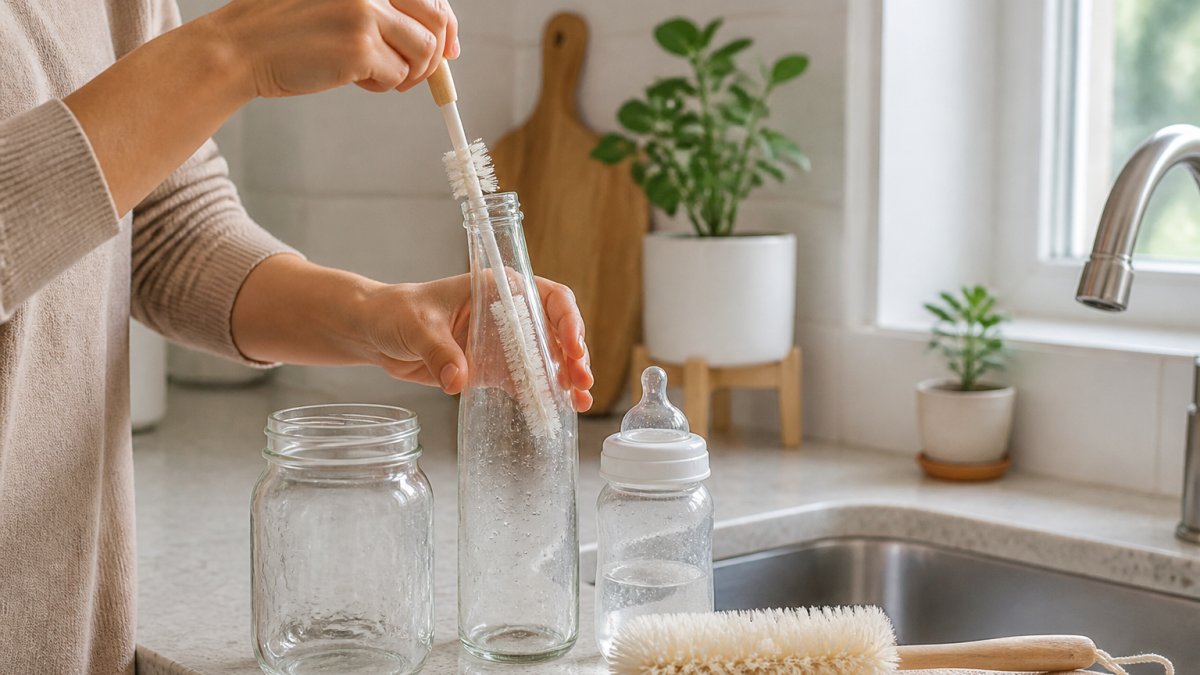
Practical Checks Before You Commit
- Flexible neck: a bendable wire or split handle reaches around curves without levering against the rim.
- Long reach: aim for a handle that clears the bottle's full depth plus a hand's width.
- Straw brush: a separate thin straw brush handles bottle straws and pump valves, which a full-size head cannot enter.
Bristle Stiffness, Reach, and Cleaning Performance
Cleaning performance comes down to matching stiffness to the job, not buying the stiffest brush. Stiff bristles cut through dried residue but risk scratching; soft bristles protect glass but need a soak first.
A common mistake is buying one brush for everything. In practice, most households do best with two: a medium-stiff plant-fiber brush for jars and tumblers, and a soft silicone or boar brush for baby bottles and delicate glassware.
Hygiene, Drying, and Replacement Guidance
Hygiene starts after washing, not during. For a deeper walkthrough, see this guide on how to sterilize baby bottles naturally. A brush that stays wet grows odor and bacteria, so store it bristle-up or hanging with airflow.
Watch out: never microwave a brush with a metal core, and never soak a wooden handle, since both ruin the tool and can trap moisture.
Pick Your Bottle Brush With Confidence
Choosing well comes down to three decisions: match the material to the vessel, match the stiffness to the residue, and commit to drying and replacing on schedule. Get those right and the brush stops being an afterthought.
At Tender Tots & Wellness, we offer a curated selection of baby gear and wellness essentials, and free worldwide shipping.
Frequently Asked Questions
What is the best material for a bottle brush?
There is no single best material, but for glass bottles the safest choice is usually a brush with uncoated natural or silicone bristles and a handle that will not shed or scratch. Natural bristles scrub stubborn residue well; silicone resists odor and dries fast. Match the material to your bottle shape and how much scrubbing you need, and check that any coating is clearly disclosed.
Are silicone or bristle bottle brushes better?
Silicone brushes are gentler on glass and resist odor and buildup, which suits daily washing of water bottles and baby bottles. Bristle brushes reach into corners and scrub dried residue more aggressively, so they work better on wide-mouth jars and tumblers. Many households keep one of each: silicone for quick daily cleaning, bristles for deeper scrubbing.
Are natural-bristle bottle brushes safe for glass bottles?
Yes, when the bristles are soft enough and the handle has no exposed metal that could contact the glass. Stiff natural bristles clean well but can scuff if you press hard, so use light pressure and let the bristle tips do the work. Check that the bristles are firmly anchored so none pull loose inside the bottle.
How do you clean and dry a bottle brush between uses?
Rinse the brush head under hot water after each use and work a little dish soap through the bristles weekly. Shake off excess water, then stand it bristles-up in an open container so air reaches the head; never store it down in a closed cup where it stays damp. Replace the brush when bristles splay, discolor, or develop a smell.
