

How to Spot Fake Montessori Toys: A Parent's Guide
Table of Contents
- What Makes a Toy Truly Montessori
- Check Safety Certifications and CPSC Toy Safety Standards
- Examine Materials: Natural vs. Plastic Imposters
- How to Identify Non-Toxic Children's Toys
- Montessori Toys for 1 Year Olds: Age-Appropriate Authenticity
- Spot Marketing Hype and Unregulated Labels
- Where to Buy and Second-Hand Considerations
- Conclusion
Last Updated: August 22, 2026
What Makes a Toy Truly Montessori
A toy isn't Montessori just because it's made of wood or labeled as such. Spot fake Montessori toys by understanding what actually defines the philosophy. True Montessori toys embody child-led learning, they invite a child to explore at their own pace, make decisions, and solve problems independently. The toy doesn't dictate how play happens; the child does.
Open-ended play and purposeful design
Open-ended play is the heartbeat of Montessori philosophy. A toy with multiple possible uses, stacking, sorting, building, arranging, allows children to direct their own learning and imagination. Purposeful design means every element serves a developmental purpose: fine motor development through grasping, cognitive growth through problem-solving, or sensory exploration through varied textures and weights.
A common mistake is confusing "simple" with "Montessori." Real Montessori toys demand engagement and require the child to think, adjust, and persist. The Wooden Rainbow Stacking Toy from Tender Tots & Wellness exemplifies this: each ring demands coordination and spatial reasoning, with no batteries, sounds, or shortcuts to completion.

Why batteries and lights don't belong
Battery-operated toys with flashing lights and sounds actively work against Montessori principles. These features hijack a child's attention and decision-making, dictating the play experience instead of the child. When external stimuli constantly interrupt, children learn to wait for external cues rather than develop internal motivation.
Real Montessori toys are silent and still until a child engages with them. If a toy requires batteries, produces sounds without child input, or lights up automatically, it's not Montessori.
Check Safety Certifications and CPSC Toy Safety Standards
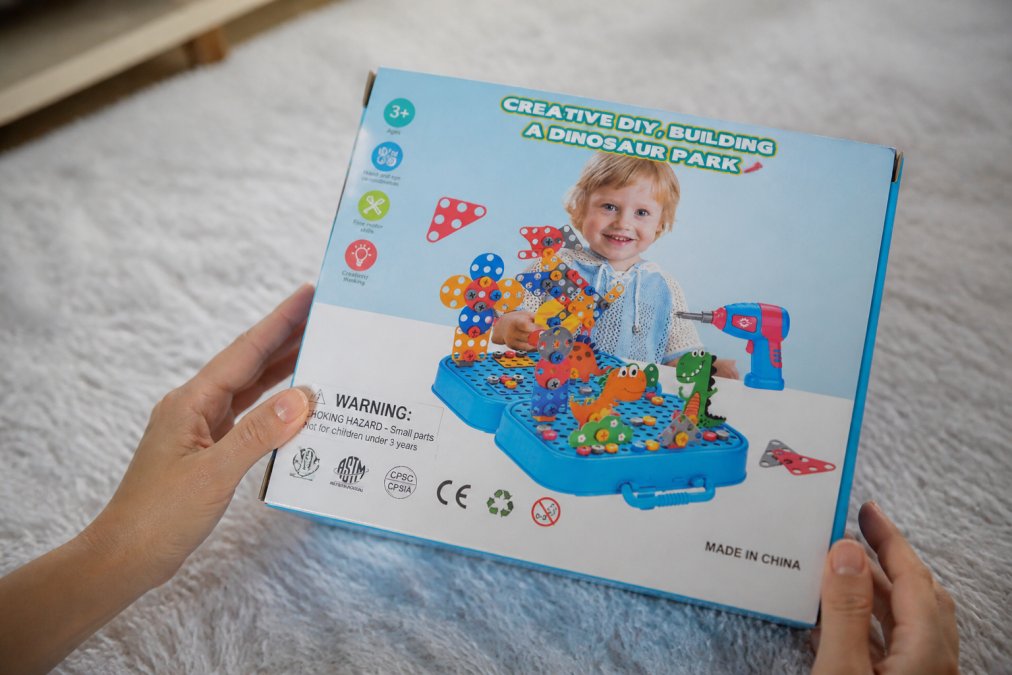
Before considering whether a toy is Montessori, verify it's actually safe. Many fake Montessori toys skip proper testing to cut costs. Safety certifications aren't optional, they're your proof that a toy has been independently tested and meets legal standards.
What ASTM and CPSIA compliance mean
ASTM F963 is the standard for toy safety in the United States, covering choking hazards, toxic materials, paint toxicity, small-part risks, and durability (astm.org). CPSIA (Consumer Product Safety Improvement Act) compliance is federal law requiring testing by third-party labs, not manufacturer self-certification. A toy labeled "CPSIA compliant" has been independently verified.
How to verify certifications before buying
Check the product packaging and listing for specific certification marks:
- ASTM F963-17 or later
- Third-party lab name (not the manufacturer)
- Certificate number you can cross-reference
- CPSC registration number
If you can't find certification details on the product page, contact the seller directly. A legitimate Montessori toy maker will provide documentation immediately. According to CPSC guidance on toy safety, imported toys must meet the same standards as domestically manufactured ones, though enforcement varies.
Examine Materials: Natural vs. Plastic Imposters
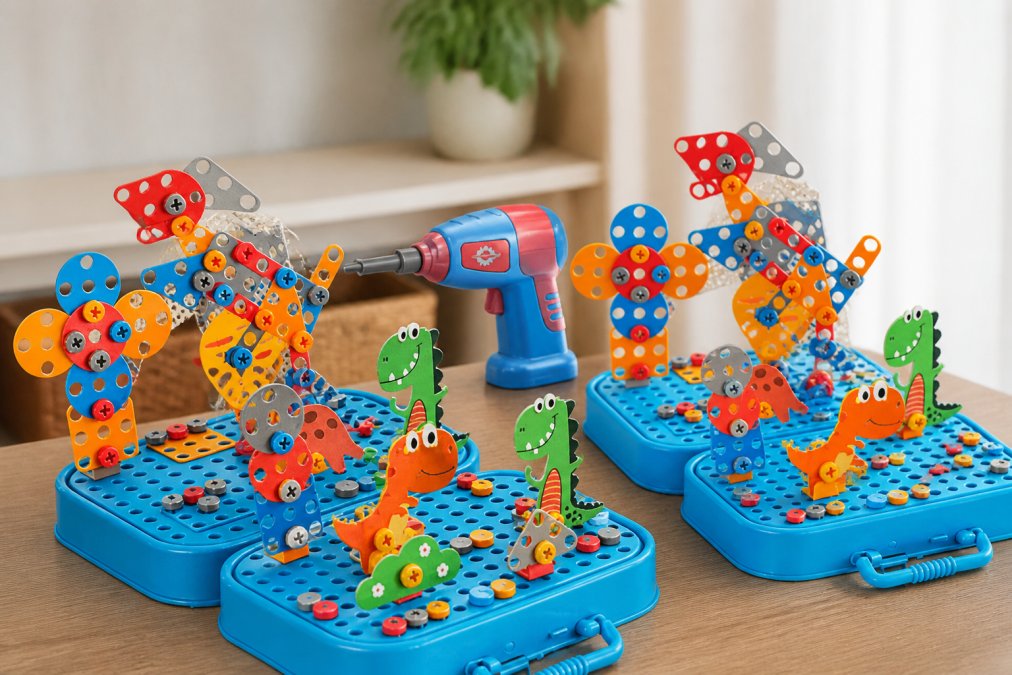
Material quality separates authentic Montessori toys from imposters. Natural materials, wood, fabric, metal, provide tactile feedback that plastic cannot replicate.
Why natural materials matter for tactile feedback
Wood grain, weight variation, and natural warmth engage a child's senses in ways plastic cannot. A wooden toy feels like a real object; plastic feels uniform and artificial. Montessori environments emphasize reality-based play, and this distinction trains children to recognize authentic objects and builds connection to the real world. Real wood also ages beautifully and lasts for years across multiple children.
Red flags in construction and finish
Inspect the toy closely before purchasing:
- Rough edges or splinters indicate poor craftsmanship
- Plastic joints or visible metal fasteners suggest cost-cutting
- Glossy plastic coating over wood prioritizes appearance over tactile experience
- Lightweight construction suggests hollow interior or low-quality wood
- Strong chemical smell indicates fresh paint or finish that may off-gas
Authentic toys use hardwoods like beech, maple, or oak that withstand years of use. Fake Montessori toys often use plywood or particle board disguised as solid wood, which warp over time.
How to Identify Non-Toxic Children's Toys
Non-toxic doesn't mean safe, but it's a critical component. Many toys marketed as "natural" still contain harmful finishes or paints.
Non-toxic finishes and paint standards
Toy paint must meet ASTM F963 standards for lead and heavy metals, but "lead-free" doesn't guarantee non-toxic. Look for toys finished with food-grade oils, beeswax, or water-based stains. If a toy's finish isn't specified, ask the seller. Legitimate manufacturers will provide safety data sheets (SDS) for their finishes.
Water-based paints are safer than solvent-based ones. Beeswax finishes are non-toxic and create a protective layer that ages gracefully. These finishes are more expensive, which is why authentic Montessori toys cost more than plastic alternatives.
Chemical safety beyond 'wood' labels
"Natural wood" is meaningless without context. A toy can be made from real wood but treated with toxic finishes. What matters is the complete picture: wood species, finish type, adhesives, and stains. Research from environmental health organizations studying toy toxins shows that many toys marketed as "eco-friendly" still contain problematic chemicals.
Ask sellers for specifics: What finish is used? What adhesive? Are stains natural or synthetic? Authentic Montessori makers have these answers ready.
Montessori Toys for 1 Year Olds: Age-Appropriate Authenticity
Montessori toys for 1 year olds must match developmental milestones while honoring Montessori principles. At this age, children explore through mouthing, grasping, and cause-and-effect observation.
Developmental milestones and toy selection
One-year-olds are developing pincer grasp, understanding object permanence, and building fine motor control. Appropriate toys include grasping rings and wooden teethers, stacking cups or rings, object permanence boxes, and wooden balls of varying sizes. Inappropriate toys include anything with small detachable parts, battery-operated features, or bright flashing lights.
Reality-based play for toddlers
One-year-olds learn through imitation and real-world exploration. A wooden spoon and bowl invite real play, stirring, scooping, experimenting with cause and effect. The Tender Tots Wooden Tool Disassembly Playset introduces toddlers to real tools and real actions, mirroring adult work and building competence.

Avoid toys that pretend to do something. A plastic phone that plays music doesn't teach how phones work; a wooden block toy phone invites imaginative, reality-grounded play.
Spot Marketing Hype and Unregulated Labels
Marketing departments have weaponized "Montessori" as a buzzword. Nearly any toy can be rebranded as Montessori-inspired with minimal changes.
Common buzzwords that don't guarantee quality
Watch for these red flags in product descriptions:
- "Montessori-inspired" (often means loosely inspired, not authentically Montessori)
- "Promotes learning" (vague, all toys promote some learning)
- "Eco-friendly" (unregulated term)
- "Natural" (doesn't specify wood type, finish, or safety)
- "Developmental toy" (every toy claims this)
- "STEM toy" (often contradicts Montessori's focus on reality-based play)
Authentic vs. Montessori-inspired: Know the difference
Authentic Montessori toys follow specific design principles developed by Maria Montessori and refined over a century. Montessori-inspired toys borrow aesthetic elements without following the philosophy. An authentic toy invites deep, sustained concentration; an inspired toy might be pretty but doesn't demand the same engagement.
Ask yourself: Does this toy have one clear purpose or multiple uses? Can a child use it successfully without adult direction? Does it invite concentration or distraction? Authentic Montessori toys answer "yes" to all three.
Where to Buy and Second-Hand Considerations
Your source matters as much as the toy itself. Buying from reputable sellers reduces the risk of counterfeits and ensures you're supporting makers who prioritize quality.
Evaluating online sellers and supply chain transparency
Legitimate Montessori toy makers are transparent about sourcing, manufacturing, and materials. Look for sellers who provide detailed material specifications, list certifications with documentation, offer clear return policies, respond quickly to safety questions, and share photos of actual products.
Tender Tots & Wellness curates Montessori-inspired toys with transparent sourcing and free worldwide shipping. Avoid sellers who use generic photos, refuse to specify materials, offer prices significantly below market rate, lack return policies, or have no customer reviews.
Risks and rewards of the second-hand Montessori market
Buying second-hand can be smart if you know what to inspect. A well-maintained wooden toy improves with age, costs less, and reduces environmental impact. However, worn finishes may expose underlying materials, damage may not be visible, and you can't verify original certifications.
If buying second-hand, inspect thoroughly for cracks, splinters, loose parts, and finish integrity. Ask the seller about the toy's history. For toddlers who mouth toys, second-hand is riskier since the finish may be compromised.
Choosing authentic Montessori toys requires vigilance, but the payoff is real. Children thrive with toys that respect their intelligence and support genuine development. By understanding what defines authentic Montessori design, checking certifications, examining materials, and avoiding marketing hype, you'll confidently navigate the marketplace.
Tender Tots & Wellness makes this easier by curating toys that meet these standards, from the MontiPlay Montessori Play Toolbox to the Wooden Rainbow Stacking Toy. Start with toys that align with your child's developmental stage, prioritize natural materials and purposeful design, and trust your instincts. The best Montessori toys let the child do the impressing.
=== FAQ ANSWERS (audit these too, same rules) ===
[1] Q: How can I tell if a toy is truly Montessori-aligned? A: Authentic Montessori toys share specific traits: they encourage open-ended play, use natural materials like wood, avoid batteries and electronic sounds, and support a child's developmental stage. Check for ASTM and CPSIA certifications, examine the construction for durability, and verify the toy promotes independent play and problem-solving rather than passive entertainment. Real Montessori toys prioritize sensory exploration and fine motor skill development over visual stimulation.
[2] Q: What CPSC toy safety standards should I verify before buying? A: The Consumer Product Safety Commission enforces CPSIA compliance for children's toys, which includes lead and phthalate testing, choking hazard assessments, and age-appropriate labeling. Verify toys meet ASTM F963 standards for safety testing. Look for certification marks on packaging or ask sellers for third-party test reports. Reputable manufacturers provide documentation; if a seller cannot produce certificates, the toy may not meet safety standards.
[3] Q: Why does Montessori discourage plastic toys? A: Plastic toys often feature bright colors, electronic sounds, and battery-operated lights that overstimulate and distract from purposeful play. Montessori emphasizes tactile feedback and natural sensory experiences; plastic lacks the texture and weight of wood. Additionally, plastic toys frequently raise concerns about non-toxic finishes and are often less durable. Natural materials like wood support concentration, independence, and cognitive development while reducing distracting features that undermine child-led learning.
[4] Q: How do I identify non-toxic finishes on children's toys? A: Request documentation confirming non-toxic, food-safe finishes and paints. Look for certifications from third-party labs confirming absence of lead, cadmium, and phthalates. Natural oils and water-based stains are preferable to synthetic varnishes. Check product descriptions for 'non-toxic finish' claims backed by test results, not just marketing language. Reputable sellers provide material transparency and safety certifications upfront, while unverified sellers often hide finish details.
Frequently Asked Questions
How can I tell if a toy is truly Montessori-aligned?
Authentic Montessori toys share specific traits: they encourage open-ended play, use natural materials like wood, avoid batteries and electronic sounds, and support a child's developmental stage. Check for ASTM and CPSIA certifications, examine the construction for durability, and verify the toy promotes independent play and problem-solving rather than passive entertainment. Real Montessori toys prioritize sensory exploration and fine motor skill development over visual stimulation.
What CPSC toy safety standards should I verify before buying?
The Consumer Product Safety Commission enforces CPSIA compliance for children's toys, which includes lead and phthalate testing, choking hazard assessments, and age-appropriate labeling. Verify toys meet ASTM F963 standards for safety testing. Look for certification marks on packaging or ask sellers for third-party test reports. Reputable manufacturers provide documentation; if a seller cannot produce certificates, the toy may not meet safety standards.
Why does Montessori discourage plastic toys?
Plastic toys often feature bright colors, electronic sounds, and battery-operated lights that overstimulate and distract from purposeful play. Montessori emphasizes tactile feedback and natural sensory experiences; plastic lacks the texture and weight of wood. Additionally, plastic toys frequently raise concerns about non-toxic finishes and are often less durable. Natural materials like wood support concentration, independence, and cognitive development while reducing distracting features that undermine child-led learning.
How do I identify non-toxic finishes on children's toys?
Request documentation confirming non-toxic, food-safe finishes and paints. Look for certifications from third-party labs confirming absence of lead, cadmium, and phthalates. Natural oils and water-based stains are preferable to synthetic varnishes. Check product descriptions for 'non-toxic finish' claims backed by test results, not just marketing language. Reputable sellers provide material transparency and safety certifications upfront, while unverified sellers often hide finish details.
This article was written using GrandRanker