

How Do You Travel Safely With a Newborn?
Last Updated: October 24, 2026
Quick Summary
To travel with a newborn safely, wait until your baby is at least two to three weeks old and cleared by your pediatrician, then plan trips around feeding and sleep with frequent stops. Keep your baby in a rear-facing car seat or an approved child restraint on flights, and treat hand hygiene as your first line of germ protection.
- Keep trips local and short during the first two weeks, with no air travel unless it is an emergency.
- Book a direct flight when possible and allow at least 90 minutes for any connection.
- Feed your baby during takeoff and landing to reduce ear discomfort from pressure changes.
- Build in road trip stops every two to three hours and take your baby out of the car seat at each stop.
- Seek care right away for a fever of 100.4°F (38°C) or higher, trouble breathing, or poor feeding.
Table of Contents
- When Can You Travel With a Newborn?
- Flying With a Newborn: Safety Tips for the Airport and Cabin
- Planning a Road Trip With a Newborn
- What to Pack When Traveling With a Newborn
- Feeding, Sleep, and Germ Protection on the Go
- Signs to Seek Medical Care While Traveling
- Gear Up for Your First Trip With Tender Tots & Wellness
- Frequently Asked Questions
When Can You Travel With a Newborn?
Most pediatricians suggest waiting until your baby is at least two to three weeks old before any long trip, and many prefer to hold off until the first well-baby visit. Learning how to travel with a newborn safely starts with one question: is your baby ready? A full-term infant who is feeding well and gaining weight usually handles short trips better than a premature baby. At Tender Tots & Wellness, we always point eager parents back to their own doctor first.
Age Guidelines and Trip Length
There is no single official minimum age for travel. Think in tiers:
- First two weeks: keep trips local and short. No air travel unless there is an emergency.
- Two to six weeks: short car rides and visits to family are usually fine for healthy, full-term infants.
- Six weeks and beyond: longer road trips and flights become more practical, especially once feeding and sleep settle into a routine.
Trip duration matters as much as age. The longer the trip, the more you need a plan for feeding, diapers, and sleep.
When to Call the Pediatrician First
Call before you book anything if your baby was premature, has a heart or lung condition, or is still below birth weight. The same goes for any fever, feeding trouble, or unusual sleepiness. The American Academy of Pediatrics guidance on traveling with children is a good starting point, but your own pediatrician knows your baby's history.
Here is how travel guidance shifts as your newborn gets older.
| Age | Travel guidance |
|---|---|
| First two weeks | Keep trips local and short; no air travel unless emergency |
| Two to six weeks | Short car rides and family visits usually fine for healthy full-term infants |
| Six weeks and beyond | Longer road trips and flights become more practical |
Flying With a Newborn: Safety Tips for the Airport and Cabin
Flying with a newborn is safe for most healthy, full-term babies once they are past those first few weeks, but the airport and cabin are where parents lose confidence. The goal is to reduce transitions, keep your baby close, and protect feeding and sleep.
Before You Book
- Age and health first. Most pediatricians are comfortable with air travel for a healthy full-term infant after the first two to four weeks, but a premature baby, a baby with heart or lung conditions, or a baby not yet back to birth weight needs clearance first.
- Book a direct flight when possible. Every connection adds a gate change, a crowd, and a chance for a missed feed. If a connection is unavoidable, build in at least 90 minutes so you are not rushing a diaper change and a feed at once.
- Choose seats deliberately. A window seat gives you a wall to lean against and one fewer neighbor to worry about. Bulkhead seats offer floor space for a car seat but often lack under-seat storage, so weigh the trade-off.
At the Airport
- Arrive early but not too early. Two hours before a domestic flight is usually enough with a newborn; three hours means a long stretch holding a baby in a loud terminal.
- Use a hands-free carrier through security. Most airports let you wear your baby through the metal detector, but you may be asked to remove the carrier and carry the baby through.
- Know the formula and breast milk rules. The Transportation Security Administration (TSA) allows formula, breast milk, and juice over 3.4 ounces in carry-on bags when traveling with an infant, but you must tell the officer at the checkpoint. Expect separate screening; allow extra time.
In the Cabin
- Feed during takeoff and landing. Swallowing helps equalize pressure in the middle ear, so a feed or pacifier during climb and descent reduces ear discomfort. If your baby is asleep, don't wake them; offer a feed or pacifier when they stir.
- Keep the diaper bag under the seat in front of you. You will need diapers, wipes, a burp cloth, and a spare outfit more than once on a longer flight.
- Dress in layers. Cabin temperatures swing between cold at altitude and warm on the ground. A short-sleeve onesie under a zip-up sleep-and-play is easier to adjust than a single heavy outfit.
A hands-free carrier is the single best piece of airport gear: arms free for documents and luggage, baby close. Our guide on how to choose a newborn baby carrier in 2026 covers head support and hip position.
Planning a Road Trip With a Newborn
A road trip with a newborn works best when you plan around feeding and sleep, not the map. Build in stops every two to three hours, and don't push through a long day.
Pack a small bag within reach of the back seat. If you're traveling with a portable crib, our roundup of the best lightweight travel crib for infants covers what to look for in size, setup, and mattress support.
Car Seat Safety From Door to Door
A rear-facing car seat is the only safe way to travel with a newborn by car. Install it before the trip and check the angle so your baby's head doesn't flop forward.
Never leave a newborn in a car seat for long stretches outside the car. Take your baby out at every stop to stretch, feed, and reset, letting a sleeping baby stay buckled while you eat lunch is how stiffness and overheating happen.
What to Pack When Traveling With a Newborn
Pack for one extra day beyond your trip length, and organize every bag by category. We built our Large Capacity Mummy Baby Backpack around that idea: an insulated bottle compartment, a dry/wet separation pocket for messy clothes, and enough storage that you're not digging one-handed in a parking lot.
Large Capacity Mummy Baby Backpack – Insulated, Waterproof & Multi-Function →

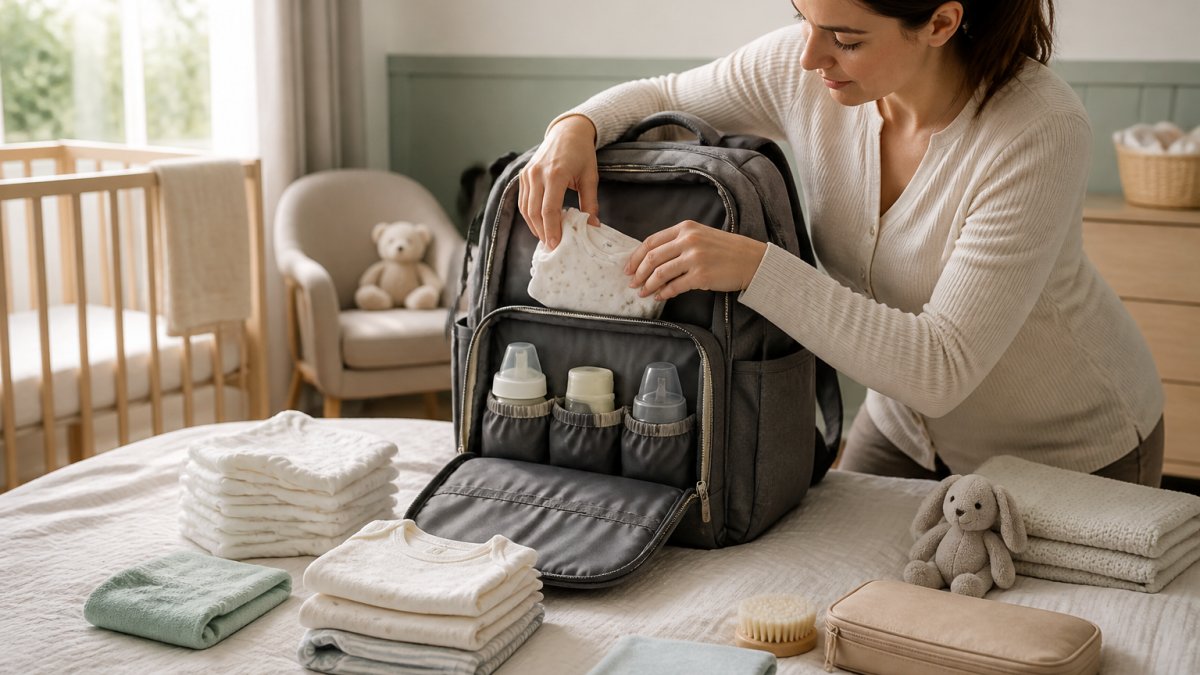
Here's a packing checklist we'd actually use:
- Diapers and wipes for two days beyond the trip
- Two spare outfits, plus one warm layer
- Feeding supplies: bottles, formula, or a nursing cover
Feeding, Sleep, and Germ Protection on the Go
Feeding, sleep, and germs are the three systems that break down first on a trip, and they are linked: a baby who feeds poorly sleeps poorly. Plan each one before you leave rather than improvising at the hotel.
Feeding Logistics: Breast, Bottle, and Formula
The safest approach is to keep the feeding method your baby already knows and to bring enough supplies for one extra day. Changes in water, formula brand, or bottle type are common causes of travel-related feeding trouble.
- Breastfeeding. Plan where you will feed at rest stops, airports, and hotels. A nursing cover and a light blanket reduce stress. Breast milk can be carried through airport security in quantities over 3.4 ounces when traveling with an infant; tell the TSA officer at the checkpoint.
- Expressed milk. Keep it cold in an insulated bag with a cold pack. Many parents carry only what they need for the travel day and buy the rest at the destination. Label every container with the date and time it was expressed.
- Formula. Pre-measure powder into individual containers rather than bringing a whole can. If you use ready-to-feed formula, pack enough for the trip plus one day. For mixing, use bottled water or water you have boiled and cooled; do not assume hotel tap water is appropriate for a newborn.
Safe Sleep in an Unfamiliar Room
Safe-sleep rules do not change on vacation: baby on their back, on a firm, flat surface, with no loose bedding, pillows, bumpers, or stuffed animals in the sleep space. Our safe sleep environment tips for newborn babies cover how to set up a safe sleep space in an unfamiliar room.
- Bring a portable crib or bassinet you trust. Confirm it meets current safety standards and that the mattress is firm and fits tightly with no gaps. Our roundup of the best lightweight travel crib for infants covers size, setup, and mattress support.
- Recreate the room. A travel blackout curtain, a white-noise app, and the baby's usual sleep sack make a hotel room feel familiar.
- Do not improvise a sleep surface. A sofa, an adult bed with soft bedding, or a car seat left on the floor are not safe sleep surfaces for a newborn. If the hotel crib is unavailable or looks damaged, ask for a replacement or change rooms before you put the baby down.
Germ Protection Without Overdoing It
Germs are a real concern for a newborn, especially a premature or medically vulnerable infant. The goal is not a sterile environment but reducing the highest-risk exposures.
- Hands first. Wash your hands before every feed and after every diaper change. Carry hand sanitizer for moments when soap and water are not available.
- Protect the face and hands. Keep strangers from touching your baby's face and hands. A light blanket over the carrier or stroller, used with supervision, can create a soft barrier in crowded spaces.
- Clean high-touch gear. Wipe down pacifiers that fall, sanitize bottle nipples, and wash carrier straps and stroller handles regularly. Our guide on how to clean and sanitize baby gear covers bottles, pacifiers, and carriers.
Signs to Seek Medical Care While Traveling
Seek care right away if your newborn has a fever, trouble breathing, refuses to feed, or is unusually hard to wake. Dehydration signs matter too: fewer wet diapers, a sunken soft spot, or a dry mouth all warrant a call.
Before you leave, save the address and phone number of a clinic or urgent care near your destination, and ask your pediatrician about after-hours care.
Gear Up for Your First Trip With Tender Tots & Wellness
Your first trip with a newborn asks a lot of you, and the right gear takes some of that weight off. At Tender Tots & Wellness, we stock baby gear and clothing chosen for real family life, from our insulated diaper backpack at $69.99 to soft cotton onesies and rompers that layer easily for travel days.
Get started with Tender Tots & Wellness and travel lighter, calmer, and better prepared.
Frequently Asked Questions
When is it safe to travel with a newborn?
Most pediatricians suggest waiting until your baby is at least 2 to 3 months old for nonessential trips, and many advise avoiding air travel before 2 months because of immature immunity. If travel is unavoidable, talk to your pediatrician first. Premature babies or those with health conditions may need a longer wait. For a healthy full-term infant, a short road trip after the first few weeks is often more manageable than flying.
How often should you stop on a road trip with a newborn?
Plan to stop every 2 hours to feed, change diapers, and let your baby stretch out of the car seat. The American Academy of Pediatrics advises against leaving infants in a car seat for long stretches, so use stops to take your baby out and hold them. Build extra time into your schedule, aim for naps, and avoid driving during your baby's fussiest hours.
Can you fly with a newborn, and what should you know first?
Airlines generally allow infants as young as a few days old, but most pediatricians recommend waiting until 2 to 3 months for air travel. Book a direct flight, feed your baby during takeoff and landing to help with ear pressure, and keep them in a carrier or on your lap. Bring hand sanitizer, extra clothing, and a change of clothes for yourself. Ask your pediatrician before booking.
What should you pack when traveling with a newborn?
Pack diapers, wipes, two to three changes of clothing, feeding supplies, burp cloths, a safe sleep surface, and any medications your pediatrician recommends. A structured diaper backpack with insulated bottle storage and dry/wet separation keeps everything organized. Bring a copy of your baby's medical records and your pediatrician's contact information. Pack more than you think you need, especially for delays.
