

Hypoallergenic Sleepwear for Babies with Eczema
Table of Contents
- Start With the Best Fabric for Baby Eczema
- How to Dress a Baby with Eczema for Bedtime
- Fleece Pajamas for Babies with Eczema: What Parents Should Know
- Seams, Stitching, and Other Friction Points to Check
- Washing Baby Clothes for Eczema: Detergent, Dyes, and Fragrance
- Assessing Fabric Claims, Certifications, and Patch Testing
- Safe Sleep Guidance Alongside Hypoallergenic Sleepwear
- Frequently Asked Questions
Last Updated: October 12, 2026
Start With the Best Fabric for Baby Eczema
The best fabric for baby eczema is one that is soft, breathable, and low in potential irritants, and for most families that means organic cotton or a bamboo-based material. These fabrics move air, pull moisture away from the skin, and feel smooth against a rash.
Eczema-prone skin has a weaker barrier, so rough fibers, tight elastic, and chemical residues all make itching worse. The right sleepwear removes those triggers instead of adding to them.
Why Bamboo and Other Regenerated Cellulose Fabrics Help
Bamboo fabric earns its place because it feels silky and stays cool. Regenerated cellulose fabrics, which include bamboo viscose and lyocell, are made by breaking down plant fiber and spinning it into thread. The result drapes softly and wicks sweat, which matters for a baby who runs warm at night.
A few things to know:
- Bamboo feels cooler than cotton against the skin
- It pulls moisture away, so sweat doesn't sit on a rash
- It drapes loosely, so it rubs less
One caveat: bamboo needs gentler washing. Hot water and harsh detergent break down the fiber faster than cotton.
Organic Cotton and Cotton Clothing for Sensitive Skin
Organic cotton is the safest default for most babies with eczema. It breathes, it holds up to frequent washing, and it rarely causes reactions on its own. The word "organic" means the cotton was grown without certain pesticides, which reduces residue left in the finished fabric.
Cotton clothing works best when it is loose and smooth. Tight cotton traps heat. A soft, roomy fit lets air move and keeps friction low.
Our Baby Cotton Romper Jumpsuit is 100% cotton and covers from shoulder to ankle in one piece, which means fewer seams pressing on the skin. Our Baby Cotton Onesie is 95% cotton with snap buttons at the bottom, a good base layer under pants when you want legs free.


How to Dress a Baby with Eczema for Bedtime
Dress a baby with eczema for bedtime in one soft, breathable layer, keep the room cool, and skip anything scratchy or tight. The goal is simple: reduce heat, reduce friction, and reduce contact with potential irritants.
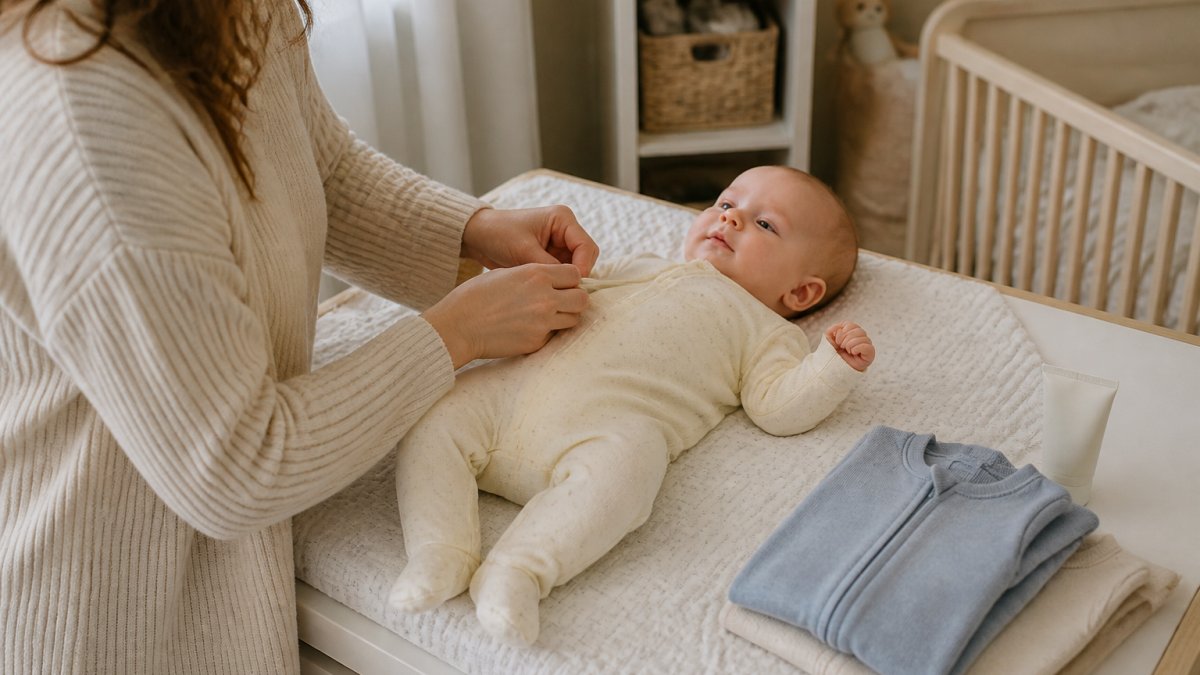
A simple bedtime routine:
- Apply fragrance-free moisturizer 15 to 20 minutes before pajamas
- Choose one soft layer, not three
- Set the room between 68 and 72 degrees Fahrenheit
- Check the neck and back for dampness an hour after sleep starts
Breathability, Temperature Regulation, and Layering
Breathable fabric lets heat escape instead of trapping it. A baby who overheats will scratch, and scratching breaks the skin barrier further. Layering is the tool that keeps temperature steady without adding bulk.
Try this approach:
- Start with a cotton onesie as a base
- Add one light layer if the room runs cool
- Remove layers before the baby gets sweaty
Moisture Wicking, Sweat, and Sleep Temperature
Moisture wicking moves sweat away from the skin so it can evaporate. When sweat sits on eczema, it stings and triggers itching. A wicking fabric keeps the surface drier through the night.
Sleep temperature and fabric weight go together. A heavy fabric in a warm room traps moisture. A light fabric in a cold room leaves the baby chilled. Match the fabric weight to the room, and check the baby once during the night.
Fleece Pajamas for Babies with Eczema: What Parents Should Know
Fleece pajamas are usually a poor choice for babies with eczema. Fleece is often made from synthetic polyester, which traps heat and doesn't breathe.
That doesn't mean fleece is banned forever. Some parents use a fleece sleep sack over a cotton layer in a cold room, which keeps the fleece off the skin.
What to watch for with fleece:
- Overheating within the first hour
- Increased scratching after switching to fleece
- Redness along the arms and legs where fabric touches
If any of those show up, switch back to cotton or bamboo. For a full-coverage cotton option, our Pure Cotton Newborn Gift Set is 100% cotton and built for all-season wear.

Seams, Stitching, and Other Friction Points to Check
Seams and stitching cause more eczema flares than most parents expect. A raised seam running down the back or across a shoulder rubs the same spot all night.
Check these spots before you buy:
- Inside shoulder seams
- Side seams along the ribs
- Tags at the neck
Flatlock seams sit flush with the fabric and cause less rubbing. Tagless labels help too. For babies who scratch, fold-over cuffs cover the hands and protect the skin without mittens that fall off.
Washing Baby Clothes for Eczema: Detergent, Dyes, and Fragrance
Wash baby clothes for eczema with a fragrance-free, dye-free detergent, and skip fabric softener entirely. Residue from detergent, softener, and dryer sheets stays in the fabric and sits against the skin all night. That residue is a common trigger, and it is one of the few triggers you can eliminate completely without buying anything new. Beyond removing these chemical irritants, incorporating gentle natural eczema remedies can further soothe inflamed skin and provide lasting comfort throughout the night.
Baby Cotton Romper Jumpsuit – Long Sleeve One-Piece Outfit for Infants →
Why Residue Matters More Than the Detergent Brand
Detergents clean by lifting oils and dirt into the wash water, then holding them there so they rinse away. When a load is too full, the rinse cycle is too short, or the detergent is dosed too high, some of that mixture stays in the fibers.
A few ingredients to avoid in baby laundry products:
- Fragrance, listed as "fragrance" or "parfum," and a common contact irritant
- Dyes, added for color, no cleaning benefit
- Fabric softener and dryer sheets, coat fibers with a waxy film that traps residue and reduces absorbency
"Free and clear" formulas skip fragrance and dyes, but read the label anyway, some still contain enzymes or optical brighteners.
A Wash Routine That Actually Rinses Clean
- Use a fragrance-free, dye-free detergent, dosed to the low end of the recommended range
- Add an extra rinse cycle every time
- Skip fabric softener and dryer sheets; use wool dryer balls if you want to reduce static
Water temperature is a trade-off. Warm or hot water rinses detergent out more thoroughly, but it also wears down bamboo and other regenerated cellulose fabrics faster and can shrink cotton. For cotton, warm is usually fine. For bamboo and lyocell, follow the care tag and lean toward cool with an extra rinse.
Isolating the Culprit When a Reaction Happens
If your baby's skin flares after a wash day, change one variable at a time:
- Rewash the same garments with an extra rinse and no detergent at all. If the flare clears, residue was likely the cause.
- If it does not clear, switch to a different fragrance-free, dye-free detergent and rewash.
- If it still does not clear, consider the fabric itself, a new bamboo or synthetic item introduced around the same time may be the trigger, not the detergent.
- Keep a simple log of detergent, fabric, and flare dates for two to three weeks. Patterns show up faster than you expect.
Assessing Fabric Claims, Certifications, and Patch Testing
Certifications tell you what is actually in a fabric, which marketing language rarely does. But most parents read a certification logo and assume it means "safe for eczema," and that is not what these standards verify. Understanding the difference helps you spend money on what matters and skip claims that mean nothing.
What the Common Textile Certifications Actually Verify
OEKO-TEX Standard 100 tests the finished textile for harmful substances, including certain azo dyes, formaldehyde, heavy metals, and pesticide residues. It has product classes; Class I is the strictest and is the one applied to baby articles.
GOTS (Global Organic Textile Standard) covers the whole supply chain, from organic fiber growing through processing.
"Hypoallergenic" is not a standard at all in the United States (the FDA). No federal agency defines or enforces it for textiles.
A Practical Label-Checking Checklist
Before you buy, run through this:
- Is there a named certification (OEKO-TEX Standard 100 Class I, GOTS) with a certificate number you can look up?
- Does the fiber content match the season and your baby's tendency to run warm?
- Are seams flatlock or otherwise finished flat, or are they raised and bulky?
A garment can pass every certification and still be wrong for your baby if the fit is tight or the fabric weight is too heavy for the room.
Patch Testing New Fabrics and Laundry Products
Eczema triggers vary from baby to baby. One family swears by bamboo; another finds it pills and irritates. Rather than treating any single material as universally hypoallergenic, test new fabrics and new laundry products one at a time so you can tell what helped and what did not.
A simple patch test:
- Cut a small square of the new fabric.
- Tape it to your baby's inner forearm or upper back, against clean, unmoisturized skin.
- Leave it for 24 hours, keeping it dry.
- Remove it and check for redness, bumps, or increased itching at that spot over the next few hours.
If the skin stays calm, the fabric is a reasonable candidate for sleepwear. If it reacts, set it aside.
Safe Sleep Guidance Alongside Hypoallergenic Sleepwear
Safe sleep rules and eczema-friendly clothing have to work together, and they usually do. Babies should sleep on their backs, on a firm surface, with no loose bedding. Soft, breathable sleepwear fits those rules well.
A few points to keep in mind:
- Skip loose blankets; use a sleep sack if you need warmth
- Avoid overbundling, which raises overheating risk
- Keep the crib free of pillows, bumpers, and stuffed toys
If your baby's eczema is severe, oozing, or not improving with home care, talk to a pediatrician or a pediatric dermatologist. Sleepwear choices help, but they don't replace medical treatment.
Frequently Asked Questions
What fabric is best for a baby with eczema?
Soft, breathable fabrics that pull moisture away from skin tend to work best. Organic cotton and cotton clothing are common choices because they are hypoallergenic and gentle against redness and rash. Bamboo fabric and other regenerated cellulose materials are also popular for their smooth, cool feel. Avoid rough wool and heavy synthetics, and check that any dye or finish is labeled low-irritation before you buy.
Are fleece pajamas safe for babies with eczema?
Fleece pajamas for babies with eczema can trap heat and sweat, which may worsen itchy skin overnight. If you use fleece, choose a loose fit and keep the room cool. Many parents find that a breathable cotton or bamboo base layer under a light sleep sack keeps sleep temperature steadier. Always follow current safe sleep guidance: no loose blankets, and a firm, flat sleep surface.
Should you wash new baby pajamas before using them?
Yes. New sleepwear can carry dyes, finishing agents, and fragrance from packaging. Washing baby clothes for eczema means using a fragrance-free, dye-free detergent and skipping fabric softener and dryer sheets. Run an extra rinse cycle if your baby has reacted to detergent before, and wash all new items before the first wear to reduce skin irritation.
When should you ask a pediatrician about a baby's nighttime eczema?
Contact your pediatrician if itching keeps your baby from sleeping, if the skin is weeping, crusting, or looks infected, or if redness and rash spread despite gentle care. A doctor can confirm the diagnosis, recommend treatment, and help you identify individual triggers. Bring notes on fabrics, detergents, and room temperature so the visit is more productive.
Eczema and bedtime don't have to be a nightly battle. The right fabric, a cool room, and a clean wash routine handle most of the problem. At Tender Tots & Wellness, we stock soft cotton sleepwear chosen for sensitive skin, with free worldwide shipping and fair prices. Our cotton rompers, onesies, and newborn gift sets are made for babies who need gentle fabric against their skin. Shop now and give your baby a calmer night's sleep.