

Buy Natural Wood Baby Gym Online: A Parent's Guide
Table of Contents
- Why Choose a Natural Wood Baby Gym Over Plastic?
- Key Benefits of Wooden Baby Gyms for Development
- How to Find a Non-Toxic Baby Activity Gym
- Baby Gym Safety Standards ASTM: What to Verify
- What to Look For When You Buy Natural Wood Baby Gym Online
- Comparing Wood Types, Finishes, and Frame Designs
- Final Checklist Before You Add to Cart
- Frequently Asked Questions
Last Updated: September 6, 2026
Walk into any big-box baby store and you will see rows of plastic activity gyms in primary colors, blinking lights, and electronic sounds. A natural wood baby gym offers the opposite: a quiet, tactile, and visually calm space for your infant to explore. For parents seeking Montessori-inspired toys that prioritize child development over flashy distractions, choosing a natural wood baby gym online is one of the more thoughtful purchases you will make in the first year. At Tender Tots & Wellness, we curate toys and gear that fit a modern family’s aesthetic while supporting real developmental progress, and this guide breaks down exactly what to look for before you click "buy."
Many parents assume all baby gyms are essentially the same, which is a costly mistake. The frame material, finish, and hanging toys determine not only safety but how your baby interacts with the gym. Below, we will show you how to evaluate construction, verify safety standards, and choose a gym that will last through multiple developmental stages. But first, here is what most guides get wrong: they focus on the gym itself, when the real value lies in how it supports tummy time and independent play.
Why Choose a Natural Wood Baby Gym Over Plastic?
A natural wood baby gym is a developmental tool, not just a place to park your baby. Unlike plastic gyms that rely on electronic stimulation, wooden gyms encourage your child to engage with open-ended toys that respond to their own actions. This aligns with Montessori principles, which emphasize self-directed activity and hands-on learning with natural materials.
The practical differences are significant. Wooden frames are heavier and sturdier, meaning they do not tip over when your baby starts pulling up. They also age better visually, fitting into a minimalist nursery without looking like a toy explosion. Plastic gyms often feature loud colors and sounds that overstimulate young infants; a wooden alternative provides a calmer environment that supports focus and longer periods of quiet exploration.
Key Benefits of Wooden Baby Gyms for Development
The benefits of wooden baby gyms extend far beyond aesthetics. During the first months, your baby develops visual tracking, grasping reflexes, and hand-eye coordination. Hanging toys made from natural wood and organic cotton provide tactile stimulation that plastic cannot replicate, offering varied textures, weights, and temperatures that enrich sensory development.
Tummy time becomes more productive with a well-designed gym. When your baby lies under the frame, they practice lifting their head and reaching for toys, strengthening neck, back, and shoulder muscles. These motor skills form the foundation for rolling, sitting, and crawling. Many parents find that their babies stay engaged with wooden toys longer because each piece behaves differently, encouraging repeated attempts to grasp and mouth them. Wooden teethers attached to the gym also provide safe relief during teething phases, making the gym useful well past the newborn stage.
How to Find a Non-Toxic Baby Activity Gym
Finding a non-toxic baby activity gym requires reading beyond the marketing language. The wood itself should come from sustainably managed forests, and the finish must be safe for a baby who will inevitably mouth the frame. Look for water-based finishes rather than solvent-based varnishes, which can off-gas volatile organic compounds. The Consumer Product Safety Commission provides guidance on federal safety regulations for baby products, and understanding these baseline requirements helps you ask better questions.
A non-toxic baby activity gym uses materials that are verified, not assumed. Check for FSC certification on the wood, which confirms responsible sourcing. Hanging toys should be free of BPA, phthalates, and lead, with organic cotton or natural rubber preferred for anything your baby will chew. If a product page does not list its materials and finishes clearly, treat that as a red flag rather than an oversight.
Baby Gym Safety Standards ASTM: What to Verify
Baby gym safety standards ASTM are not optional considerations; they are the baseline for a safe product. The ASTM F963 standard, which governs toy safety in the United States, covers mechanical hazards, flammability, and toxic elements (astm.org). When you buy natural wood baby gym online, verify that the product explicitly states compliance with ASTM F963, as this indicates third-party testing for lead, heavy metals, and small parts that could pose choking hazards.
The frame design matters as much as the materials. Check that the gym has a foldable frame with locking mechanisms that cannot pinch small fingers during setup or collapse unexpectedly during use. Hanging toys should be attached securely with no cords longer than seven inches, which prevents strangulation risks (cpsc.gov). These details are where cheap gyms cut corners, and they are difficult to assess from photos alone.
What to Look For When You Buy Natural Wood Baby Gym Online
When you buy natural wood baby gym online, you cannot inspect the product in person, so your evaluation must rely on detailed specifications. Start with the wood type. Beech wood and birch wood are the most common choices for premium gyms because they are dense, smooth, and resistant to splintering. The frame should feature rounded edges and a sanded finish, with no rough spots that could irritate your baby's skin.
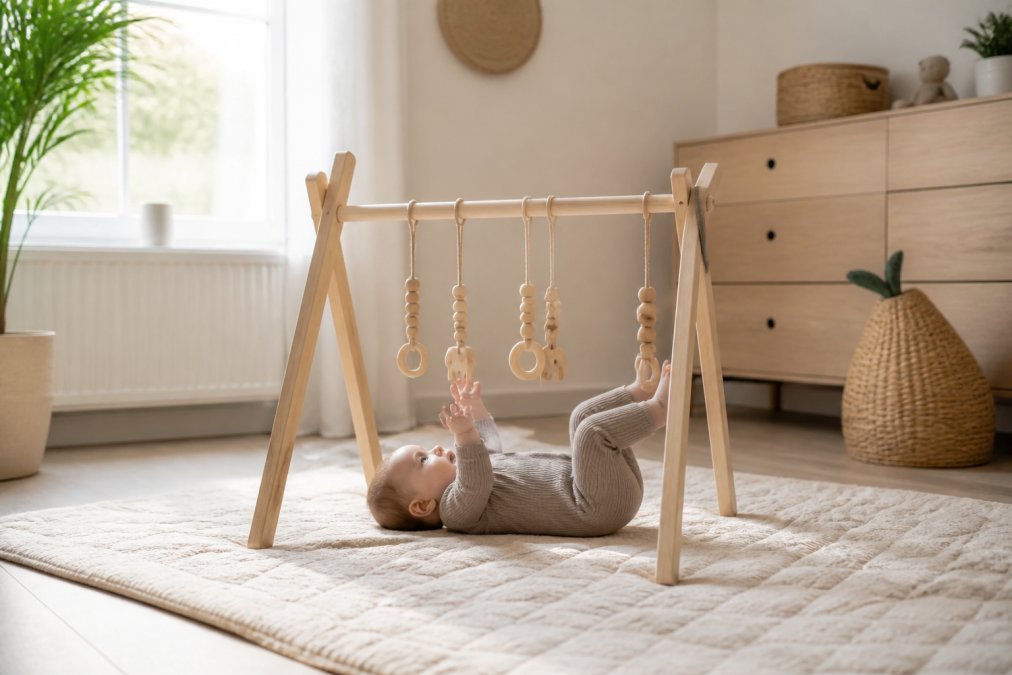
Consider the gym's adjustability and longevity. An infant activity center with an adjustable height feature grows with your baby, accommodating tummy time for newborns and supported sitting for older infants. Measure your available floor space before ordering, as gyms vary significantly in footprint. The play mat should be thick enough for comfort on hardwood floors, and it should wipe clean easily, since spit-up and drool are inevitable.
Comparing Wood Types, Finishes, and Frame Designs
Not all wooden baby gyms are created equal, and the differences come down to materials and construction. The table below summarizes what you should expect at each quality tier:
| Feature | Entry-Level | Mid-Range | Premium |
|---|---|---|---|
| Wood Type | Mixed hardwood | Birch or beech | FSC-certified beech |
| Finish | Unspecified | Water-based | Water-based, hand-sanded |
| Hanging Toys | Plastic mix | Wood and cotton | Organic cotton, natural rubber |
| Frame Design | Fixed height | Foldable | Foldable, adjustable height |
| Safety Testing | Self-declared | ASTM F963 | ASTM F963, third-party tested |
The frame design determines how the gym fits into your daily routine. A foldable frame is essential if you plan to move the gym between rooms or store it when not in use. Assembly should take minutes, not hours, with no tools required beyond what is included. Consider the resale value as well: high-quality wooden gyms from reputable brands hold their value because they are durable and safe. Many families buy them used, which speaks to their longevity.
Final Checklist Before You Add to Cart
Before you complete your purchase, run through this checklist to confirm the gym meets your standards. First, verify that the product page lists ASTM F963 compliance and specifies the finish type. Second, confirm the wood is FSC-certified and identify the wood species. Third, check that all hanging toys are free of BPA, phthalates, and lead.
Next, measure your space and confirm the gym's dimensions, including the mat. Review the assembly process and ensure the frame folds flat for storage. Finally, read the return policy carefully, particularly regarding damaged items or missing parts. A reputable seller stands behind the product quality. At Tender Tots & Wellness, we understand the importance of these details, which is why our curated selection focuses on high-quality items at fair prices, with free worldwide shipping to make the process seamless. We also offer a thoughtful return policy because we want you to shop with confidence, knowing that what arrives matches what you saw online.
Choosing the right gym for your baby means balancing safety, developmental value, and durability. The options are many, but the criteria are clear: non-toxic materials, verified safety standards, and a design that supports independent play from tummy time through early sitting. Tender Tots & Wellness brings together Montessori-inspired toys and essential baby gear that blend timeless elegance with modern trends, so you can create a nursery that feels intentional and calm. Explore our collection and find a natural wood baby gym that will grow with your child.
Frequently Asked Questions
Are wooden baby gyms better than plastic?
Wooden gyms offer several advantages over plastic. They are generally sturdier, so they resist tipping during active play. Wood is also naturally non-toxic and chemical-free when finished properly, unlike some plastics that may contain BPA or phthalates. From a developmental standpoint, the natural texture of wood provides varied tactile stimulation that smooth plastic cannot. Wooden gyms also fit better in minimalist or Montessori-inspired nurseries because they do not feature loud colors or flashing lights, allowing your baby to focus on the hanging toys and their own movement.
What should I look for when buying a natural wood baby gym?
Start by checking the finish. Look for water-based, non-toxic finishes rather than varnishes that may contain solvents. Confirm the wood is sustainably sourced, ideally FSC-certified. Next, verify the fabric components, like hanging toys or a play mat, are made from organic cotton and are BPA-free. Check that the frame has a foldable design for easy storage and that assembly is simple. Finally, review the product listing for compliance with ASTM safety standards and read customer reviews for feedback on durability and real-world use.
Are wooden baby gyms safe for newborns?
Yes, wooden baby gyms are safe for newborns when used correctly. Always supervise tummy time and ensure the gym is assembled according to the manufacturer's instructions. The frame should be stable and sit flat on the floor. For newborns, keep hanging toys within their visual range but out of reach of their grasp until they start showing signs of reaching. Check that all hanging elements are securely attached and that there are no small parts that could become loose. Always follow the age and weight recommendations provided by the manufacturer.
How do I clean a natural wood baby gym?
Cleaning a wood gym is simple. Wipe the wooden frame with a slightly damp, soft cloth and dry it immediately. Do not soak the wood or use harsh chemical cleaners, as these can damage the finish. For fabric accessories like hanging toys or a play mat, check the care label. Most organic cotton items are machine washable on a gentle cycle, but air drying is recommended to prevent shrinkage. Regularly inspect the gym for splinters or loose hardware, and sand down any rough spots that appear over time.