

Montessori Activity Gym: Complete Buyer's Guide
Table of Contents
- What Makes a Montessori Activity Gym Different
- Benefits of Montessori Play Gyms for Early Development
- Key Features to Look For in a Non-Toxic Baby Activity Gym
- Montessori Toys for 1 Year Olds and Activity Gym Pairing
- Wooden vs. Plastic Activity Gyms: What's Right for Your Family
- Setup, Cleaning, and Long-Term Use
- How to Shop for a Montessori Activity Gym Online
- Frequently Asked Questions
Last Updated: September 2, 2026
What Makes a Montessori Activity Gym Different
A montessori activity gym is a thoughtfully designed play structure that prioritizes open-ended exploration, sensory stimulation, and child-led discovery over flashy entertainment. Unlike conventional baby gyms packed with electronic sounds and bright primary colors, Montessori-inspired activity gyms emphasize natural materials, minimal visual clutter, and toys that invite repeated manipulation and problem-solving.
The core philosophy centers on respecting the child's developmental pace. These gyms feature adjustable, modular components that grow with your child rather than becoming obsolete after a few months. What separates a true Montessori activity gym from marketing-driven knockoffs is intentionality: hanging toys are positioned to encourage specific motor patterns, and materials are chosen for their sensory properties, the weight of wood, the texture of organic cotton, the gentle sound of wooden beads. A genuine montessori activity gym respects the child's autonomy by offering choices without overwhelming them, supporting fine motor skill development through grasping and reaching, and creating space for tummy time that builds gross motor strength.
Benefits of Montessori Play Gyms for Early Development
Montessori activity gyms support developmental milestones in ways generic baby gear cannot. The open-ended design encourages infants to initiate their own play sequences rather than passively watching lights flash, building confidence and curiosity-driven learning from birth.
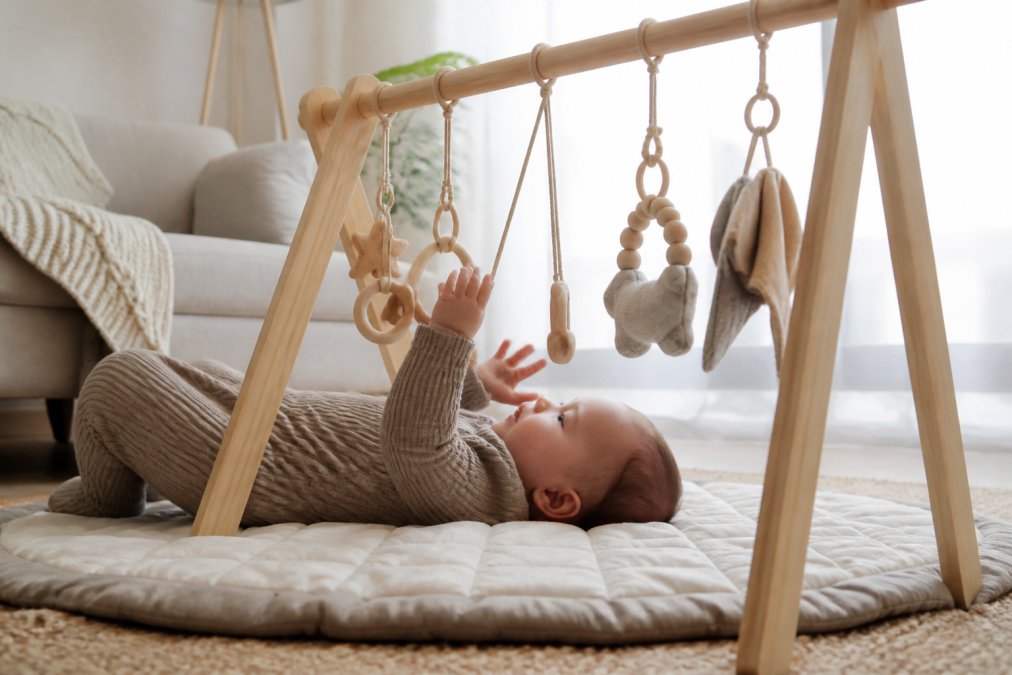
Fine motor skill development accelerates when children have access to toys designed for grasping, turning, and pulling (peer-reviewed research). A montessori activity gym typically features toys at varying heights and distances, encouraging reaching and hand-eye coordination. Wooden rings, fabric loops, and textured objects invite repeated grasping, the foundation for later writing and dexterity.
Gross motor development happens through supported movement. Tummy time under the gym naturally encourages neck and shoulder strengthening, and as infants progress, they learn to roll, push up, and eventually crawl (aap.org).
Sensory exploration is where Montessori design truly shines. Natural wood provides different tactile feedback than plastic. Organic cotton textures differ from synthetic fabrics. Wooden beads create subtle sounds when manipulated. These varied sensory inputs build neural pathways more effectively than uniform plastic toys.
Cognitive development benefits from cause-and-effect learning. When a child pulls a wooden ring and feels it move, they're building understanding of physics and object permanence. The lack of electronic sounds means the child learns that their own actions create results.
Key Features to Look For in a Non-Toxic Baby Activity Gym
The most important feature of any activity gym is what it's made from. Non-toxic materials aren't optional, infants explore the world through their mouths, so every surface must meet strict safety standards (cpsc.gov). Look for activity gyms constructed from sustainably sourced wood finished with child-safe, non-toxic stains or oils. Real Montessori-aligned brands use food-grade finishes or natural oils that are safe even if chewed.
Adjustable height is essential. A gym that allows you to lower or raise the hanging toys as your infant grows extends its useful life from months to years. Modular design means you can swap toys and reconfigure the space as your child's interests evolve, while also making cleaning easier.
Open-ended play features matter more than novelty. A wooden ring that can be grasped, chewed, rotated, and dropped is more valuable than a toy that does one programmed action. Look for toys with multiple ways to interact: hanging fabric loops that can be grabbed from different angles, wooden beads that can be spun, rings that can be pulled at various intensities.
Safety Standards and Material Certifications
Non-toxic baby activity gyms should carry certifications verifying their safety. Look for products tested for lead, phthalates, and other harmful chemicals. Certifications to recognize include CPSC compliance for children's products, testing for chemical safety in textiles, and verification that wood finishes are food-grade safe.
When evaluating a montessori activity gym online, check the product description for specific safety testing information. Specific statements like "tested for lead and phthalates" or "food-grade finish" indicate the manufacturer invested in verification. If a company won't provide specific certification details, move on to brands that document their safety standards clearly.
Design Elements That Support Open-Ended Play
Open-ended play happens when toys don't dictate a single correct use. A wooden ring can be grasped, rotated, chewed, shaken, or dropped. Toys without buttons, lights, or predetermined sequences invite exploration rather than passive consumption.
Spacing and positioning matter strategically. Toys should be placed at heights that encourage reaching without frustration. Visual simplicity supports focus, a montessori activity gym with five carefully chosen toys teaches more than one cluttered with twenty options. Neutral colors, natural wood tones, cream, and soft gray create a calm environment that encourages concentration rather than overstimulation.
Montessori Toys for 1 Year Olds and Activity Gym Pairing
By age one, your child's developmental needs shift. They're moving more intentionally, grasping with purpose, and beginning to understand cause and effect more clearly. The toys you pair with your montessori activity gym should evolve to match these emerging skills.
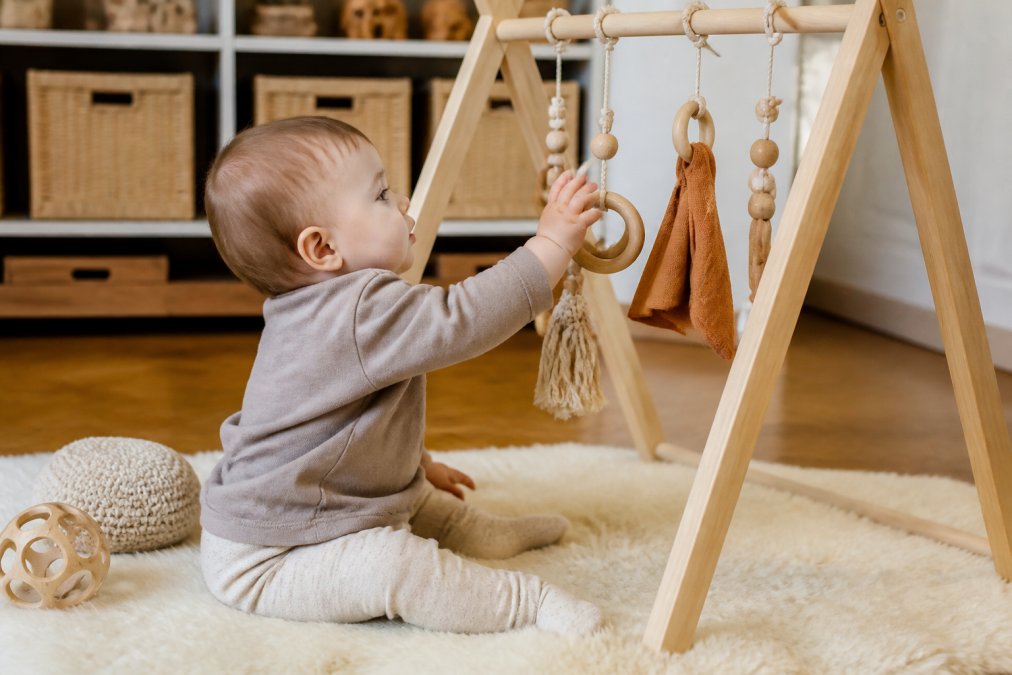
Wooden rings remain valuable through this age, they're simple enough for new skills and complex enough to hold interest as abilities grow. Stacking rings, nesting rings, and rings on a dowel all support hand-eye coordination and spatial reasoning.
Grasping toys with varied diameters support developing pincer grip. Wooden beads on a string, fabric-wrapped wooden handles, and textured wooden shapes all encourage the hand strengthening necessary for eventual self-feeding and writing.
Sensory exploration toys become more sophisticated at this age. Toys that make subtle sounds, wooden chimes, fabric crinklers, soft bells inside cloth pouches, invite investigation. The key is that the child creates the sound through their action, building understanding of cause and effect.
The Tender Tots & Wellness Wooden Tool Disassembly Playset ($55.99) pairs beautifully with activity gyms for children approaching their first birthday, inviting open-ended manipulation while building fine motor skills and problem-solving thinking.

Wooden vs. Plastic Activity Gyms: What's Right for Your Family
Wooden activity gyms align most closely with Montessori philosophy. Wood provides varied sensory feedback: temperature, weight, grain texture, and sound all differ from plastic. A wooden gym feels substantial and intentional, integrates into modern homes without visual jarring, and typically lasts through multiple children while holding resale value.
Plastic activity gyms offer practical advantages in specific situations. They're lighter, easier to move between rooms, and typically less expensive upfront. For families with space constraints or those planning brief use, plastic can make sense. Plastic is also easier to sanitize.
The sustainability question favors wood when sourced responsibly. Sustainably harvested wood is renewable; plastic is petroleum-based and persists in landfills for centuries.
Quality wooden montessori activity gyms range from $200 to $600; plastic gyms often cost $80 to $250. The real consideration is resale value and longevity. Wooden Montessori-aligned gyms maintain value because demand remains strong. A wooden gym used for two children and then resold recovers much of its cost; a plastic gym typically depreciates rapidly.
Setup, Cleaning, and Long-Term Use
Setting up a montessori activity gym correctly makes the difference between a toy that engages your child and one that sits unused. Read the manufacturer's instructions carefully, as most quality gyms require assembly but offer adjustability that makes setup worthwhile.
Position the gym in a space with natural light but not direct sun. Avoid placing it directly under ceiling fans or in drafty areas. Adjust toy heights based on your child's current abilities, newborns need toys positioned lower for focused gazing, while older infants need them raised to encourage fuller arm extension.
Cleaning wooden activity gyms requires gentle care. Use a soft, damp cloth to wipe down wood surfaces weekly. For fabric components, check manufacturer guidance; many organic cotton elements can be hand-washed or spot-cleaned. Never submerge wooden pieces or use harsh chemicals.
Long-term use extends far beyond infancy when you choose quality. Many families use their wooden montessori activity gyms through age two or three by adjusting configurations and rotating toys. Quality wooden gyms typically sell for 50-70% of their original price on secondhand markets, while plastic gyms rarely recover more than 20-30%.
How to Shop for a Montessori Activity Gym Online
Shopping for a montessori activity gym online requires attention to detail. Real Montessori-aligned brands describe their materials specifically: "sustainably sourced birch wood," "food-grade finish," "organic cotton fabric." Vague descriptions suggest marketing over substance.
Check for certification information. Legitimate brands list safety testing explicitly. If the product page doesn't mention these, contact the seller directly and ask. Examine photos from multiple angles, quality product photography shows finish detail, wood grain, fabric weave, and construction.
Read customer reviews strategically, focusing on detailed reviews from parents who've used the gym for six months or longer. Verify return policies before purchasing. Quality retailers stand behind their products and offer straightforward returns if something arrives damaged or misrepresented.
Compare pricing across multiple retailers, but don't assume the cheapest option is the best value. Mid-range pricing from established retailers often indicates appropriate quality-to-cost balance. Confirm that the retailer will replace damaged items without hassle and offers guidance on setup and adjustment.
Choosing the right montessori activity gym sets the foundation for months of developmental play and learning. The investment in quality materials, thoughtful design, and safety certification pays dividends in your child's engagement and your family's long-term satisfaction. At Tender Tots & Wellness, we curate activity gyms that combine Montessori principles with modern aesthetics, pieces that support your child's natural development while fitting seamlessly into how your family actually lives. Shop our collection of carefully selected activity gyms and discover why parents choose quality over quantity when it comes to their child's earliest learning experiences.
Frequently Asked Questions
What makes an activity gym Montessori-aligned?
A true Montessori activity gym emphasizes open-ended play, natural materials, and child-led exploration rather than flashing lights or pre-programmed activities. Look for gyms with adjustable height, detachable toys that encourage fine motor skills, and minimal visual clutter. The environment should invite curiosity-driven play and allow babies to progress at their own developmental pace without overstimulation.
At what age should a baby start using a Montessori activity gym?
Babies can begin tummy time with a low activity gym as early as 2-3 months, though most benefit most from 4-6 months onward when they develop stronger neck control and begin reaching for objects. For 1-year-olds, Montessori toys for this age work best when paired with gyms that offer adjustable height and rotating toys to match their growing gross motor skills and hand-eye coordination.
How do I know if a Montessori activity gym is truly non-toxic?
Check for certifications like CPSIA (Consumer Product Safety Commission) compliance and look for products made with organic cotton, sustainably sourced wood, and child-safe finishes free of BPA, phthalates, and heavy metals. Reputable brands provide material sourcing details and third-party safety testing results. A non-toxic baby activity gym should have transparent documentation about every material used.
Do Montessori activity gyms really help with tummy time?
Yes. Activity gyms designed for tummy time encourage neck strengthening, spatial awareness, and visual tracking as babies reach for hanging toys. The presence of engaging but not overstimulating sensory elements supports developmental activities that build gross motor skills and confidence during this critical early childhood education phase.
This article was written using GrandRanker