

Is Durable Baby Gear That Lasts for Multiple Children Worth It?
Last Updated: November 1, 2026
Quick Summary
Durable baby gear is worth it because it survives one child and still serves the next, and replacement can cost more than buying well once. Compare cost per child per year, not sticker price, by adding replacements and repairs and subtracting resale value.
- Durability is a set of checkable specs, not a feeling you get by touching fabric.
- Newborn-specific items get used hardest and shortest, while convertible items are most likely to reach a second child.
- A $69.99 diaper backpack used by two children over five years works out to about $7.00 per child per year.
- Gear stored damp between children grows mildew in seams and linings that usually cannot be reversed.
- Check five things before reusing secondhand gear, including no recalled models and no damaged harness.
Table of Contents
- What Makes Durable Baby Gear Worth the Upfront Cost
- How to Choose Baby Gear That Lasts
- Baby Gear That Grows With Your Child: Stage-by-Stage Picks
- Baby Gear for Multiple Kids: What Survives Siblings
- Total Cost of Ownership: Price Now vs. Price Over Years
- Cleaning, Maintenance, and Repairability That Extend Lifespan
- Secondhand Safety Checks Before You Reuse or Resell
- Shop Tender Tots & Wellness for Gear Built to Hand Down
- Frequently Asked Questions
What Makes Durable Baby Gear Worth the Upfront Cost
Durable baby gear is equipment built to survive one child and still serve the next, from the crib frame to the diaper bag you carry every day. Many parents find that cheap gear gets replaced, and replacement can cost more than buying well once.
The upfront price stings. Sturdier convertible items often cost more than basic versions. But that gap can narrow when the same piece serves more than one child over several years.
Here's what most buying guides get wrong: they treat durability as a feeling, something you sense by touching fabric. It isn't. Durability is a set of checkable specs, and once you know which ones matter, the price difference usually justifies itself.
How to Choose Baby Gear That Lasts
Choosing long-lasting baby gear comes down to two questions: how is it built, and does its spec match how you actually live? Answer both before you compare prices. For a fuller walkthrough of retailers and standards, see our guide on where to buy quality baby gear.
Check the Build, Not the Label
Words like "premium" and "sturdy" cost nothing to print. Look at materials and construction instead. Oxford cloth with a polyester lining is a common choice for daily-use bags. Food-safe PP plastic is used for toddler feeding dishes. Pure cotton is a soft, breathable material for changing pad covers.
A common mistake is judging by weight alone. Heavier is not automatically stronger, and a bag that is too heavy gets left at home. Check seams, zippers, and how removable parts attach.
Match the Spec to Your Daily Routine
A stroller that folds small suits city living; a structured backpack suits long outings. Write down your three most common trips, then check whether a product's dimensions and carrying style fit them. Gear that fights your routine gets abandoned, and abandoned gear is the most expensive gear you will ever buy.
Baby Gear That Grows With Your Child: Stage-by-Stage Picks
Baby gear that grows with your child is gear whose usable range is defined by adjustable sizing, convertible modes, or add-on parts, not by a single age printed on the box.
Use the ranges below as a planning tool, not a guarantee. Actual lifespan depends on weight limits, how often the item is used, and whether replacement parts are still sold when you need them.
- Newborn to about 6 months (roughly 7-20 lb): bassinet inserts, changing pad covers, swaddles. A washable cotton changing pad cover is a practical choice here because it can be removed and washed.
- About 6 to 12 months (roughly 15-25 lb): feeding gear and activity centers. Dishwasher-safe bowls can make cleaning easier.
- About 12 months to 3 years (roughly 20-40 lb): convertible car seats, toddler towers, and a roomy diaper bag that can serve as a day-trip pack.
- 3 years and beyond: a diaper backpack can still be useful as a travel bag for an older child.
Sizing can be tricky for many parents. Check listed dimensions carefully before you commit. Our step-by-step guide to verifying baby gear sizes shows how to measure your baby and account for growth.
Convertible and Multi-Functional Products: Where the Real Lifespan Lives
Many convertible products change mode instead of changing ownership. Examples include convertible car seats and cribs that convert to toddler beds. When you compare them, check three things: the top weight or height limit in each mode, whether the conversion parts are included or sold separately, and whether the manufacturer still sells those parts years later. A convertible item whose adapter is discontinued is a one-child item wearing a two-child label.
How to Read a Lifespan Claim
Because lifespan figures vary, you can build your own estimate. Start with the top weight limit, subtract your child's current weight, and divide by typical monthly growth in that stage. Then discount for wash cycles, sun exposure, and storage conditions. Check the stroller's rated weight limit against your child's expected growth to estimate how long it will be useful. That estimate is the number you should compare across products, not the marketing phrase on the tag.
Baby Gear for Multiple Kids: What Survives Siblings
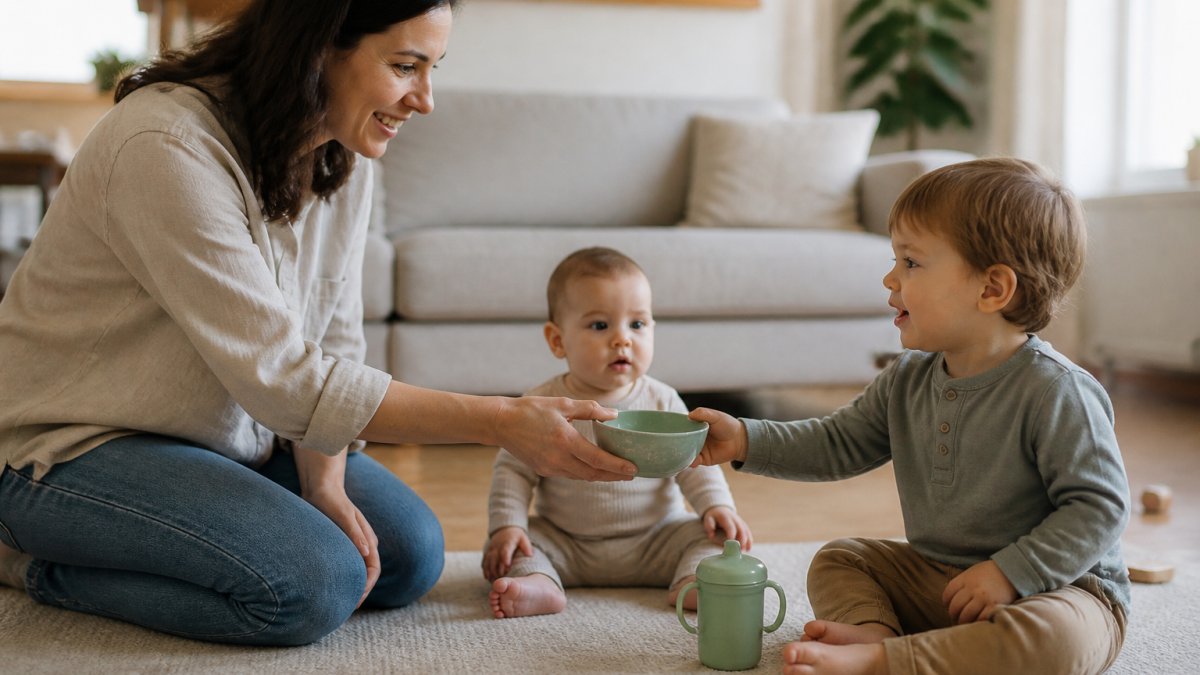
Baby gear for multiple kids is easier to reuse when it can be cleaned easily and when parts can be replaced. Useful features include removable washable covers and wipeable surfaces.
Watch out: gear stored damp between children grows mildew in seams and linings, and that damage usually cannot be reversed. Dry everything fully before it goes into storage.
Pure Cotton Changing Pad Cover – Soft, Removable & Washable | Fits Standard →
Total Cost of Ownership: Price Now vs. Price Over Years
Total cost of ownership is the purchase price plus every replacement, repair, cleaning supply, and accessory over the years you own an item, minus what you recover when you resell it. The sticker price alone does not show cost per child.
Here is the method, in four steps:
- Add the true upfront cost. Include required accessories: a second car seat base, a stroller adapter, a replacement cover, a travel bag. These can add to the sticker price and are easy to overlook at checkout.
- Add replacement and repair costs over the expected lifespan. Multiply the cost of a replacement cover or strap by how many times you realistically expect to replace it. A $25 cover replaced twice over five years is $50 of ownership cost.
- Subtract resale value. Gear with replaceable parts can hold resale value better than gear with discontinued parts.
- Divide by children and years. Cost per child per year is the only number that lets you compare a $69.99 bag against three $25 bags fairly.
Run the math per child, not per purchase. For parents weighing eco-friendly options, our roundup of sustainable baby gear brands shows which ones justify the higher upfront price.
| Gear Type | Typical Lifespan | Reuse Across Siblings | What Drives Cost | Cost-Per-Child Lever |
|---|---|---|---|---|
| Diaper backpack | 4-6 years | High | Fabric, zippers, straps | Replaceable straps; resale strong |
| Changing pad cover | 2-3 years | Medium | Cotton quality, wash cycles | Buy two, rotate, extend life |
| Feeding bowl | 3-5 years | High | Plastic durability, dishwasher safe | Dishwasher-safe PP outlasts thin plastic |
| Convertible car seat | 6-10 years | High | Build quality, replaceable parts, expiration date | Check the expiration date before buying used |
| Convertible crib | 5-8 years | High | Hardware, conversion kit availability | Confirm toddler-rail kit is still sold |
A Worked Example
As an illustration, a $69.99 diaper backpack used by two children over five years works out to about $7.00 per child per year. Comparing that to several cheaper bags depends on how long each one actually lasts, so use your own estimate.
The Costs Competitors Leave Out
Three ownership costs are easy to overlook. Replacement parts: a cover, strap, or buckle that is still sold five years later is worth more than a lower sticker price. Cleaning supplies: frequent washing wears fabric faster; a cover that tolerates normal-cycle washing without pilling saves replacement cost. Storage between children: gear stored damp or in a hot garage can fail before the second child uses it, turning a two-child purchase into a one-child purchase. Choosing a dry, climate-stable storage spot can help protect gear between children.
Cleaning, Maintenance, and Repairability That Extend Lifespan
Cleaning and maintenance decide whether gear reaches a second child at all. Gear often wears out faster when maintenance is skipped. Wash removable covers on a normal cycle, wipe hard surfaces after every use, and air-dry anything with a lining before storage.
Repairability matters just as much. A replaceable cover or strap extends a product's life by years. A routine of regular cleaning can help keep items in good condition. Our guide on how to clean and sanitize baby gear properly walks through the practical steps.
Secondhand Safety Checks Before You Reuse or Resell
Secondhand gear is worth reusing when it passes a short inspection. Check five things before it goes near a baby:
- No cracks, chips, or sharp edges on plastic parts
- Seams and zippers intact, with no fraying or pulled threads
- All straps, buckles, and fasteners present and working
- No mildew, stains, or lingering odor in linings
- No recalled models; verify the model against official recall listings
Skip anything with a damaged harness or a missing part you cannot source. Safety gear with an unknown history is not worth the savings.
Shop Tender Tots & Wellness for Gear Built to Hand Down
We carry baby gear that can be used across stages. Our Large Capacity Mummy Baby Backpack at $69.99 uses Oxford cloth with a polyester lining and includes an insulated bottle compartment and dry/wet separation. The 360° Rotate Spill-Proof Baby Bowl at $30.99 is made from BPA-free PP plastic and is top-rack dishwasher safe. The Pure Cotton Changing Pad Cover at $21.99 is removable and easy to wash.

Get started with Tender Tots & Wellness and build a nursery that serves every child who comes after.
Frequently Asked Questions
What baby gear is worth buying for multiple children?
Focus on items that take daily wear and still hold their shape: changing pad covers, structured diaper backpacks, and feeding dishes. A pure cotton changing pad cover at $21.99 is removable and machine washable. A $69.99 insulated diaper backpack includes dry/wet separation and an insulated bottle compartment for outings.
How can I tell if baby gear is durable before I buy?
Look at materials and construction details rather than marketing claims. Oxford cloth with a polyester lining is the listed material for the diaper backpack, and the feeding bowl is made from food-safe PP plastic. Check whether covers are removable and machine washable, whether seams are reinforced, and whether the dimensions match standard furniture. Gear that specifies exact measurements, like a 32 x 16 x 4 cm cover sized for standard changing pads, is easier to trust than vague sizing.
Is it safe to reuse durable baby gear for a second child?
Many non-structural items can be reused after inspection. Wash fabric covers on a normal cycle, check plastic bowls for cracks or cloudiness, and confirm buckles, straps, and seams still function. Retire anything with a recalled model number, a broken harness, or a cracked shell. Car seats and cribs deserve a check against current safety standards before reuse, since those rules change over time. Everything else that cleans up well and shows no damage is fair game for siblings.
How should I store baby gear between children?
Clean and dry everything completely before packing, since trapped moisture causes mildew in fabric and odor in plastic. Store items somewhere dry, and let the diaper backpack air out before packing it away. Label bins by stage so items are easier to find.
What should I check before buying used baby gear?
Start with the model number and confirm it has not been recalled. Then inspect in person: flex plastic bowls for stress cracks, pull on backpack straps and zippers, and check fabric covers for thinning or pilling. Ask how the item was cleaned, since harsh bleach can weaken fibers. Avoid anything missing hardware or with a repaired harness. Used gear that passes these checks can serve a second family well, especially simple items like cotton covers and structured bags.
