

Why Secondhand Baby Gear Is Worth It for New Parents
Last Updated: November 4, 2026
Quick Summary
Buying secondhand baby gear saves money because short-use, high-ticket items like bassinets, swings, and activity gyms are used for only a handful of months before resale. It also keeps resource-intensive gear in use instead of in landfills. Buy safety-critical items new and source the rest used.
- Bassinets and cradles are used for roughly the first six months.
- Search the model number against the Consumer Product Safety Commission recall database before buying.
- Never buy used car seats, crib mattresses, breast pumps, bottles, nipples, or helmets.
- Consignment shops curate for condition, thrift stores offer the lowest prices, and parent groups allow inspection.
- Families who buy used and then resell, donate, or pass items on extend the loop further.
Table of Contents
- The Real Financial Payoff of Buying Secondhand Baby Gear
- The Environmental Case for Pre-Loved Baby Items
- Safety Tips for Secondhand Baby Gear Every Parent Should Know
- What Baby Items to Avoid Buying Used
- How to Sanitize Used Baby Gear by Material Type
- Tracking Resale Value and the Secondhand Lifecycle
- Where to Shop for Quality Secondhand Gear
- Building Your Nursery with Tender Tots & Wellness
- Frequently Asked Questions
The Real Financial Payoff of Buying Secondhand Baby Gear
The benefits of buying secondhand baby gear start with the math every new parent eventually does on a napkin. A crib, stroller, bouncer, and high chair each have a short usable life, and the resale market is full of gear used for mere months.
Secondhand baby gear is any previously owned infant or toddler item, furniture, strollers, clothing, feeding supplies, resold through thrift stores, consignment shops, or online marketplaces at a fraction of its original cost.
Where the Savings Add Up Fastest
The biggest wins come from short-use, high-ticket items. Bassinets, infant swings, activity gyms, and baby bathtubs are used for a handful of months and then sit in a closet.
- Bassinets and cradles: used for roughly the first six months
- Infant swings and bouncers: outgrown quickly, often barely used
- Activity gyms and play mats: durable, easy to clean, and widely available
A common mistake is buying everything new for a first baby, then discovering half of it was never needed. Start with short-life items secondhand and reserve new purchases for pieces where safety and hygiene matter most.
Budget-Friendly Alternatives to a Full Baby Registry
A full registry pushes new parents toward buying everything at once, at retail prices. A leaner approach: register for the safety-critical items and source the rest through the secondhand market.
Build a two-column list: car seats, crib mattresses, and feeding items you want new in one; everything else in the other, priced against consignment shops and online marketplaces. Our budget-friendly baby registry checklist walks through what to include and what to skip.
The Environmental Case for Pre-Loved Baby Items
Every onesie, crib, and stroller that changes hands instead of landing in a landfill keeps materials in use and shrinks a family's environmental footprint.
The circular economy angle matters more here than in most categories. Infants outgrow clothing in weeks and equipment in months, so the secondhand market absorbs a steady flow of gently used goods with years of service left.
Why Baby Gear Is an Unusually High-Impact Category
Most consumer goods are used for years before resale. Baby gear is different: the first owner's useful life is measured in months, while the product's physical life is measured in years.
The environmental math follows from that mismatch. Manufacturing a stroller or crib concentrates energy, plastic, metal, and textile production into a single purchase.
The Materials That Matter Most
Not all secondhand purchases carry the same environmental weight. The biggest wins come from items that are material-intensive and short-lived:
- Nursery furniture (cribs, dressers, gliders): solid wood and engineered wood products carry significant embedded material and energy; a used dresser or glider can serve two or three children across a decade.
- Strollers and travel systems: metal frames, plastic joints, and technical fabrics are resource-heavy to produce and hold up well to resale when inspected.
- Clothing and bedding: textiles are water- and energy-intensive to produce, and infants outgrow sizes in weeks, so the resale loop is especially efficient.
Items that are cheap to manufacture and heavily worn, socks, bibs, and heavily used bottles, offer less environmental benefit and more hygiene risk, so they are lower priorities for the secondhand loop.
The Trade-Offs Worth Knowing
Secondhand is not automatically the lower-impact choice in every scenario. Driving long distances for a single low-value item can offset the benefit, so bundle purchases or buy locally.
Watch out: a recalled or damaged item is not an environmental win. If it has to be discarded after purchase, the resale loop breaks and the item ends up in the waste stream anyway.
Making the Loop Work in Practice
The environmental benefit compounds when gear keeps moving. Families who buy used and then resell, donate, or pass items to local parent groups extend the loop further than those who buy used and store items indefinitely. Keeping original hardware, manuals, and boxes makes resale easier.
Safety Tips for Secondhand Baby Gear Every Parent Should Know
Safety tips for secondhand baby gear come down to two habits: verify the item's history and inspect it in person before money changes hands. Used gear is safe when it meets current safety standards, has no recalls against it, and shows no structural damage.
Checking for Recalls and Safety Certifications
Before buying anything used, search the model number against the Consumer Product Safety Commission recall database. Recalls happen, and a recalled item is not a bargain at any price.
Watch out: cribs manufactured before the current federal crib standards, and car seats that have been in a crash or passed their expiration date, should never be bought used.
Inspecting Hard Goods vs. Soft Goods
Hard goods and soft goods fail in different ways, so inspect them differently.
| Item Type | What to Check | Red Flags |
|---|---|---|
| Hard goods (cribs, high chairs, strollers) | Joints, screws, folding mechanisms, brakes | Cracks, missing hardware, loose hinges |
| Soft goods (clothing, bedding, carriers) | Seams, elastic, fabric integrity | Stretched elastic, torn seams, persistent stains |
| Plastic items (bath tubs, toys) | Surface integrity, edges | Cracks, sharp edges, cloudiness |
| Car seats | Expiration date, crash history, harness | Past expiry, frayed straps, unknown history |
Structural integrity is the deciding factor. A stroller with a wobbly frame or a crib with a cracked rail is a hard no, regardless of how gently worn it looks.
Large Capacity Mummy Baby Backpack – Insulated, Waterproof & Multi-Function →
What Baby Items to Avoid Buying Used
Some items should always be bought new. Car seats top the list: you cannot verify crash history, and the plastic degrades over time, which is why manufacturers print expiration dates. Crib mattresses are another: a used mattress may not fit a different crib frame snugly, creating a gap hazard.
The items to avoid buying used:
- Car seats: unknown crash history and expiration dates
- Crib mattresses: fit and hygiene concerns
- Breast pumps: hygiene and manufacturer warranty issues
Everything else, from clothing to strollers to nursery furniture, is fair game with a careful inspection.
How to Sanitize Used Baby Gear by Material Type
How to sanitize used baby gear depends on what it is made of.
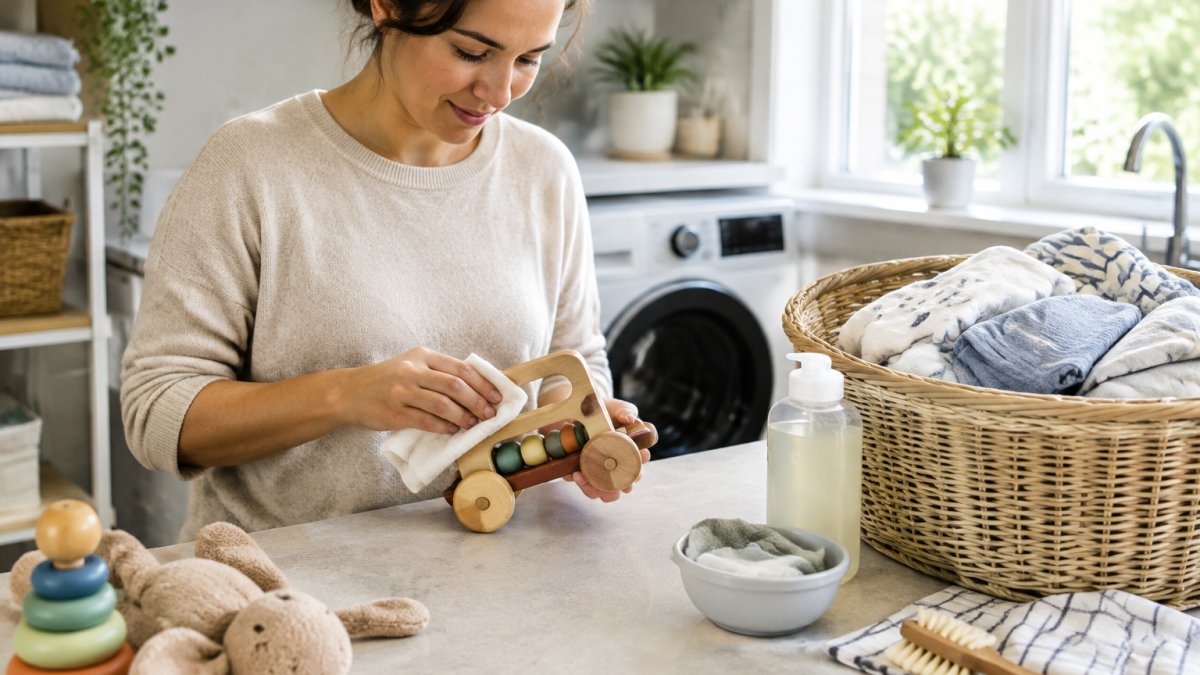
Hygiene Protocols for Plastic, Wood, and Fabric
- Plastic: wash with mild soap and warm water, rinse, air dry fully. Disinfect with a diluted solution only where the manufacturer allows it.
- Wood: wipe with a damp cloth and mild soap, then dry immediately. Never soak wooden toys or furniture.
- Fabric: follow the care label, wash on the hottest safe cycle, and dry completely before use.
For a full step-by-step walkthrough, our guide on how to clean and sanitize baby gear properly covers each material in detail.
Tracking Resale Value and the Secondhand Lifecycle
The secondhand lifecycle is the useful life of an item across multiple owners, and it is where the real payoff hides.
Track what you buy and what you resell. If you are weighing whether higher-quality gear pays off across multiple children, our breakdown of whether durable baby gear is worth it makes the case with the resale math.
Where to Shop for Quality Secondhand Gear
Quality secondhand gear comes from four main sources: consignment shops, thrift stores, online marketplaces, and local parent groups. Consignment shops curate for condition, thrift stores offer the lowest prices, online marketplaces give the widest selection, and parent groups are best for local, inspect-before-you-buy finds.
Inspect in person whenever possible, ask about the item's history, and confirm the model number before paying. For families who want eco-conscious options and trustworthy sources, our guide to sustainable baby gear brands points to where quality secondhand gear is worth seeking out.
How the Four Channels Compare
The right channel depends on what you are buying and how much verification you need.
- Consignment shops: curated inventory, staff who typically check condition, and a physical location to inspect before paying. Prices sit above thrift stores but below retail. Ask whether the shop checks for recalls and accepts returns.
- Thrift stores: the lowest prices and the widest unpredictability. Inventory turns over fast, so visit regularly. Inspect everything in person; staff rarely verify recalls or missing hardware.
- Online marketplaces: the widest selection and the ability to search by model number, which makes recall checks easier. You usually cannot inspect before paying, so ask for close-up photos of joints, labels, and the model plate, and confirm history in writing.
Vetting Checklist Before You Pay
Regardless of channel, run the same checks before money changes hands:
- Confirm the model number and manufacturer. The model plate or label is the key to every other check. If it is missing or unreadable, treat the item as unverifiable.
- Search the model against the Consumer Product Safety Commission recall database. A recalled item is not a bargain at any price.
- Ask for the item's history. How many children used it, how long, and whether it was ever in a crash or repaired. For car seats, crash history alone is disqualifying.
- Inspect in person or request detailed photos. Focus on joints, folding mechanisms, brakes, harness straps, and hardware. Missing screws or a wobbly frame are hard no's.
- Check for original parts and manuals. Original hardware and documentation make the item easier to verify and easier to resell later.
Watch out: listings that show only a stock photo, refuse close-ups of the model plate, or cannot answer basic history questions are the ones most likely to waste your time. A seller who cannot verify the model number cannot verify the recall status either.
Pricing Expectations by Channel
Pricing varies by channel and condition, but the pattern is consistent: thrift stores at the bottom, consignment shops in the middle, and online marketplaces and parent groups in between depending on brand and condition. Well-known brands hold value better on marketplaces, while generic gear moves best through thrift and swap channels. When comparing a used item against retail, factor in replacement parts, cleaning supplies, and your time.
Inspection Logistics That Save Time
For online purchases, ask the seller to demonstrate folding mechanisms and brakes on video before you pay, and confirm the return policy in writing. For in-person purchases, bring a tape measure for crib slat spacing and mattress fit, and test every moving part yourself. Meet in a public place during daylight and inspect before paying.
Building Your Nursery with Tender Tots & Wellness
Secondhand sourcing handles the big-ticket items, but some pieces are worth buying new, and that is where we come in.
Our Large Capacity Mummy Baby Backpack keeps everyday essentials organized with an insulated bottle compartment and dry/wet separation. Our Pure Cotton Changing Pad Cover is removable and washable, which matters when you are mixing new and gently used gear. And our 360° Rotate Spill-Proof Baby Bowl is BPA-free and dishwasher safe for mealtime.


The smartest nurseries mix both: source the short-life items secondhand, buy the safety-critical and hygiene-sensitive pieces new, and fill the gaps with gear built to last. Shop the baby and toddler gear collection to complete your setup.
Frequently Asked Questions
Is it safe to buy secondhand baby gear?
It can be, as long as you inspect each item and check for recalls. Hard goods like wooden toys and plastic feeding bowls are usually safe if they are intact and free of cracks. Avoid anything with missing parts, loose joints, or worn straps. Always verify the item meets current safety standards and has its original labels when possible. Cleaning and sanitizing before use is essential, and you should skip car seats and cribs unless you can confirm their full history.
What baby items should you never buy used for safety reasons?
Skip car seats, cribs, and breast pumps unless you can verify their history and confirm they have never been in an accident or recalled. Car seats weaken after crashes and their expiration dates matter. Cribs made before current safety standards may have drop sides or unsafe slats. Breast pumps are single-user devices for hygiene reasons. Mattresses and bottle nipples are also best bought new because they wear down and can harbor bacteria that sanitizing cannot fully remove.
How do you properly sanitize secondhand baby gear?
Match the method to the material. Wash fabric items like rompers and changing pad covers in hot water with a baby-safe detergent, then dry on high heat. Wipe plastic and wooden toys with a mild soap solution, rinse, and air dry completely. For feeding items like the 360° Rotate Spill-Proof Baby Bowl, check that it is dishwasher safe on the top rack before washing. Always follow manufacturer guidelines and let every item dry fully before your baby uses it.
How much money can you save by buying used baby gear?
Savings vary by item, but secondhand shopping often cuts costs significantly on short-use items like clothing, bouncers, and activity centers. Babies outgrow clothing and gear within months, so pre-loved items in gently used condition deliver the same function at a lower price. Pair secondhand finds with new essentials from a curated shop to balance budget and safety. Track what you spend versus retail so you can see the real difference over your baby's first year.
The challenge is not finding secondhand gear; it is knowing which items to buy used and which to buy new. That is where a curated source helps. Tender Tots & Wellness offers free worldwide shipping, a blend of timeless and modern pieces, and quality products at fair prices, so you can fill the gaps with confidence. Get started with Tender Tots & Wellness and build a nursery that lasts.
