

Choosing Wooden Toys for Infant Motor Skills
Last Updated: November 18, 2026
Quick Summary
Choosing wooden toys for infant motor skills works best when you match the toy to your baby's current grasp, from light rattles for a palmar grasp to peg puzzles for a pincer grasp. Wood's weight and texture give honest feedback that builds strength in small hands.
- Wood has weight, grain, and resistance that plastic lacks, and that resistance builds strength in small hands.
- Fine motor skills are small, precise movements; gross motor skills are big movements, and they develop on different timelines.
- Palmar grasp (0-5 months) calls for light wooden rattles with a slim handle.
- Anything small enough to pass through a toilet paper tube is a choking risk for children under three.
- Wipe wooden toys with a damp cloth and mild soap, then dry right away; never soak wood or put it in the dishwasher.
Table of Contents
- Why Wooden Toys for Infants Build Motor Skills Better Than Plastic
- Motor-Skill Milestones by Age: What Your Baby Can Actually Do
- Baby Toys for Developing Motor Skills: Matching the Toy to the Grasp
- Fine Motor Skills Toys for 12 to 18 Months: Pinching, Stacking, and Placing
- Montessori Toys for 1 Year Olds: Choosing With Purpose, Not Packaging
- Wooden Toy Safety, Wood Species, Finishes, and Cleaning
- How to Choose and Use a Wooden Toy Step by Step
- Shop Wooden Toys That Support Your Baby's Next Milestone
- Frequently Asked Questions
Why Wooden Toys for Infants Build Motor Skills Better Than Plastic
Choosing wooden toys for infant motor skills starts with one idea: a toy should push back a little. Wood has weight, grain, and resistance that plastic lacks, and that resistance is what builds strength in small hands.
At Tender Tots & Wellness, we look for toys that reward effort. A wooden rattle feels different from a hollow plastic one before a baby even grips it.
Weight, texture, and feedback: what wood teaches small hands
Wood gives a baby honest feedback. A wooden block has real mass, so an infant must adjust their grip to lift it. The surface has grain and slight variation, which wakes up the sense of touch. When a baby shakes a wooden rattle, the sound is warm and soft rather than shrill.
Plastic is light and slick. It slips. It offers little resistance, so the hand does less work. Wood asks more of the hand, and that extra effort is the whole point.
The American Academy of Pediatrics guidance on safe sleep and play reminds parents that supervised play is where infants build strength. Wooden toys fit that job well.
Motor-Skill Milestones by Age: What Your Baby Can Actually Do
Many parents buy toys for the age their baby is, not the age on the box. The fix is to watch what your baby can actually do, then pick a toy that asks for one small step beyond it. Here is how fine and gross motor skills unfold across the first 18 months, and how each stage maps to wooden toy choices.
Fine versus gross motor development in the first two years
Fine motor skills are small, precise movements: grasping, pinching, transferring, and releasing. Gross motor skills are big movements: head control, rolling, sitting, crawling, pulling up, and walking. They develop on different timelines, and a baby can be ahead in one and average in the other. That is normal.
| Age | Observable fine motor signs | Observable gross motor signs | Wooden toy match |
|---|---|---|---|
| 0-3 months | Reflexive grasp when palm is touched; batting at objects | Lifting head briefly during tummy time | Light wooden rattle with a slim handle |
| 3-6 months | Reaching with both hands; holding an object briefly | Rolling front to back; sitting with support | Grasping rings, wooden teether, activity gym with hanging wooden pieces |
| 6-9 months | Transferring an object hand to hand; raking small items toward the palm | Sitting without support; starting to crawl | Chunky wooden blocks, stacking cups, a tray of large wooden pieces |
| 9-12 months | Pincer grasp emerging; dropping objects into a container | Pulling up to stand; cruising along furniture | Peg puzzles with thick pegs, wooden coin drop, first shape sorter |
| 12-18 months | Pinching and placing with aim; stacking two to three blocks | Walking independently; climbing | Shape sorters, stacking rings, wooden blocks for tower building |
What to watch for at each stage
The table is a map, not a test. Use it to notice what your baby is already trying, then choose a toy that makes that action slightly harder.
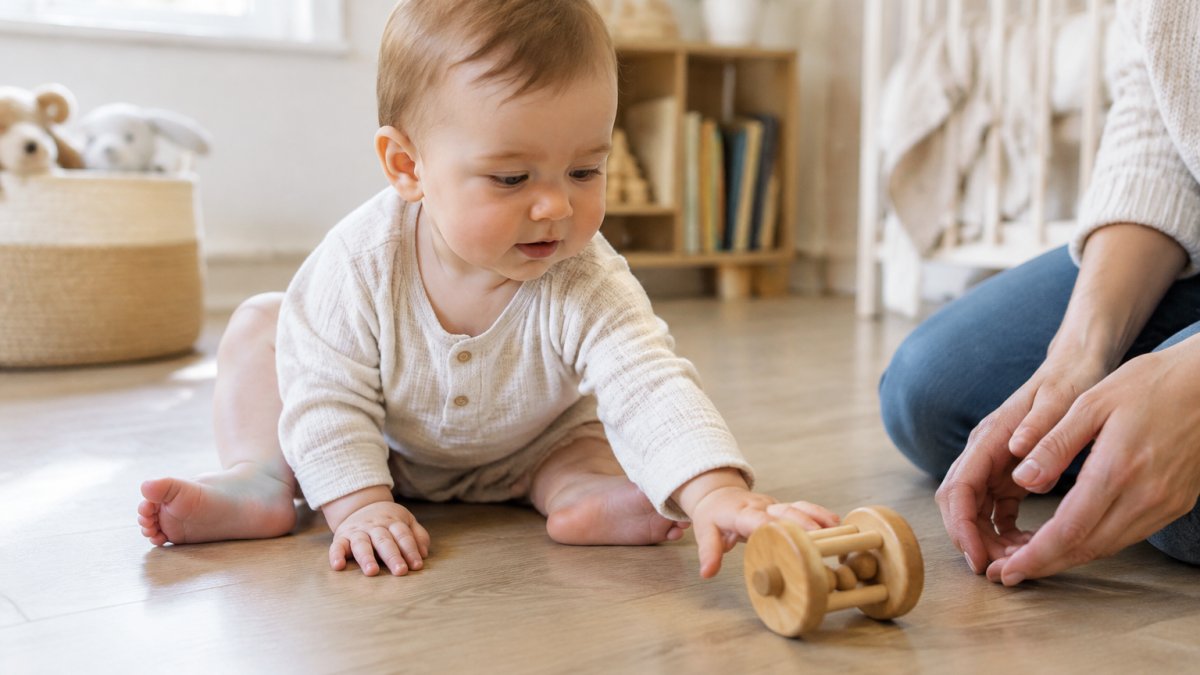
- Early infancy (0-6 months): the goal is reaching and holding. A toy that is too heavy gets dropped and ignored. Look for rattles and rings light enough to lift with one hand.
- Mid-infancy (6-9 months): the goal is transferring and releasing. A baby who can move an object from hand to hand is ready for a container to drop it into.
- Later infancy (9-18 months): the goal is aim and control. Peg puzzles and shape sorters reward precision, but only if the pegs and shapes are large enough to grip easily.
A common pattern is that a baby masters a grasp weeks before they can use it deliberately. Offering a toy that is one step ahead keeps the challenge interesting without causing frustration.
If a toy is consistently thrown or ignored, it may be too hard or too easy for the current grasp.
For a deeper age-by-age list, see our best Montessori toys for 1 year olds guide.
Baby Toys for Developing Motor Skills: Matching the Toy to the Grasp
The best baby toys for developing motor skills match the grip your baby has right now. A toy that is too heavy gets dropped and ignored. A toy that is too easy gets tossed aside.
Here is how we match toys to grasps:
- Palmar grasp (0-5 months): baby wraps the whole hand around an object. Choose light wooden rattles with a slim handle.
- Radial palmar grasp (5-7 months): thumb joins the fingers. Choose wooden rings and easy-to-hold blocks.
- Raking grasp (7-9 months): fingers rake small items toward the palm. Choose a tray of chunky wooden pieces.
- Pincer grasp (9-12 months): thumb and index finger pinch. Choose peg puzzles and small wooden coins.
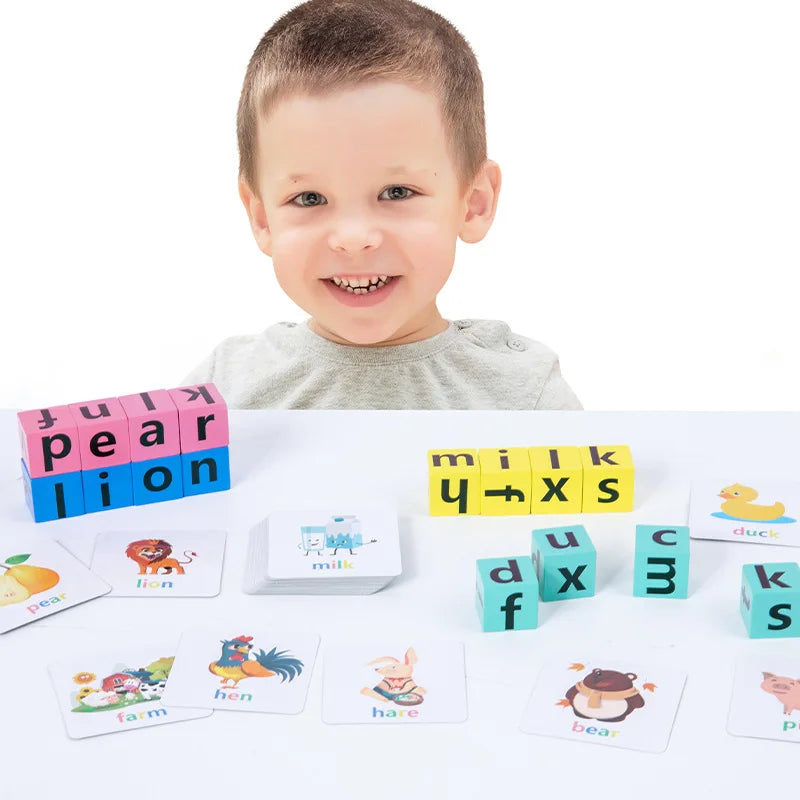
If you want a single toy to start with, our WordWise Blocks - Fun Learning For Kids give small hands a real grip to work on, with 40 cards for guided play as your baby grows.
Fine Motor Skills Toys for 12 to 18 Months: Pinching, Stacking, and Placing
Fine motor skills toys for 12 to 18 months can ask for precision. The toys that help most are the ones that reward aim and control.
Look for these features:
- Shape sorters with easy-to-grip wooden shapes
- Peg puzzles with thick, rounded pegs
- Stacking rings on a stable wooden base
- Wooden blocks for tower building and knocking down
A common mistake is buying a sorter with too many shapes at once. Start with a circle and a square. Add shapes as your toddler masters the first two.
For a deeper age-by-age list, see our best Montessori toys for 1 year olds guide.
Montessori Toys for 1 Year Olds: Choosing With Purpose, Not Packaging
Montessori toys for 1 year olds share a few traits. They are simple, made of natural materials, and designed for one clear task. They also leave room for the child to lead the play.
Skip toys that do the work for the child. A button that plays a song teaches a baby to press a button. A wooden coin that drops into a slot teaches aim, control, and cause and effect.
Ask three questions before buying:
- Does the toy have one clear purpose?
- Can my child use it without me running it?
- Will it still work in six months?
If the answer to all three is yes, it earns a place in the play space.
Wooden Toy Safety, Wood Species, Finishes, and Cleaning
Safety comes down to five things: the wood, the finish, the size, the age label, and the condition. Check each one before a toy goes into your baby's hands, and recheck the condition weekly.
Wood species. Maple, beech, and rubberwood are common because they are hard and resist denting and splintering under teething.
Finishes and coatings. Look for water-based, non-toxic finishes or food-grade oils such as linseed or beeswax blends.
Size and choking hazards. Anything small enough to pass through a toilet paper tube is a choking risk for children under three.
Age labeling. The age label on the box reflects the smallest part and the intended use, not just the difficulty.
Splinters and wear. Run your thumb over the wood before first use and once a week after. Look for cracks along the grain, lifted finish at edges, and loose joints.
Cleaning. Wipe wooden toys with a damp cloth and mild soap, then dry them right away.
For a full breakdown of safe materials, read our guide to safe materials for Montessori infant toys.
How to Choose and Use a Wooden Toy Step by Step
Here is the process we recommend to parents, from first look to first play.
Total time: about 20 minutes per toy Difficulty: beginner
What you'll need:
- Your baby's current grasp and age
- A tape measure or toilet paper tube for the choke test
- The toy's material and finish details
Step 2: Check the surface. Run your thumb over the wood.
Step 3: Do the choke test. If any piece fits inside a toilet paper tube, it waits until your child is older.
Step 4: Confirm the finish. Look for a non-toxic, water-based finish or food-grade oil on the label.
Step 5: Check for recalls. Search the toy's brand and model on the CPSC recall database before you buy. Our step-by-step recall check guide walks through this in detail.
Step 6: Set up supervised play. Sit nearby, offer the toy, and let your baby lead.
Step 7: Clean and inspect weekly. Wipe with a damp cloth, dry fully, and check for new cracks or wear.
Expected result: your baby grips, reaches, and explores with more control each week.
If you want the full case for wood over plastic, our article on why Montessori experts avoid plastic battery toys covers it.
Shop Wooden Toys That Support Your Baby's Next Milestone
The right toy at the right moment does more than entertain. It gives a baby a real challenge their hands can solve, and that small win builds the next skill.
Tender Tots & Wellness curates Montessori-inspired toys with high quality at a fair price, and offers free worldwide shipping. Our items are chosen to fit a modern family's needs.
Your baby's next milestone is already forming in their hands. Let Tender Tots & Wellness help you meet it with toys that reward effort, free worldwide shipping, and a curated selection built around real developmental stages. Get started with Tender Tots & Wellness and give your baby a toy worth reaching for.
Frequently Asked Questions
Are wooden toys better for babies than plastic ones?
Wooden toys for infants offer a different kind of feedback than plastic. Wood has weight, so a baby feels resistance when lifting and shaking it, which builds grip strength. It has a natural texture that gives small fingers something to hold. Plastic can be lighter and easier to clean, so many families keep both. What matters most is whether the toy matches your baby's current grasp and reach, not the material alone.
Which toys help babies practice grasping and reaching?
Start with lightweight rattles and grasping toys suited to a young baby's grip. As your baby begins to transfer objects between hands, around seven to nine months, add toys with two distinct grip points. By ten to twelve months, offer stacking rings and simple shape sorters. Baby toys for developing motor skills work best when they sit just beyond your baby's comfortable reach, so they have to stretch and lean to get them.
What fine motor skills toys are suitable for babies 12 to 18 months?
At this age, babies are working on the pincer grasp, so small handled objects matter. Peg puzzles, nesting cups, and wooden blocks can all give practice with pinching and placing. A toy like WordWise Blocks, $25.00 at Tender Tots & Wellness, pairs colorful wooden blocks with 40 cards for guided and independent play. Check any toy for small pieces before giving it to a young child.
How do I choose a safe wooden toy for a baby?
Check three things before buying. Look at the finish, the hardware, and the size of any small parts. Anything smaller than a toilet paper tube is a choking risk for children under three.
