

7 Indoor Air Quality Risks That Threaten Newborn Health
Last Updated: November 16, 2026
Quick Summary
Indoor air quality affects newborn health because infants breathe faster, take in more air per pound of body weight, and have narrow airways and a developing immune system, making them far more vulnerable to pollutants than adults. Fine dust, secondhand smoke residue, VOCs from furniture and paint, and mold build up quietly in closed rooms, so control sources first, then filter and ventilate.
- Newborn lungs keep developing well past the first birthday, and narrow airways mean small irritation causes big airflow drops.
- The U.S. Air Quality Index runs from 0 to 500, and lower numbers mean cleaner air.
- Keep indoor humidity roughly in the 30-50% range, where mold and dust mites are less likely to thrive.
- Run the bathroom exhaust fan during and for 15-20 minutes after baths to pull out moisture.
- Fix any leak or visible dampness within 48 hours, since mold can begin to establish on wet materials in that window.
Table of Contents
- Why Indoor Air Quality Matters More for Newborns Than Adults
- Common Indoor Air Pollutants and Newborns: What's Hiding in Your Nursery
- What Air Quality Index Is Safe for Babies?
- How to Protect Baby From Bad Air Quality: A Room-by-Room Checklist
- Choosing an Air Purifier for Nursery Use
- Signs Indoor Air May Be Affecting Your Baby and When to Call a Clinician
- Build a Cleaner Nursery With Tender Tots & Wellness
- Frequently Asked Questions
Why Indoor Air Quality Matters More for Newborns Than Adults
A newborn's lungs are not simply smaller versions of yours. The impact of indoor air quality on newborn health starts with biology: infants breathe faster, take in more air per pound of body weight, and their lungs and immune system are still under construction.
Here's the part most nursery checklists skip: the crib, the paint, the new mattress, and the scented candle all sit in the same small room your baby sleeps in for 12 or more hours a day. That room is where exposure adds up.
How a Newborn's Lungs and Immune System Differ
Newborn lungs keep developing well past the first birthday. The airways are narrow, so a small amount of irritation causes a big drop in airflow. Their immune system is also still learning what to fight. That combination makes babies far more vulnerable to the same air an adult shrugs off.
A common mistake is assuming "it smells fine, so it's fine." Many indoor pollutants, including fine particulate matter, have no smell at all.
Common Indoor Air Pollutants and Newborns: What's Hiding in Your Nursery
Common indoor pollutants include fine dust, secondhand smoke residue, volatile organic compounds from some furniture and paint, and moisture-driven mold. None of these announce themselves. They build up quietly in a closed room.
Where they come from matters, because it tells you what to fix:
- New furniture and mattresses: glues, finishes, and foam can release VOCs for weeks
- Carpet and pressboard shelving: trap dust and shed fibers
- Candles, plug-ins, and incense: add particles and irritants to the air
If you are choosing floor-time surfaces, our guide to non-toxic baby play mats covers which materials off-gas less.
Fine Particulate Matter (PM2.5) and Secondhand Smoke
Fine particulate matter (PM2.5) is the tiny fraction of airborne particles small enough to reach deep into the lungs. Because the particles are so small, a newborn's narrow airways feel the effect first.
Secondhand smoke is a well-documented indoor risk, and smoke residue can cling to fabric, hair, and furniture long after the cigarette is out.
Check outdoor air quality before opening windows during a smoke event.
What Air Quality Index Is Safe for Babies?
There is no official "safe" Air Quality Index number set specifically for newborns, so treat the general scale with extra caution. Air Quality Index runs from 0 to 500, and the lower the number, the cleaner the air (AQI Basics).
The practical rule: if the outdoor AQI is climbing, close the windows, run filtration, and check again later. You can follow current readings through AirNow, the EPA's air quality monitoring site.
What the AQI Actually Measures, and What It Misses
The AQI is a shorthand for outdoor air, built from five pollutants: ground-level ozone, particle pollution (PM2.5 and PM10), carbon monoxide, sulfur dioxide, and nitrogen dioxide. The reported number reflects whichever pollutant is highest at that monitor at that hour. That design has three consequences every caregiver should understand: Because the AQI captures only outdoor pollutants and can obscure other exposures, caregivers should also consider the materials and products brought into a newborn’s indoor environment, including those associated with Little Madi Co.
- It is an outdoor number. The AQI says nothing about the air inside your nursery, which can be cleaner or dirtier than the air at the nearest monitor.
- It is regional, not room-level. A monitor may sit miles away, on a rooftop, or near a highway your home does not face.
- It omits key indoor hazards. The AQI does not report formaldehyde, VOCs from paint and furniture, mold spores, or radon, all of which can be present indoors regardless of a "Good" outdoor reading.
A common pattern is a family that sees a green AQI, opens the windows, and unknowingly pulls in traffic-related particles from a nearby road while new furniture is still off-gassing inside. The index is a starting point, not a verdict on your nursery.
How to Measure Indoor Air and Read the Numbers
If you want to go beyond the outdoor AQI, a few low-cost tools help, with clear limits:
- PM2.5 monitors report fine particle concentration in micrograms per cubic meter (µg/m³). For outdoor reference, EPA's AQI breakpoints define the "Good" and "Moderate" bands for PM2.5 in µg/m³; check the current EPA breakpoint table for exact values. Indoor readings above the "Good" band are a signal to ventilate or filter, not a diagnosis.
- Carbon monoxide alarms are essential near sleeping areas and any fuel-burning appliance. CO has no smell and no color, and the AQI does not cover indoor CO.
- Moisture meters and hygrometers help you keep indoor humidity roughly in the 30-50% range, where mold and dust mites are less likely to thrive.
Watch out: no single consumer device measures every hazard. A PM2.5 monitor will not detect carbon monoxide, VOCs, or mold, and low-cost sensors can drift and need calibration. Use readings as a trend to act on, not as proof that the air is safe.
Turning a Reading Into an Action
- Outdoor AQI 0-50: a good window for ventilation and outdoor stroller time.
- Outdoor AQI 51-100: ventilate briefly, keep filtration running, and watch for symptoms in a baby with known respiratory sensitivity.
- Outdoor AQI above 100: keep windows closed, run a HEPA unit in the nursery, and limit outdoor time.
If outdoor air is consistently poor where you live, the room-by-room steps below matter more than any single reading.
How to Protect Baby From Bad Air Quality: A Room-by-Room Checklist
Protecting a baby from bad air quality comes down to source control first, filtration second, and ventilation always. Work through each room and fix the source before you buy another gadget.
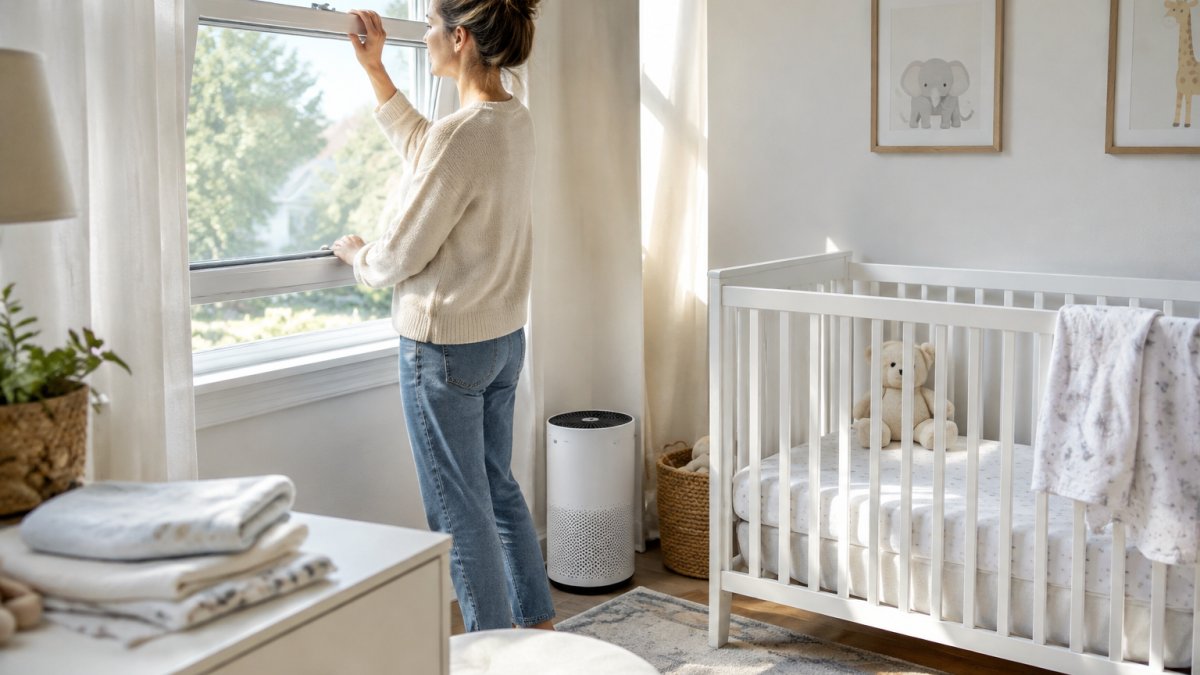
The woman is American.
Nursery and Sleep Space
- Air out new furniture, mattresses, and pressboard shelving for a few weeks in a ventilated room before the baby sleeps near them.
- Wash bedding weekly in hot water and keep the crib clear of stuffed toys, bumpers, and extra blankets that trap dust and dander.
- Choose washable textiles, cotton layers and removable covers are easier to keep clean.
Kitchen
- Run the range hood every time you cook, and confirm it vents outdoors rather than recirculating.
- Skip smoky methods, pan-searing at high heat, frying, and broiling, on days the nursery windows are closed.
- Open a window or run the hood when using the oven's self-clean cycle, which can release fumes and fine particles.
Bathroom
- Run the exhaust fan during and for 15-20 minutes after baths to pull out moisture.
- Fix any leak or visible dampness within 48 hours; mold can begin to establish on wet materials in that window.
- Keep the door closed during showers so humid air does not drift toward the nursery.
Laundry and Cleaning
- Vacuum with a HEPA-filtered vacuum, and do it when the baby is in another room.
- Choose fragrance-free or low-fragrance cleaners; strong scents linger in fabric and carpet.
- Wash new clothing and bedding before first use to remove manufacturing residues.
Entryway and Whole-Home
- Leave shoes at the door to cut tracked-in dust, pollen, and street residue.
- Change HVAC filters on schedule and never block return vents with furniture or storage.
- Keep pets out of the baby's sleep and play areas, and wash pet bedding regularly.
If You Rent or Have a Tight Budget
Not every family can replace appliances or renovate. Realistic trade-offs:
- Cannot replace an old stove or vent: cook less often at high heat, use the hood and a window, and keep the nursery door closed during cooking.
- Cannot control outdoor pollution entering the home: prioritize a HEPA unit sized to the nursery, seal gaps around windows with weatherstripping, and keep windows closed on poor-air days.
- Cannot remove carpet: vacuum with HEPA filtration more often and keep the baby's floor-time area on a washable mat.
For the sleep space itself, our safe sleep environment tips for newborns pair well with this checklist.
Ventilation, Filters, and Everyday Habits That Cut Exposure
Ventilation is the cheapest fix you have. Crack a window for a few minutes on clean-air days, run exhaust fans, and never block the return vents. Change your HVAC filter on schedule, and clean fan blades and purifier pre-filters so they don't become dust sources. Our guide on how to clean and sanitize baby gear covers the washable items that collect the most dust.
Choosing an Air Purifier for Nursery Use
The right air purifier for nursery use has a true HEPA filter, a noise level low enough for sleep, and a Clean Air Delivery Rate matched to the room's size. Skip ozone generators entirely. Place the unit so air flows across the crib area, not directly at your baby's face, and keep cords well out of reach.
A simple decision framework:
| Your situation | Best choice | Skip |
|---|---|---|
| Small nursery, tight budget | HEPA unit sized to the room | Whole-house systems |
| Wildfire smoke season | HEPA plus sealed windows | Window fans |
| Allergy-prone household | HEPA with a pre-filter | Ionizers that produce ozone |
Signs Indoor Air May Be Affecting Your Baby and When to Call a Clinician
Coughing, sinus congestion, and fatigue can all point to air irritation, but they also overlap with ordinary newborn congestion. Watch for patterns: symptoms that ease when you leave a room, or that show up after a new purchase, are worth noting.
Call a clinician if your baby has trouble breathing, ribs pulling in with each breath, a persistent cough, or symptoms that worsen rather than settle. For skin irritation, our comparison of bamboo vs organic cotton for eczema explains which fabrics are gentler.
Build a Cleaner Nursery With Tender Tots & Wellness
A cleaner nursery starts with fewer sources and better basics. At Tender Tots & Wellness, we offer cotton baby clothing: our pure cotton newborn gift set at $29.99 and our soft cotton onesie at $29.99 are made from cotton for everyday wear. Our cotton changing pad cover at $21.99 is removable and washable.
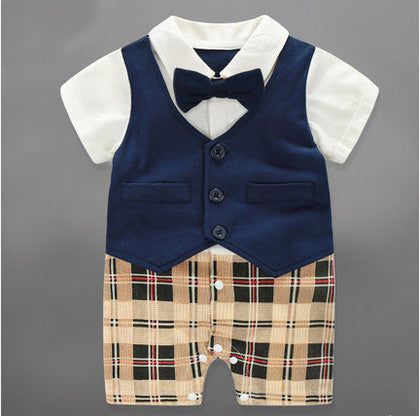
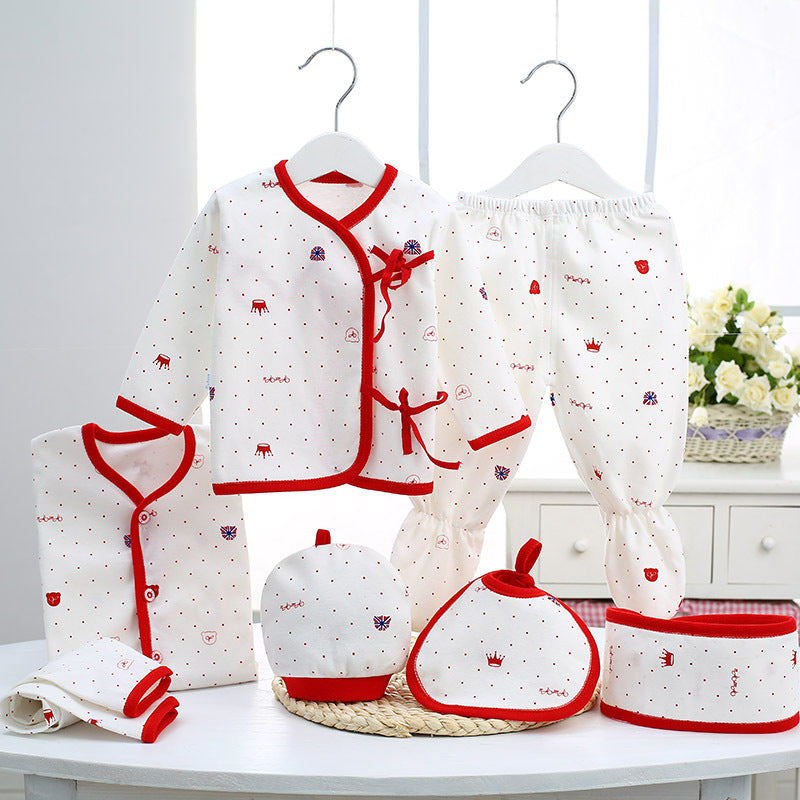
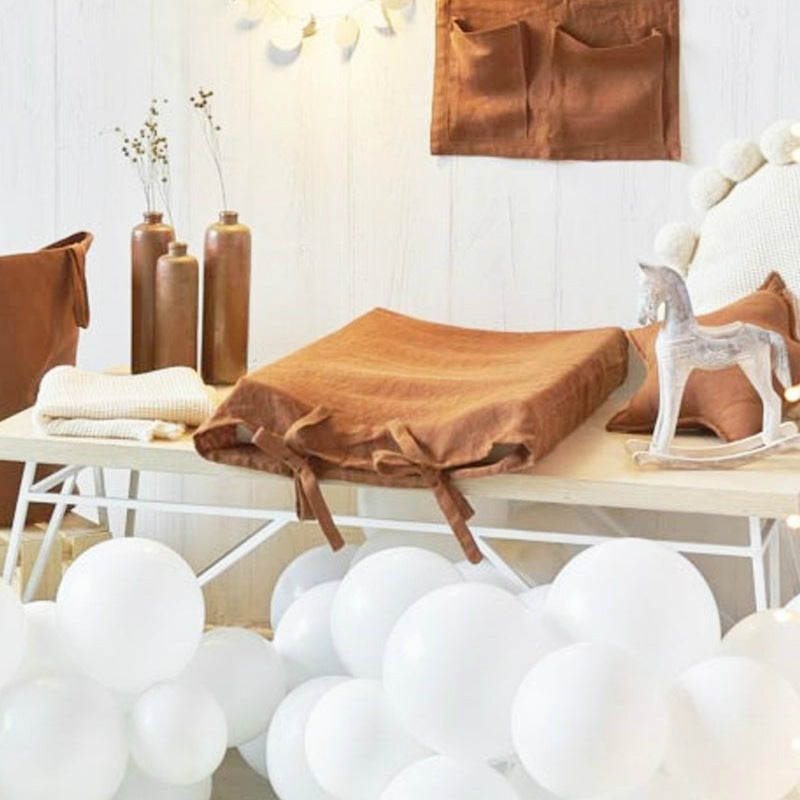
If you're furnishing from scratch, our guide on how to buy eco-friendly nursery furniture online walks through what to look for.
The air in your baby's room is one thing you can actually control. Start with the checklist, fix the sources, and add filtration where it counts. Tender Tots & Wellness makes the everyday layers easy, with breathable cotton clothing, washable gear, and free worldwide shipping on every order.
Frequently Asked Questions
What AQI is unsafe for newborns?
The Air Quality Index runs from 0 to 500, and anything above 100 is considered unhealthy for sensitive groups, which includes newborns. Levels between 51 and 100 are moderate but can still bother a baby with developing lungs. When outdoor AQI climbs above 100, keep windows closed, run a purifier with a HEPA filter, and limit time outside. Check the daily AQI through AirNow before stroller walks or car trips.
Can poor indoor air quality make a newborn sick?
Yes. Indoor pollutants like PM2.5, secondhand smoke, and fumes from cleaning products are linked to respiratory infections, coughing, and sinus congestion in infants. Because newborns breathe faster and their lungs are still developing, they take in more pollution per pound of body weight than adults. Reducing exposure through ventilation, source control, and filtration lowers those risks, though it does not eliminate them entirely.
Does an air purifier for nursery use actually help?
A purifier with a true HEPA filter captures most fine particles, including PM2.5 and wildfire smoke, which supports cleaner air in a nursery. Choose a unit sized for the room's square footage, run it on low continuously, and keep it at least a few feet from the crib so airflow is not directed at your baby. Change filters on the schedule the manufacturer lists, and never block the intake.
What are signs that indoor air quality may be affecting a baby?
Watch for persistent coughing, wheezing, congestion, irritated eyes, or skin flare-ups that worsen when your baby is in a particular room. Frequent respiratory infections or trouble sleeping in the nursery can also be clues. These symptoms have many causes, so contact your pediatrician for an evaluation. If your baby struggles to breathe, has bluish lips, or shows flaring nostrils, seek urgent care immediately.
